
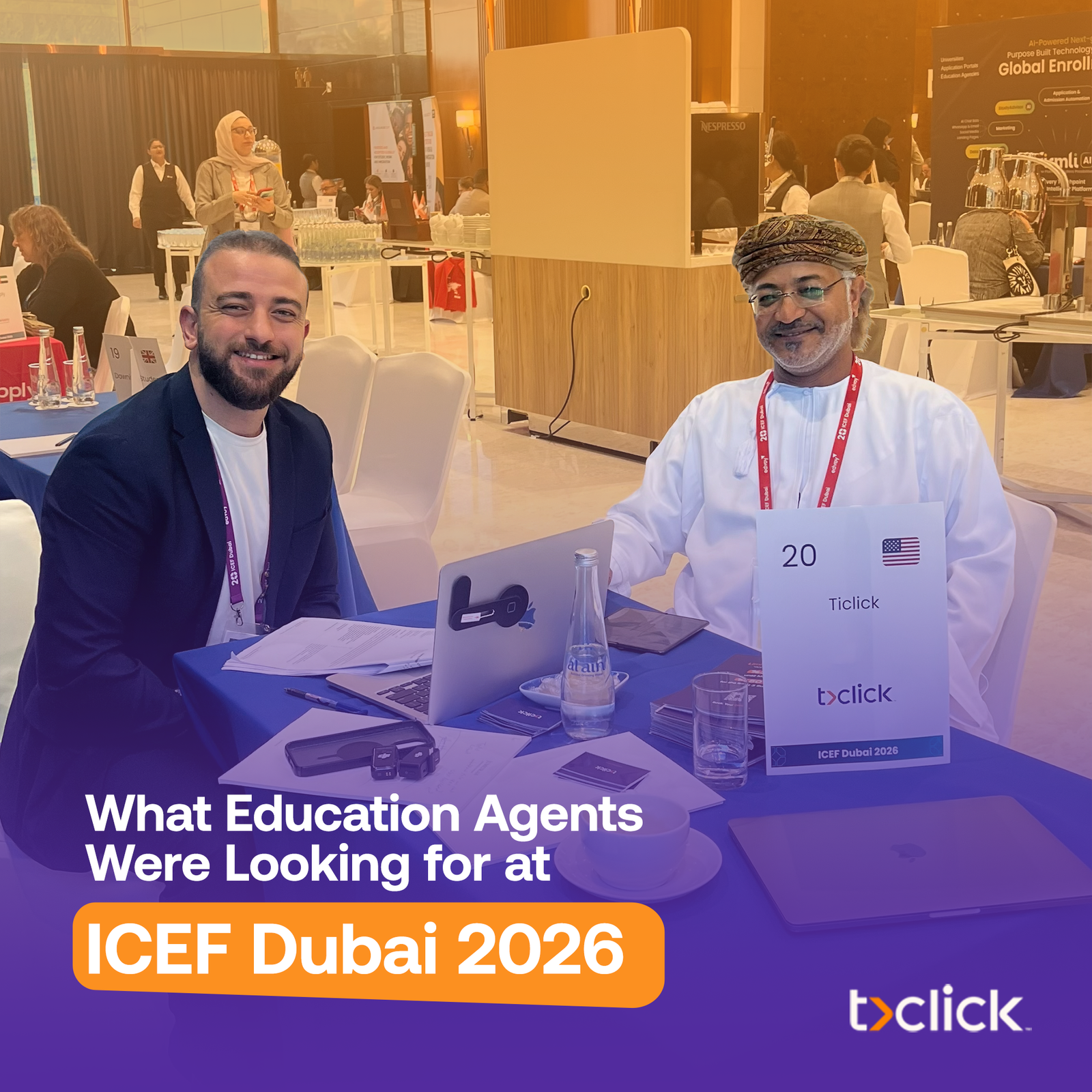
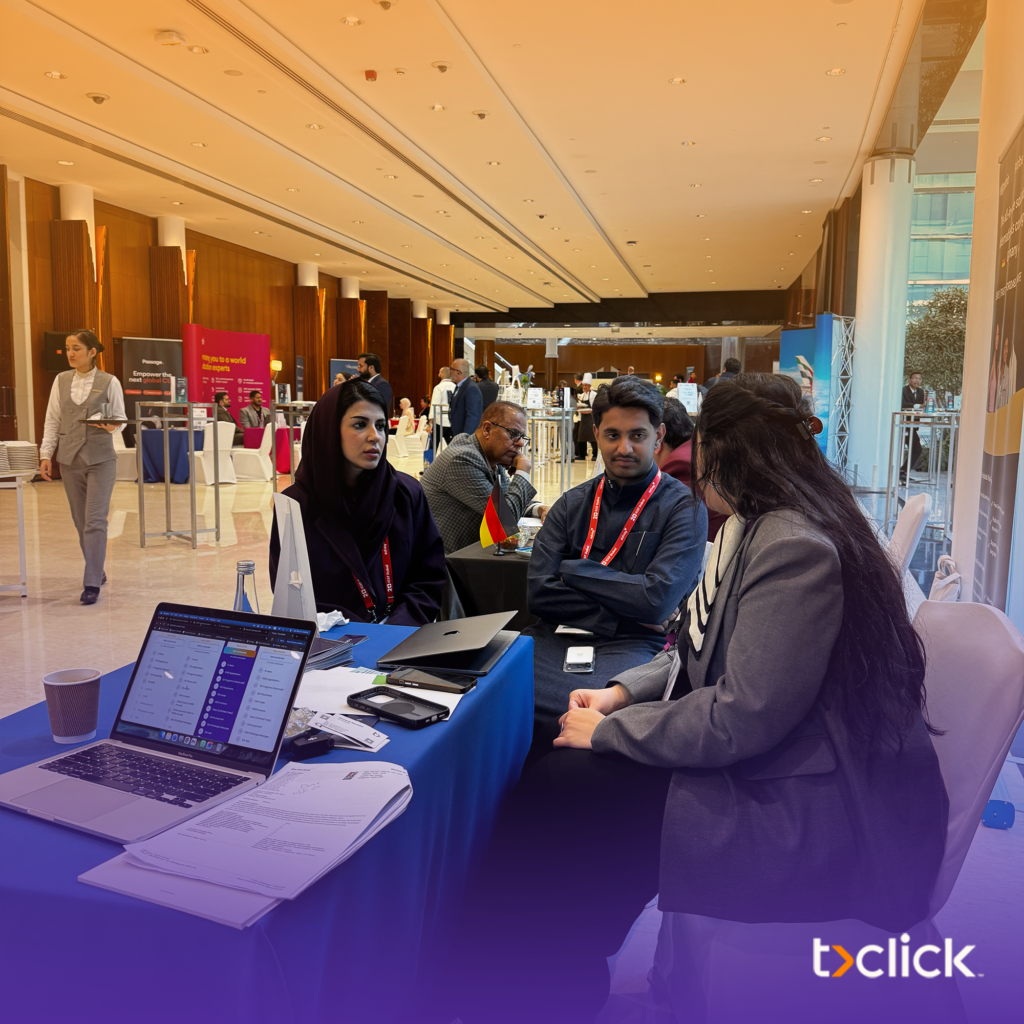
ICEF Dubai 2026 once again confirmed its position as one of the most influential meeting points in international student recruitment. Bringing together education agents, universities, recruitment teams, and service providers, the event created a focused environment where real operational conversations took place—not just introductory networking.
For Ticlick CRM, participating in ICEF Dubai 2026 was an opportunity to engage directly with the professionals shaping international recruitment across markets. Over the course of structured B2B meetings, our team spoke with education agents managing diverse student pipelines, multiple destinations, and increasingly complex documentation processes.
What quickly became clear is that 2026 is a year defined by pressure and change. Agents are handling higher inquiry volumes, faster response expectations, and greater institutional demands for transparency and performance tracking. Their role is expanding—and so are the operational challenges attached to it.
This article explores what education agents were looking for at ICEF Dubai 2026, based on real conversations and recurring themes shared during the event. It reflects the priorities agents raised, the expectations they now face, and the structural gaps they are trying to close in order to operate more efficiently in an increasingly competitive recruitment environment.
The Evolving Role of Education Agents in 2026
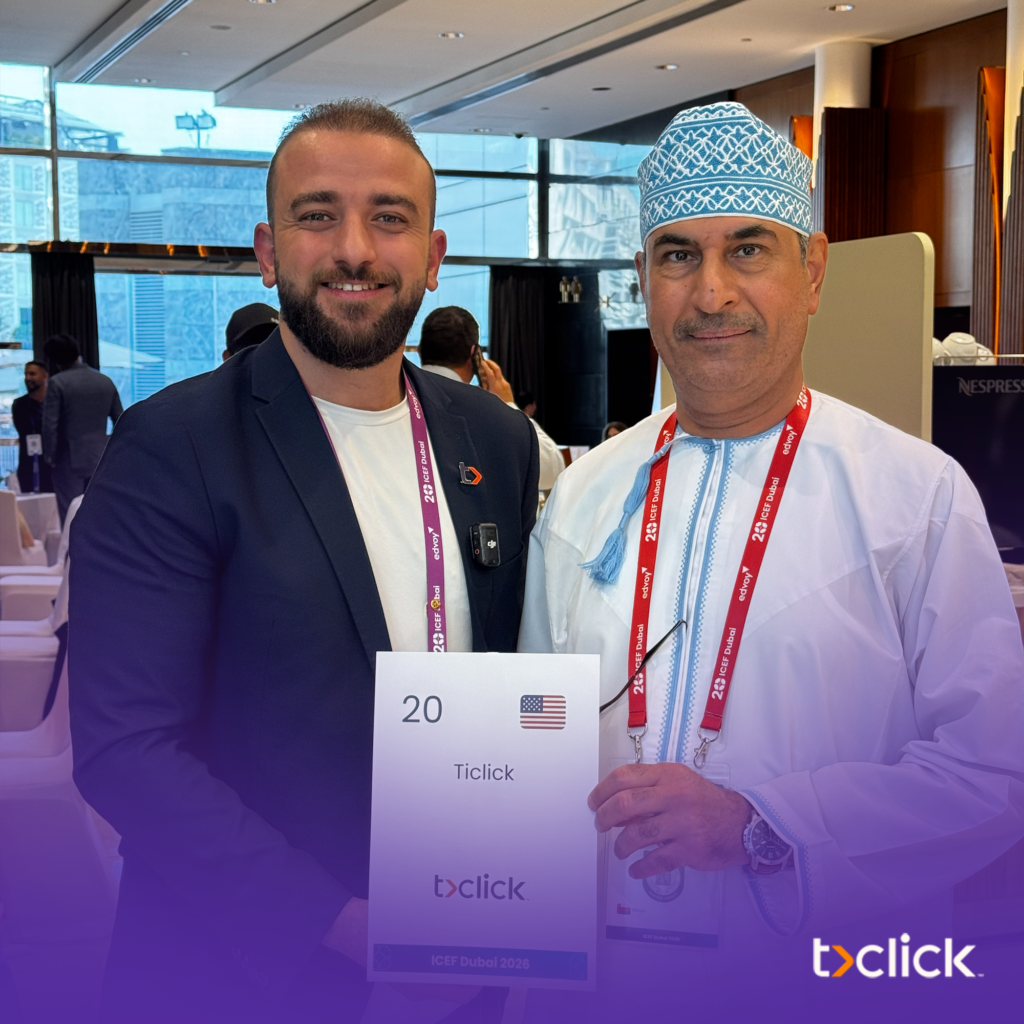
Education agents are no longer viewed as simple intermediaries. In 2026, they are strategic contributors to institutional growth, market expansion, and student success.
From Student Placement to Strategic Recruitment Partners
The traditional view of agents as student placement facilitators has evolved. Institutions now expect agents to deliver well-prepared, informed, and documentation-ready applicants.
Agents are increasingly responsible for:
- Pre-screening and advising students thoroughly
- Ensuring documentation accuracy before submission
- Managing multi-stage student journeys
- Reducing application errors and delays
- Protecting institutional reputation through quality control
The conversations at ICEF Dubai 2026 reflected this shift clearly. Agents understand that their value is measured not just by volume, but by execution and consistency.
Rising Expectations from Institutions
Institutions are setting higher standards in 2026. The themes that surfaced repeatedly included the following:
Speed
Institutions expect faster follow-ups and shorter turnaround times.
Accuracy
Incomplete applications and documentation gaps are no longer tolerated at scale.
Transparency
Institutions want visibility into agent pipelines, student progress, and conversion quality.
These expectations directly influence what education agents were looking for at ICEF Dubai 2026—structured partnerships that enable them to meet these standards consistently.
Many of the technology trends discussed at ICEF Dubai 2026 are especially relevant for J-1 program agencies navigating complex compliance and documentation workflows.
Explore the key challenges J-1 agencies face and how CRM systems solve them in our detailed guide.
What Education Agents Were Actively Searching for at ICEF Dubai 2026
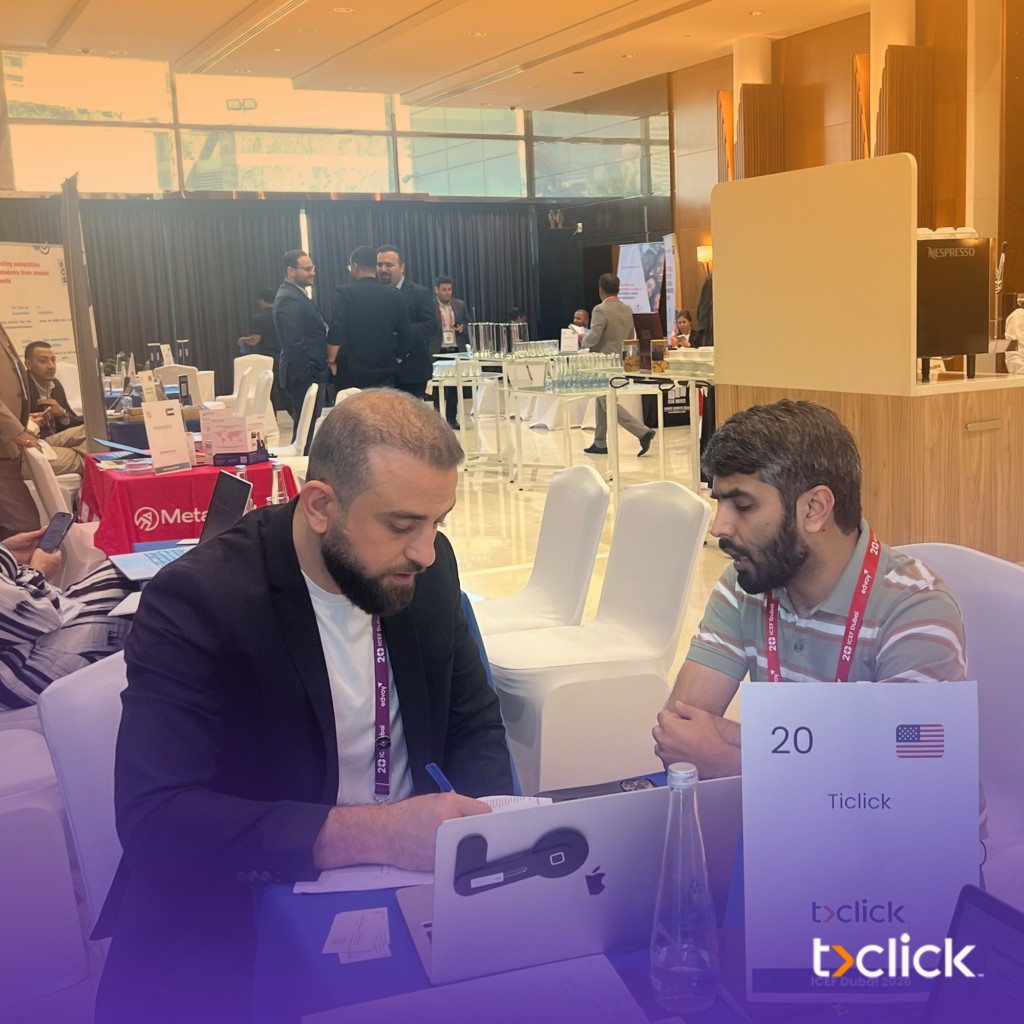
The central theme of the event was not simply partnership expansion—it was operational alignment.
Clear Communication and Faster Institutional Responses
Agents emphasized the importance of predictable communication structures. Delayed responses create friction with students and families.
They were looking for:
- Defined contact channels
- Clear escalation paths
- Faster clarification on requirements
- Reduced back-and-forth loops
Transparent Application Tracking
A recurring challenge agents described was limited visibility after submitting applications.
They want to know:
- Has the application been received?
- Which stage is it in?
- What is missing?
- When is a decision expected?
Without transparency, agents spend time chasing updates instead of supporting students.
Simplified Documentation and Visa Workflows
Documentation complexity continues to increase. Agents manage passports, transcripts, financial forms, language certificates, and visa-related paperwork.
They were looking for:
- Standardized checklists
- Clear document requirements
- Fewer repeated submissions
- Faster document validation
Simplification reduces drop-offs and improves processing speed.
Reliable Reporting and Performance Visibility
Performance accountability is rising. Agents want better insight into:
- Conversion rates
- Application processing time
- Market performance
- Student progression stages
This data is critical for maintaining strong institutional partnerships.
Long-Term, Structured Partnerships — Not Short-Term Deals
Perhaps the strongest message from ICEF Dubai 2026 was that agents are seeking stability.
They want structured, long-term collaboration models supported by operational clarity — not transactional agreements with unclear processes.
The student recruitment technology trends highlighted at ICEF Dubai 2026 are only the beginning of a larger digital transformation across international education.
To explore what’s next, read our in-depth analysis of the future of international student recruitment software and how it will shape global enrollment strategies.
The Operational Challenges Agents Shared
Managing High Inquiry Volumes
Inquiry growth is accelerating across markets. Without structured systems, high volume leads to delays, missed follow-ups, and inconsistent communication.
Fragmented Communication Channels
Agents frequently described operating across:
- Excel spreadsheets
- Shared drives
This fragmentation leads to duplicated work and reduced clarity.
Document-Heavy Student Journeys
Multi-stage international recruitment processes create administrative pressure. Each additional document requirement increases the risk of delay.
Limited Visibility After Submission
Once an application is submitted, agents often lose real-time visibility. This visibility gap was one of the most repeated concerns during ICEF Dubai 2026 discussions.
A Shift Toward Structured Recruitment Infrastructure
One of the clearest takeaways when analyzing what education agents were looking for at ICEF Dubai 2026 is the growing shift toward structured recruitment infrastructure.
Agents are no longer focused solely on expanding program portfolios or increasing institutional connections. Instead, they are increasingly evaluating how well their operations are supported by systems that allow them to manage complexity efficiently.
As recruitment volumes increase and student journeys become more documentation-heavy, informal processes are no longer sustainable. ICEF Dubai 2026 revealed that agents are thinking beyond short-term placement numbers — they are thinking about long-term operational stability.
Why Agents Are Asking About Systems, Not Just Programs
Historically, ICEF events centred heavily around programs, commission structures, and destination demand. In 2026, however, the tone of many conversations has shifted.
When discussing what education agents were looking for at ICEF Dubai 2026, it became evident that agents are now asking questions such as the following:
- How do institutions manage application workflows?
- What systems are used for tracking progress?
- How is communication structured?
- Is there visibility into student status after submission?
This shift signals maturity in the agent market. Agents understand that even the best program offering can fail if operational coordination is weak. They are prioritizing structured systems because those systems directly impact student experience, conversion rates, and institutional trust.
The Growing Importance of Recruitment Technology
Recruitment technology is no longer viewed as an optional enhancement. It is becoming core infrastructure.
ICEF Dubai 2026 demonstrated that agents are increasingly aware of the operational limitations caused by fragmented tools. Many described the inefficiencies of managing student journeys across WhatsApp messages, spreadsheets, email threads, and shared folders.
Technology now plays a central role in solving those inefficiencies by enabling the following:
- Centralized tracking
- Automated follow-ups
- Document management
- Real-time updates
- Performance analytics
When analyzing what education agents were looking for at ICEF Dubai 2026, technology consistently appeared as a foundational requirement for growth — not just a convenience.
CRM Systems as Collaboration Tools
One important evolution highlighted at ICEF Dubai 2026 is the reframing of CRM systems.
Agents are no longer seeing CRM platforms purely as internal sales databases. Instead, they are beginning to view them as collaboration tools that connect agents, institutions, counsellors, and sometimes students within one structured environment.
A recruitment-focused CRM can provide:
- Clear stage visibility
- Shared communication history
- Document tracking transparency
- Defined workflows
- Performance reporting
This collaborative function addresses one of the most common friction points raised when discussing what education agents were looking for at ICEF Dubai 2026—the lack of visibility after submission and the need for predictable communication structures.
How Events Like ICEF Dubai Are Redefining Agent Expectations
ICEF Dubai 2026 did more than facilitate partnerships. It reflected how education agents themselves are evolving.
Education Agents Are Becoming More Strategic
Agents are no longer simply evaluating commission percentages or marketing materials. They are assessing institutional operational maturity.
Many agents at ICEF Dubai 2026 demonstrated a deeper understanding of process alignment, documentation clarity, and response consistency. They recognize that structured workflows lead to better student outcomes and stronger reputational positioning.
Agents Are Prioritizing Efficiency
Efficiency is no longer optional in high-volume recruitment environments. Agents managing multiple markets and institutions cannot afford repetitive manual processes.
When reviewing what education agents were looking for at ICEF Dubai 2026, operational efficiency was a consistent theme:
- Faster processing
- Fewer duplicated submissions
- Reduced status chasing
- Predictable communication timelines
Efficiency directly influences conversion rates and long-term sustainability.
Agents Want Partners with Systems, Not Just Offers
Perhaps the most important shift is this: agents increasingly want partners who operate with structured systems.
They are looking for institutions that:
- Provide clear documentation workflows
- Offer transparent status tracking
- Maintain defined communication channels
- Use structured recruitment systems
- Support data-backed reporting
In other words, partnerships are now evaluated based on operational infrastructure, not only academic offerings.
Conclusion
ICEF Dubai 2026 made one trend unmistakable: the future of agent-led recruitment is structured, technology-enabled, and operationally precise.
When examining what education agents were looking for at ICEF Dubai 2026, the message is clear. Agents are searching for structure. They are prioritizing efficiency. They are demanding transparency. And they increasingly expect partnerships to be supported by reliable systems rather than informal processes.
International recruitment is becoming more complex—with longer student journeys, higher documentation requirements, and greater accountability from institutions. In this environment, technology is no longer an accessory. It is essential infrastructure.
The institutions and agencies that invest in structured recruitment systems—not just disconnected tools—will be the ones positioned to scale sustainably and build stronger, long-term partnerships.
ICEF Dubai 2026 did not simply showcase opportunities. It revealed a market that is evolving toward operational maturity—and the organizations that recognize this shift early will define the next phase of international student recruitment.