
How AI Is Transforming Student Recruitment: A New Era
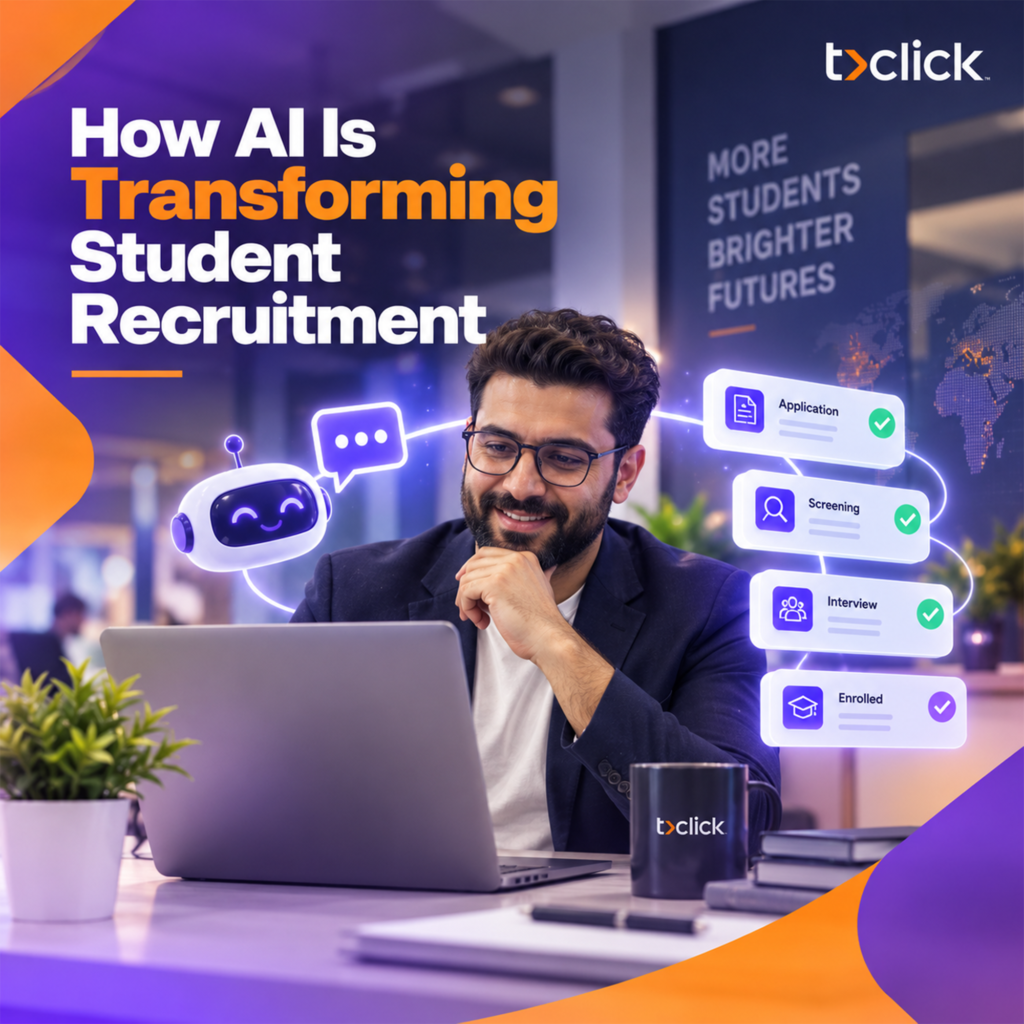
Student recruitment has always involved much more than attracting prospective students. Behind every enrollment is a long sequence of work: answering inquiries, understanding student needs, qualifying leads, recommending options, scheduling conversations, following up, collecting documents, tracking applications, monitoring deadlines, and keeping students engaged until they make a final decision. For years, much of that work depended on people performing one small action after another. A new inquiry arrived. Someone reviewed it. A student asked a question. Someone responded. An application stopped progressing. Someone had to notice. A deadline approached. Someone had to remember to follow up. Artificial intelligence is beginning to change that operating model. AI is transforming student recruitment by changing how teams discover, understand, engage, qualify, and support prospective students throughout the journey from initial interest to enrollment. The important change is not simply that AI can complete certain recruitment tasks faster. Recruitment teams can increasingly reconsider which tasks need to be performed manually in the first place. That distinction matters. Used well, AI does not remove the need for recruiters, counsellors, or admissions professionals. It can remove some of the repetitive work surrounding them, giving people more time for conversations, decisions, and student situations that genuinely require human expertise. At the same time, prospective students are changing how they research their options. AI-powered search and conversational tools are becoming part of the discovery process, which means recruitment organizations are adapting on both sides of the journey. Understanding how AI is transforming student recruitment therefore requires looking beyond individual tools. The bigger change is happening across the recruitment process itself. What Does AI Do in Student Recruitment Actually Mean? AI in student recruitment refers to the use of artificial intelligence to support activities across the prospective student journey, including discovery, enquiry management, qualification, communication, personalization, counselor preparation, application workflows, analytics, and reporting. It is important to distinguish AI from traditional automation. Recruitment automation typically follows predefined rules: Trigger → Predefined Action For example, when a student submits an inquiry form, the CRM automatically sends a confirmation email. AI-assisted recruitment introduces an additional layer: Student Context → AI Interpretation → Recommended or Prepared Action → Human Review or Workflow Instead of simply sending the same predefined response, AI may help summarize the inquiry, identify relevant context, prepare an appropriate response, or highlight the next action a recruiter should consider. More advanced systems may introduce agentic workflows: Goal or Event → Context → Approved Action → Escalation In these cases, AI may be permitted to perform certain actions within defined boundaries rather than simply generating a recommendation. The broader recruitment model therefore begins to look like Student Data → Recruitment Context → AI Assistance → Workflow → Human Judgment → Action AI is only one part of that system. The quality of the student data, CRM, workflows, permissions, knowledge sources, and human oversight around it determines how useful the technology can actually become. Want to see where AI-powered recruitment is heading next? Explore The Future of AI in Study Abroad Agencies to discover how AI could reshape agency workflows, counselor roles, student support, and day-to-day operations. Why Is Student Recruitment Changing Now? AI is not entering student recruitment in isolation. Several changes are happening at the same time. Prospective students expect faster access to information. Recruitment teams manage increasingly complex student journeys across websites, email, messaging platforms, CRM systems, applications, documents, and multiple destinations. Institutions and education agencies also need to respond to students across different time zones, languages, programs, and recruitment stages. Most importantly, students themselves are beginning to use AI during the research process. ICEF has highlighted a growing shift toward AI-assisted student search, with prospective international students increasingly using generative AI to research institutions and study options before making direct contact with a university or recruitment organization. (ICEF Monitor) Keystone Education Group’s State of Student Recruitment Report 2026, based on responses from more than 67,000 prospective students across 150 countries, also reflects the growing influence of AI on how students think about education and the skills they expect to need. (Amazon Web Services, Inc.) Recruitment is therefore changing on both sides: AI-Enabled Students + AI-Enabled Recruitment Teams A prospective student may already have compared destinations, researched programs, summarized university information, or generated questions with AI before speaking to a counselor. The recruiter’s starting point is changing as a result. From Manual Recruitment to AI-Assisted Recruitment Traditional student recruitment can involve significant manual coordination: Lead → Manual Review → Counselor → Follow-Up → Application → Manual Monitoring → Enrollment AI-assisted recruitment creates the possibility of a different workflow: Lead → Context and Qualification → CRM → Relevant Engagement → Counselor → Automated Workflow → Application Monitoring → Enrollment This does not mean every stage should be automated. Instead, the objective is to move human effort toward the stages where it creates the greatest value. Routine reminders do not necessarily require a counselor. A complex conversation about a student’s goals probably does. Preparing a summary of an applicant’s history can be assisted by AI. Interpreting that history and deciding what advice to provide may require professional judgment. That separation between work that can be automated, work that can be assisted, and work that should remain human-led is at the center of AI’s impact on student recruitment. How AI Is Transforming Student Recruitment Across the Entire Journey AI does not affect only one part of recruitment. Its influence can extend from the moment a prospective student begins researching options to the point at which an application becomes an enrollment. The effect is different at every stage. 1. AI Is Changing How Prospective Students Discover Institutions For years, the digital student discovery journey often started with a search engine. A student searched for a course or destination, reviewed search results, visited university websites, compared options, and eventually submitted an enquiry. That journey is becoming less linear. Generative AI gives prospective students another starting point. Instead of searching through multiple pages independently, a student can ask a conversational system to
The Future of AI in Study Abroad Agencies
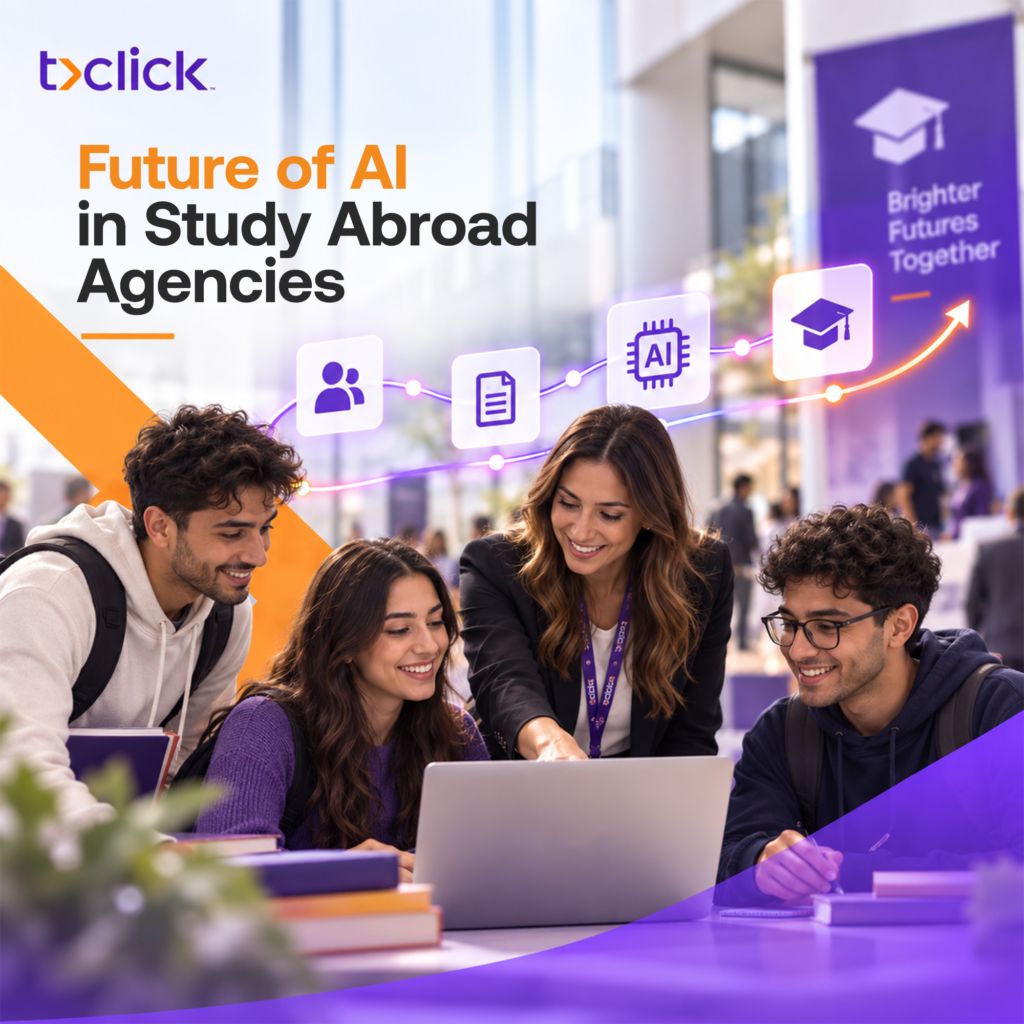
For years, the most common way for a study abroad agency to grow was straightforward: attract more students, hire more counsellors, add more administrative staff, and increase the team’s capacity to manage applications. That model is beginning to change. Artificial intelligence is giving agencies another way to increase capacity. Instead of adding people every time enquiry volumes rise, agencies can use technology to handle more of the repetitive work surrounding student recruitment, applications, communication, and administration. This does not mean the study abroad agency of the future will operate without counsellors. In fact, the opposite may prove more important. As AI becomes better at retrieving information, drafting routine communication, organizing records, translating content, and supporting repetitive workflows, the work that remains with people becomes more concentrated around judgment, relationships, reassurance, and complex decisions. And this shift is already underway. INTO University Partnerships reported in June 2026 that 71% of the education agents it surveyed use AI tools daily or weekly. Usage reached 79% among respondents in East Asia and 59% in South Asia. The same research found that agents tend to use AI where it improves efficiency while remaining more cautious in areas where accuracy and accountability matter. So, the future of AI in study abroad agencies is not simply about adding ChatGPT, a chatbot, or another automation tool. It is about reconsidering how the agency operates when software can perform more of the work that once consumed employees’ time. The important question is no longer whether AI will enter the study abroad agency. For many agencies, it already has. The more important question is what happens when AI moves from an individual productivity tool to part of the agency’s operating model. What Does the Future of AI in Study Abroad Agencies Actually Mean? The future of AI in study abroad agencies refers to the increasing use of artificial intelligence across student enquiries, lead management, counselor preparation, university and program research, communication, applications, document workflows, reporting, and agency operations. But that definition needs an important qualification. AI should not be viewed as an isolated layer sitting outside the agency. A sustainable model looks more like this: Student Data → CRM → Workflows → Automation → AI → Human Expertise Each component provides something the others cannot. The CRM provides context. Automation handles predictable processes. AI helps interpret information and assist with less predictable work. People provide judgment, accountability, empathy, and relationships. The real future, therefore, is not: Study Abroad Agency + AI Tool It is: Connected Agency Operations + AI + Human Expertise That distinction matters because buying an AI tool is easy. Redesigning an agency so that technology and people work effectively together is much harder. AI Adoption Has Already Started Inside Study Abroad Agencies Discussions about AI in international education sometimes make the technology sound as though it is still waiting to arrive. The data suggests otherwise. INTO’s 2026 agent survey found that seven in ten participating agents use AI daily or weekly. It also found that 80% of agents believe students use AI frequently or occasionally when deciding where to study. Current applications are relatively practical. Agents can use generative AI to help with: Research Translation Email drafting Content preparation Summarization Administrative work Information retrieval Student communication The important development over the next few years is unlikely to be simply higher usage. It will be deeper integration. Today, an employee may open a separate AI tool, manually enter information, receive an answer, and then copy that answer into another system. Tomorrow, more AI capabilities are likely to operate within the systems where student information and agency workflows already live. That is the difference between using AI and becoming an AI-enabled agency. Why Are Study Abroad Agencies Particularly Suited to AI? Study abroad agencies have an unusual operating model. They combine enormous amounts of repetitive information with decisions that can have major consequences for students. Consider how much routine work takes place around a single applicant. The agency may need to collect an enquiry, identify the student’s destination and program interests, schedule counseling, request documents, check application progress, send reminders, answer repeated questions, communicate deadlines, update records, coordinate with university partners, and continue following up until the student enrolls. Multiply that process across hundreds or thousands of students. There is significant room for technology to help. Study abroad agencies commonly deal with: High enquiry volumes Repetitive questions Large amounts of program information Multiple destinations and universities Document-heavy processes Frequent follow-up Multiple communication channels Long recruitment cycles Changing deadlines Multilingual students Large numbers of routine administrative tasks At the same time, the industry involves: High-stakes decisions Visa complexity Financial considerations Family involvement Personal aspirations Unusual student circumstances Trust Regulatory and ethical responsibilities That combination explains both the opportunity and the limitations of AI. Study abroad agencies contain exactly the combination that makes AI valuable and difficult: large amounts of repetitive information surrounding decisions that can be deeply personal and highly consequential. The Student Is Changing Before the Agency Does One of the biggest reasons agencies need to think about AI has nothing to do with their internal technology. Their students are changing. A 2025 INTO survey involving more than 1,600 newly enrolled international students in the US and UK found that 17% had used AI as part of their initial university search. Among the students who used AI, 81% said it was more helpful than traditional information sources, while another 15% considered it about as helpful. The study also showed significant differences between markets. AI use during university search approached 30% among respondents from South Korea and the Philippines and was also relatively high among students from Taiwan, Vietnam, Japan, and mainland China. This changes the starting point of a counseling conversation. Traditionally, a student might approach an agency and ask: “What universities offer this course?” “How much does it cost?” “Which countries should I consider?” “What documents do I need?” Students can now ask AI many of those questions before contacting an agency. That does not mean
AI in International Student Recruitment in 2026: Key Trends
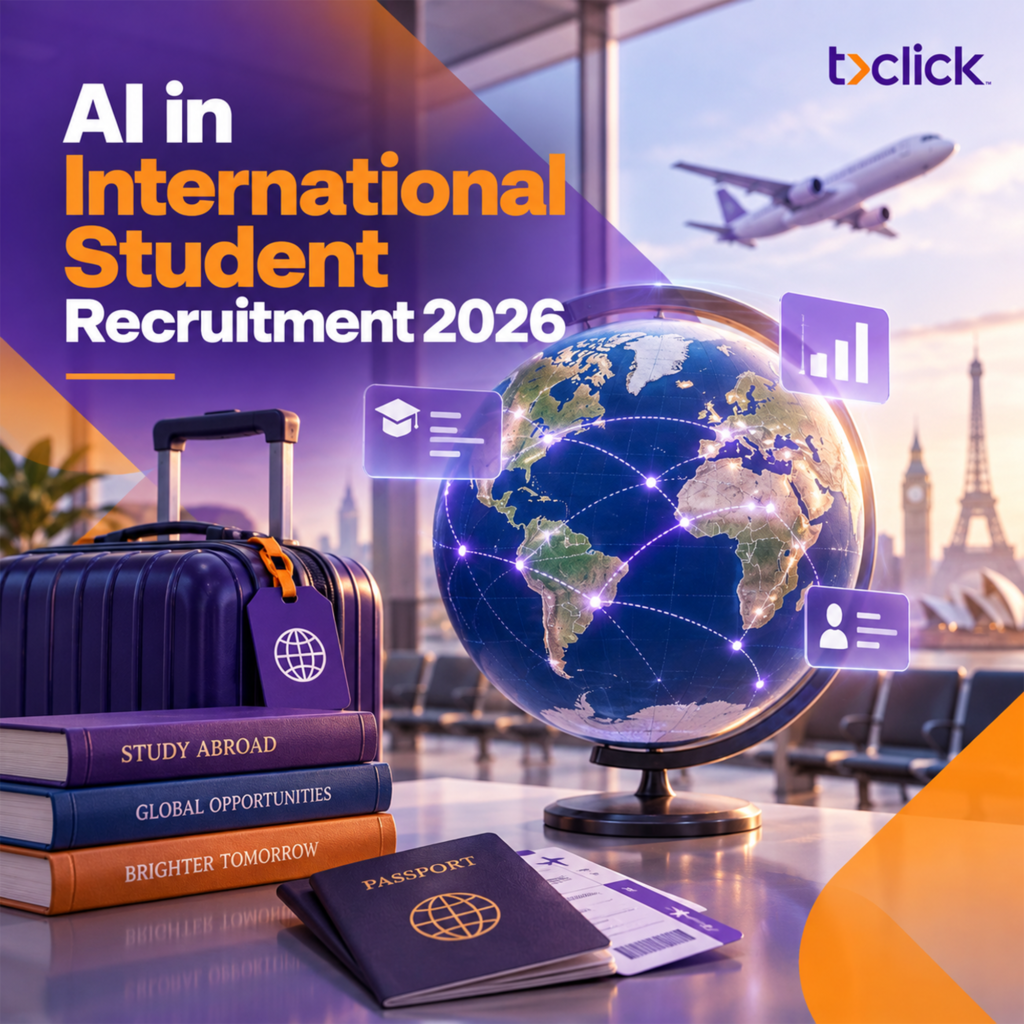
International student recruitment has always been sensitive to change. Visa rules shift, destination preferences evolve, new source markets emerge, and students reconsider what makes an overseas degree worth the investment. In 2026, however, recruitment teams are dealing with several of these changes at the same time, while artificial intelligence is also reshaping how students find information and how education organizations manage recruitment. The student journey is no longer as predictable as it once appeared. Prospective students may compare several countries before choosing a destination, use AI to research universities before visiting their websites, speak with an education agent, continue the conversation through messaging channels, and move between digital and human touchpoints before submitting an application. At the same time, recruitment teams are under pressure to respond quickly, manage larger volumes of information, maintain accurate communication, and adapt their strategies as student mobility shifts between destinations. Recent evidence reflects that complexity. Keystone Education Group’s 2026 research draws on more than 67,000 prospective international students across 150 countries and points to policy changes, geopolitical pressures, and AI as important forces affecting how students make study-abroad decisions. Research reported by ICEF also shows that affordability, visa processes, and employment opportunities continue to influence destination choice. This makes AI in international student recruitment in 2026 about much more than adding a chatbot to a website or asking a generative AI tool to write emails. The bigger change is happening on both sides of the recruitment journey. Students are using AI to find and interpret information, while recruiters, agents, and institutions are using it to manage information and work more efficiently. The organizations that understand both sides will be better prepared for what comes next. What Does AI in International Student Recruitment Mean in 2026? AI in international student recruitment refers to the use of artificial intelligence across the recruitment journey to help institutions and education agencies understand demand, engage prospective students, manage leads, automate repetitive work, support counsellors, analyze recruitment data, and improve the journey from initial interest to enrollment. This includes several different forms of AI. Generative AI Generative AI can help recruitment professionals draft communication, summarize information, prepare content, conduct initial research, and reduce repetitive writing tasks. Conversational AI Conversational AI supports interactions with prospective students through channels such as website chat and messaging platforms. More advanced systems can collect context, answer approved questions, qualify enquiries, and hand conversations to counselors when human involvement is needed. Predictive AI Predictive models analyze historical and current data to identify patterns that may help with forecasting, prioritization, and recruitment planning. AI Assistants An AI assistant can help employees retrieve information, summarize student records, prepare communication, and work more efficiently with the data available to them. AI Agents AI agents go a step beyond providing information. Depending on their permissions and design, they may be able to complete approved tasks, interact with systems, trigger workflows, and escalate exceptions. AI-Powered CRM When AI works with CRM data, it can potentially understand more of the student’s recruitment context instead of operating as an isolated tool. This is why AI should increasingly be viewed as a technology layer across recruitment rather than a single feature. Why Is 2026 Different for International Student Recruitment? The importance of AI cannot be understood without looking at the wider international education market. AI is arriving at a time when student mobility itself is becoming more complex. Student Mobility Is Being Redistributed International education demand has not simply disappeared. Students are reconsidering where they go. BONARD’s Q2 2026 analysis describes global student mobility as being reorganized rather than simply declining. Traditional destinations remain important, but the market is becoming more fragmented as students consider a wider range of options across Europe, Asia, and other regions. That creates a different challenge for recruitment teams. Historical assumptions about which markets will produce students, which destinations they will prefer, and which messages will convert them may no longer be enough. Visa Policy Is Affecting Decisions Earlier Visa considerations are also moving closer to the beginning of the decision process. Research involving more than 5,800 prospective and current students across 118 countries found that students are investigating visa conditions earlier. Cost, processing difficulty, approval uncertainty, and post-study work opportunities can influence whether a destination remains under consideration at all. For recruitment teams, this means the student journey cannot be understood purely through program interest. Destination accessibility is becoming part of recruitment strategy. Affordability Remains Critical ICEF’s Agent Voice survey, involving 1,225 agents across 113 countries, found that affordability, visa processes, and employment opportunities remain central considerations for study-abroad decisions. Students are not simply asking, “Which university do I prefer?” They are increasingly asking: Can I afford the destination? Can I realistically obtain a visa? What opportunities exist after graduation? Is the investment worthwhile? Recruitment communication needs to respond to those questions clearly. Students Are Already Using AI AI is not something students are waiting for institutions to introduce. Research involving more than 1,600 newly enrolled international students in the US and UK examined how students were already using AI during the university discovery and application process. This matters because it changes the starting point of the recruitment journey. Education Agents Are Using AI Too The shift is equally visible among education agents. INTO reported in June 2026 that 71% of agents surveyed use AI tools daily or weekly, although adoption levels vary by region. The research also indicates that agents tend to use AI where it improves efficiency while remaining more cautious where accuracy and accountability become important. In other words, AI is not entering international student recruitment from one direction. Students, agents, institutions, and recruitment technology providers are adopting it at the same time. How Are International Students Using AI Before They Contact an Institution? For years, international recruitment strategies were built around a relatively familiar discovery path. A student might search Google, visit university websites, compare programs, complete an enquiry form, and eventually speak with a counselor or education agent. That path is becoming less
AI for Admissions CRM: Smarter Admissions Management
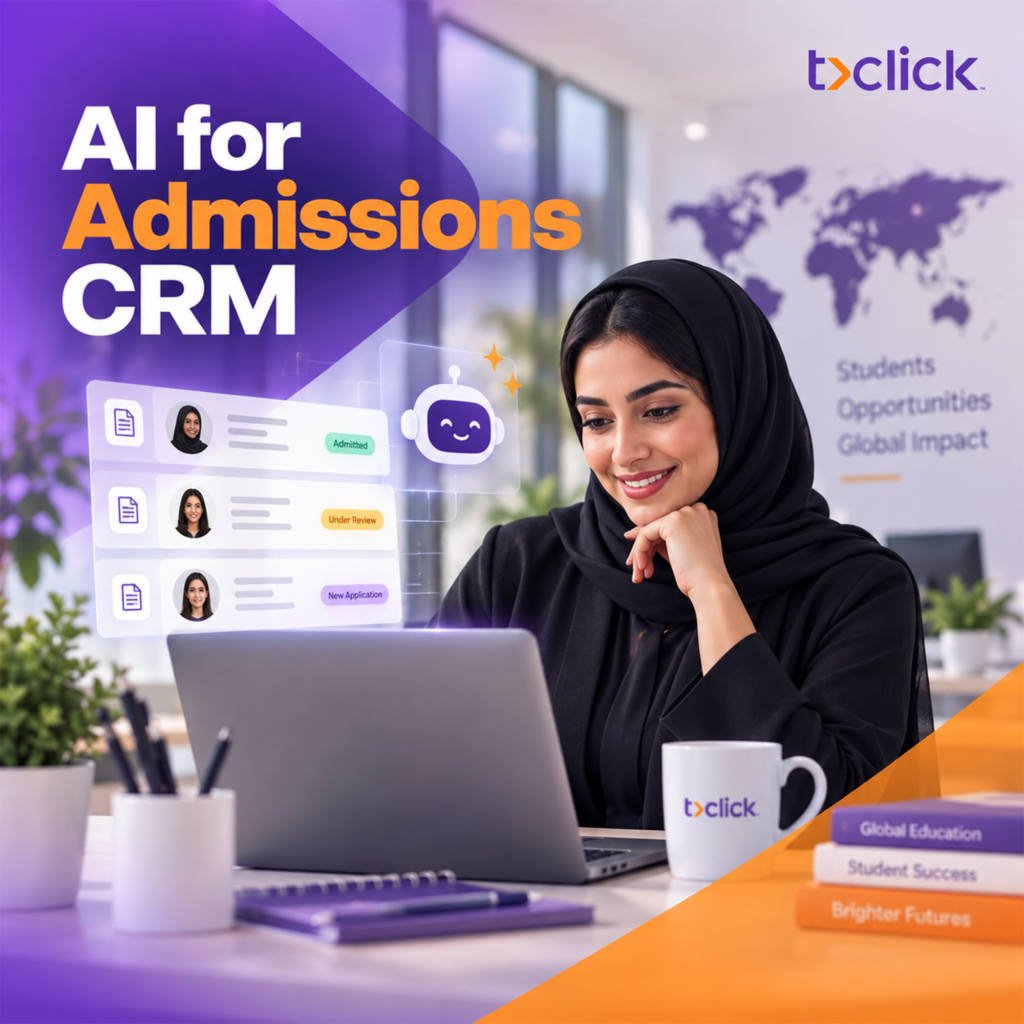
Admissions teams rarely struggle because they have too little information. In most organizations, the opposite is true. Every applicant journey generates data: enquiries, emails, calls, application records, documents, appointments, tasks, notes, status changes, deadlines, and decisions. An admissions CRM brings much of that information together, giving teams a structured way to manage prospective students from first contact through enrollment. Yet storing information and knowing what to do with it are two different things. A counselor may open the CRM in the morning and see hundreds of active applicants. Which application needs attention today? Which applicant has stopped responding? Who is waiting for an answer? Which deadline is approaching? Where is an application stalled, and why? This is where AI for Admissions CRM becomes useful. AI can add an intelligence layer to admissions operations, helping teams interpret applicant context, identify priorities, reduce repetitive work, and take appropriate action faster. Current admissions platforms are already moving in this direction, combining CRM data with AI-assisted engagement, application intelligence, predictive analytics, scoring, and workflow support. The goal, however, should not be to automate every admissions decision. It should be to use AI where it can remove friction while keeping people in control of decisions that require experience, judgment, and empathy. The real value of AI for Admissions CRM is turning the information already inside the CRM into clearer priorities, faster actions, and better applicant experiences. What Does AI for Admissions CRM Mean? AI for Admissions CRM refers to the use of artificial intelligence within or alongside an admissions customer relationship management system to help institutions manage enquiries, prospective students, applicants, communications, workflows, applications, and enrollment more efficiently. Depending on the software, this may include: AI assistants for admissions staff Applicant and enquiry summaries Conversational AI Lead qualification Applicant prioritization AI-assisted lead scoring Predictive analytics Natural-language CRM search Communication assistance Application review support Document intelligence Next-action recommendations AI agents Workflow automation The important word here is context. An AI writing tool can draft an email. An AI capability connected appropriately to an admissions CRM may also understand who the applicant is, where they are in the admissions process, what previous interactions have occurred, and which next steps are still outstanding. That context is what can turn AI from a convenient productivity tool into something more useful for admissions operations. What Does an Admissions CRM Do Without AI? Before evaluating AI, it helps to understand what a strong admissions CRM already does. At its core, an admissions CRM gives institutions a structured environment for managing relationships with prospective students and applicants. It may help teams: Capture enquiries Maintain applicant profiles Track prospects through admissions stages Manage applications Assign counselors or admissions staff Record communication Schedule follow-ups Create tasks Automate predefined workflows Manage documents Monitor enrollment goals Generate reports In simple terms, the traditional CRM model can be described as: Capture → Store → Track → Automate → Report That foundation remains essential. Current higher-education CRM platforms continue to place applicant records, communication, application management, workflow, and enrollment visibility at the center of their admissions solutions even as AI capabilities expand. So, if an admissions CRM can already automate workflows and track applicants, what does AI add? What Does AI Actually Add to an Admissions CRM? The easiest way to understand the difference is to consider the questions each layer of technology helps answer. CRM Records What happened? The CRM stores activities, communications, applications, and applicant data. Automation Executes What should happen when a predefined event occurs? For example: Application submitted → Create review task Analytics Measures What is happening across the admissions funnel? Managers can monitor applications, conversion rates, pipeline stages, and other metrics. AI Interprets What does the available context suggest requires attention? AI can help summarize information, retrieve relevant records, identify signals, or assist employees in understanding what is happening. AI Agents Act Which approved steps can the system perform to move the process forward? Where agentic functionality exists, AI may be permitted to perform defined multi-step activities and escalate to staff when necessary. The term should be evaluated carefully, however, because current higher-education products use “AI agent” to describe systems with very different levels of autonomy. The evolution looks like this: Record → Automate → Measure → Interpret → Act The significant change is not simply that the CRM contains AI. It is that the CRM can increasingly help admissions teams understand and act on the information it already contains. Where Can AI Fit Across the Admissions Funnel? An applicant does not suddenly appear at the application stage. Admissions teams manage a longer journey: Enquiry → Prospect → Qualified Applicant → Application → Review → Decision → Offer → Enrollment AI can support different work at each point. Enquiry At the beginning of the journey, prospective students may ask about programs, requirements, deadlines, fees, or other basic information. AI can support first-line engagement, help identify intent, capture relevant information, and direct enquiries appropriately. Prospect Once the institution knows more about the prospective student, AI can help organize context and support the next appropriate action. Qualification AI can assist with organizing signals such as program interest, intake, timeline, readiness, and other institution-defined criteria. Qualification should help teams manage attention, not become an automatic judgment about a student’s value. Application Once a prospect begins an application, the CRM can track progress while AI helps surface missing information, outstanding tasks, or stalled activity. Review AI can potentially reduce administrative work around application review by summarizing records, organizing information, or helping reviewers retrieve relevant material. Decision The consequences become more significant at this stage. Institutions should establish clear human oversight for consequential admissions decisions rather than assuming that every process should be automated simply because the technology can support it. Offer AI and automation can assist with routine communication, reminders, and next-step coordination. Enrollment The applicant’s history should remain available as the relationship moves toward enrollment. Across the funnel, one principle matters: AI becomes more useful when it understands where the applicant is, not just
Student Recruitment AI Software for Smarter Recruitment
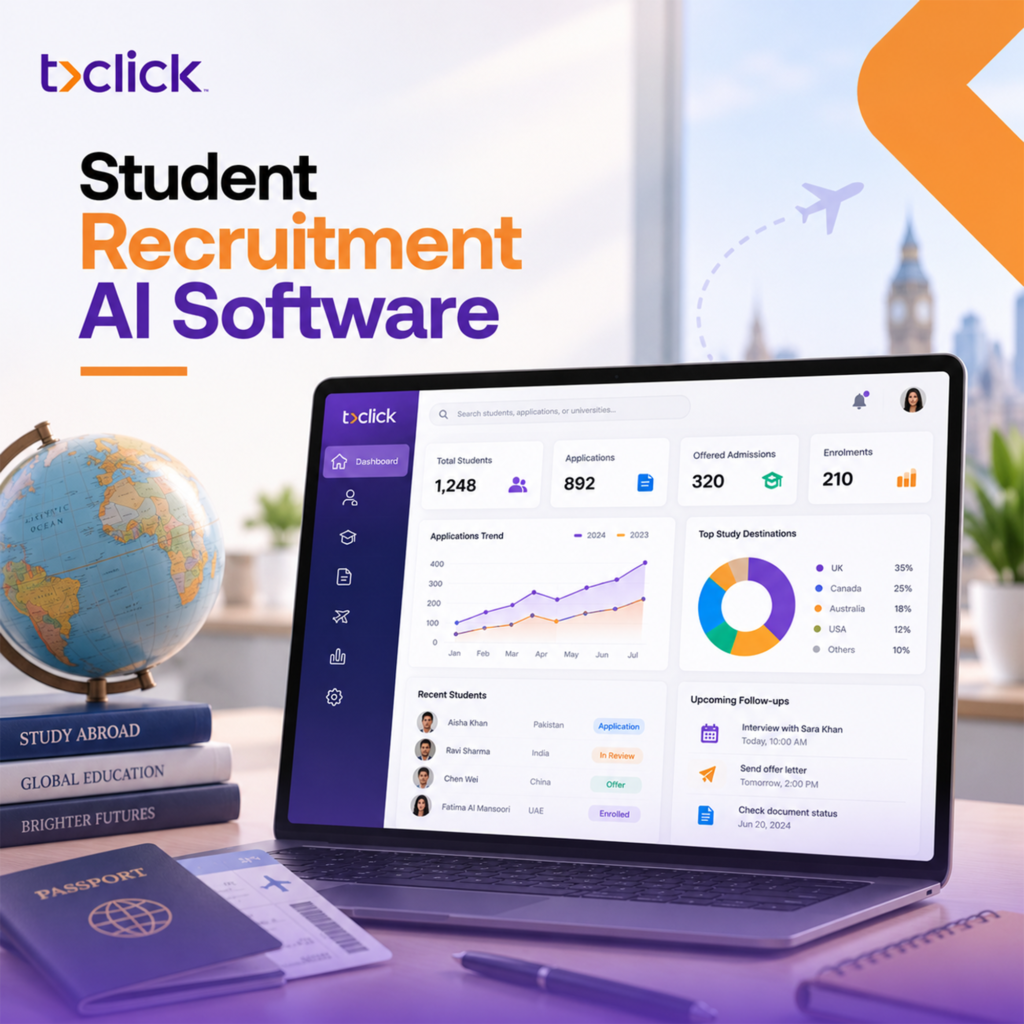
Generating student inquiries is only one part of recruitment. The harder part begins after those inquiries arrive. Every prospective student creates a series of tasks. Someone needs to respond, understand what the student wants, capture the right information, determine the appropriate next step, maintain follow-up, arrange counselling, track applications, collect documents, and keep the student informed as the journey progresses. When inquiry volume is manageable, teams can handle much of this work manually. As recruitment expands across more markets, channels, programs, and intakes, the same approach becomes difficult to scale. The problem is not necessarily a shortage of leads. It is a shortage of time and attention. Student recruitment AI software can help education organizations address this challenge by combining recruitment data, artificial intelligence, workflow automation, communication, and human expertise across the student journey. The objective is not to replace counsellors with algorithms. It is to determine which parts of recruitment genuinely require human expertise and which repetitive tasks can be handled more efficiently with technology. The real opportunity is not using AI to recruit students instead of people. It is using AI to stop people spending their time on recruitment work that never required their expertise. What Is Student Recruitment AI Software? Student recruitment AI software is technology that uses artificial intelligence to help education organizations manage and improve recruitment activities such as inquiry handling, lead qualification, student communication, follow-up, application workflows, task automation, prioritization, and recruitment analysis. The term does not describe one specific feature. Depending on the platform, AI student recruitment software may include capabilities such as: AI-assisted student engagement Lead qualification Conversational AI AI assistants for recruitment staff Lead prioritization Workflow automation Intelligent routing Conversation and record summaries Application support Knowledge retrieval Recruitment analytics Next-action recommendations AI agents for approved workflows This distinction matters when comparing platforms. A chatbot added to a website may use artificial intelligence, but that alone does not create a complete AI student recruitment platform. The more useful question is whether AI connects with the wider recruitment operation. Can it understand relevant student context? Can it help employees identify what requires attention? Can it reduce administrative work? Can it support the next appropriate action without losing human oversight? Those questions reveal much more than an “AI-powered” label on a product page. Why Student Recruitment Needs More Than Traditional Automation Automation has already improved many recruitment processes. A conventional automation system typically follows predefined rules: If X happens → Do Y For example: New inquiry → Send confirmation email Application submitted → Create counselor task No response for three days → Send reminder These workflows are useful because they make predictable processes more consistent. AI introduces a different capability. Rather than only reacting to a predefined event, AI can potentially help interpret information within the recruitment process. The model becomes closer to: What is happening? → What information is relevant? → What does the context suggest? → What should happen next? For instance, traditional automation can send the same follow-up after three days. AI-assisted recruitment may help staff understand whether a lead has already asked a complex question, whether an important deadline is approaching, or whether a conversation requires human attention. This does not make rules obsolete. In fact, clear rules become even more important when AI is introduced. Automation follows rules. AI can help interpret context within those rules. Where Does AI Fit Across the Student Recruitment Lifecycle? Recruitment is not a single transaction. It is a sequence of connected stages. A typical journey may look like: Awareness → Inquiry → Qualification → Counseling → Application → Documents → Offer → Enrollment AI can support different types of work at each stage. Inquiry A prospective student may begin with a simple question about a country, course, intake, or service. AI can help provide appropriate first-line information, identify the purpose of the inquiry, and capture useful context before human intervention is required. Qualification Not every inquiry has the same level of intent or readiness. AI can assist with collecting structured information such as study level, destination interest, target intake, timeline, and other agency-defined qualification criteria. The purpose should be to organize opportunities, not make consequential decisions about students automatically. Counseling Before a consultation, counselors may need to review messages, previous activities, student preferences, and outstanding questions. AI-generated summaries or information retrieval can reduce preparation time and allow the counselor to begin with more context. Follow-Up Students rarely move from inquiry to application in one interaction. AI and automation can support appropriate reminders, task creation, communication drafting, and follow-up workflows so that opportunities are less dependent on individual memory. Application Once an application begins, teams need visibility into progress, pending actions, communication, and ownership. AI can support employees by surfacing relevant information and helping them understand what needs attention. Document Collection Document collection often creates repetitive administrative work. Automated reminders, workflow tasks, and intelligent assistance can help teams manage the process more consistently while keeping unusual cases under human review. Offer Stage Students receiving offers may need guidance about next steps. AI can assist with routine information and internal coordination, while individual academic, financial, or immigration questions remain with qualified staff. Enrollment The final stage still requires continuity. Important recruitment context should not disappear simply because the student has moved further down the pipeline. Across all these stages, one principle remains important: The value of AI increases when it supports the recruitment journey rather than solving one isolated task. What Problems Should Student Recruitment AI Software Solve? Before comparing AI features, education organizations should identify the operational problems they actually need to fix. Recruitment Problem AI-Supported Approach Slow inquiry response Immediate first-line engagement High volume of early-stage inquiries Structured qualification support Repetitive counselor questions AI-assisted routine responses Inconsistent follow-up Workflow and follow-up automation Student information spread across tools Connected recruitment context Staff spending time searching records AI summaries and information retrieval Leads becoming inactive unnoticed Engagement signals and alerts Manual lead routing Intelligent assignment support Application bottlenecks Workflow visibility and reminders Limited management
Conversational AI for Study Abroad Agents and Recruitment
Conversational AI for Study Abroad Agents and Recruitment Discover how conversational AI for study abroad agents can qualify leads, support multilingual conversations, improve response times, and connect inquiries with the right counselor. A student rarely begins the study abroad journey by saying, “I am ready to submit my application.” More often, the process starts with a question. Which country would suit me? Can I apply with my current qualifications? What intake should I choose? How much will it cost? Which documents do I need? Can I speak to a counselor? For study abroad agencies, these conversations are not small interactions. They are often the first stage of the recruitment journey. The challenge is that student inquiries arrive at different times, through different channels, and with very different levels of intent. Some students are only exploring options. Others are ready to apply. Some need a quick answer, while others need an experienced counselor to understand a complex academic or personal situation. That is where conversational AI for study abroad agents can create real operational value. Used well, conversational AI can help agencies respond faster, capture useful student information, qualify inquiries, support multilingual communication, route students to the right counselor, and connect conversations with the wider recruitment process. The goal is not to make AI talk to as many students as possible. The real value is helping more student conversations lead somewhere useful. What Is Conversational AI for Study Abroad Agents? Conversational AI for study abroad agents refers to artificial intelligence technology that can communicate with prospective and existing students through natural conversations while supporting recruitment tasks such as answering routine questions, capturing lead information, identifying intent, qualifying inquiries, scheduling appointments, and routing students to the appropriate next step. Depending on the platform, conversational AI may work across: Website chat WhatsApp Messaging platforms Voice calls SMS Email Student portals It can also connect with a CRM or recruitment system so that important information from the conversation becomes part of the student record. This is what makes conversational AI more useful than a simple FAQ bot. A traditional chatbot may respond to predefined questions. A more advanced conversational AI system can understand different ways of asking the same question, ask follow-up questions, maintain context across the interaction, and support actions that move the recruitment process forward. In practical terms, that can mean turning: “I want to study in the UK.” into a more useful recruitment conversation about: Degree level Subject area Preferred intake Academic background Budget range Timeline Need for counseling The technology becomes valuable when the conversation produces context that a recruitment team can actually use. Why Is Study Abroad Recruitment a Strong Use Case for Conversational AI? Study abroad recruitment has several characteristics that make conversational AI particularly relevant. Students Ask Questions Before They Are Ready to Apply Most prospects are not ready to complete a long application or inquiry form during their first interaction. They may only want to understand whether a destination, program, or service is relevant to them. Conversation creates a lower-friction starting point. Instead of forcing the student into a formal process immediately, an agency can begin by answering the question and gradually identifying what the student needs. Recruitment Happens Across Countries and Time Zones International education agencies often work with students in several markets. A student may contact the agency at a time when no counselor is available. Conversational AI can provide appropriate first-line assistance outside office hours, helping the student move forward rather than waiting until the next working day for a basic response. This does not mean every inquiry should be resolved automatically. It means the agency can remain responsive even when human teams are offline. Agents Handle Large Numbers of Repetitive Questions Counselors often spend time answering the same categories of questions: What countries do you support? Which programs are available? What documents are required? When is the next intake? How do I book a consultation? What happens after I submit my information? These questions matter, but they do not always require a counselor’s expertise. Conversational AI can handle suitable routine interactions while preserving human time for more complex work. Study Abroad Decisions Require Multiple Conversations Choosing a university, destination, course, or application route is rarely a one-message decision. Students ask questions, compare options, disappear for a few days, return with new concerns, and often need reassurance or clarification before taking the next step. That makes continuity important. The agency needs to know what has already been discussed and what should happen next. Different Leads Have Different Levels of Intent Two students can ask almost the same question but be at completely different points in the recruitment journey. One may be researching options for next year. Another may already have documents prepared and want to apply immediately. Conversational AI can help collect signals about intent and readiness so the agency can prioritize follow-up more effectively. Language Can Become a Barrier to Early Engagement International recruitment naturally involves students from different linguistic backgrounds. Even students who are comfortable studying in English may prefer asking early questions in their first language. Multilingual conversational AI can reduce that friction, provided the language quality is strong enough for the market being served. The real recruitment challenge is therefore not simply generating more inquiries. It is giving every inquiry a timely, relevant, and useful next step. How Does Conversational AI Work in a Study Abroad Agency? The exact process depends on the technology, but a typical conversational journey may look like this: Student Message ↓ Intent Recognition ↓ Relevant Information Retrieval ↓ Natural Response ↓ Student Information Capture ↓ Qualification ↓ Next Step, Routing, or Booking ↓ CRM Record or Counselor Handoff For example, a student may ask: “Can I study a master’s degree in Germany?” The system may respond with a general explanation and then ask a few relevant questions, such as: What did you study previously? Which field are you interested in? When do you want to begin? Would you like to speak with a
AI Grounding: What It Means and Why It Matters for CRM
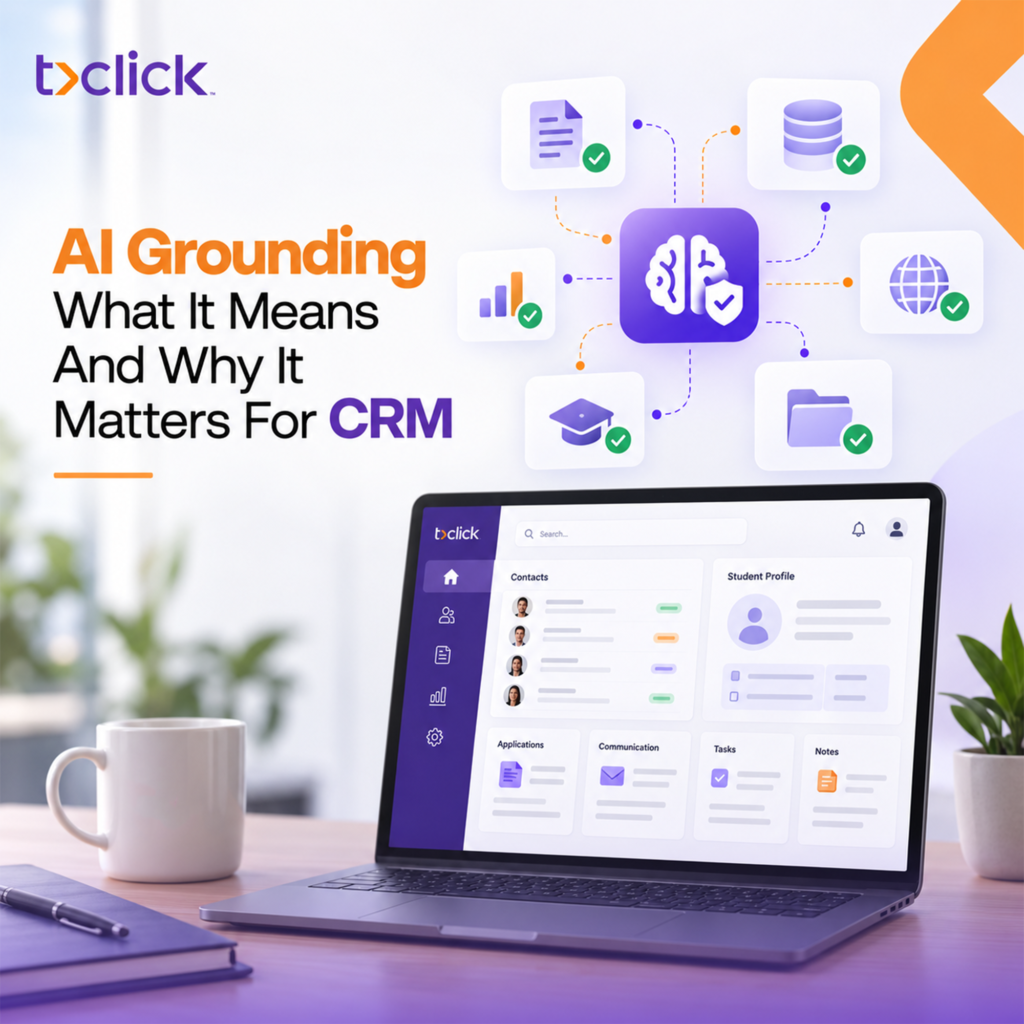
A CRM can contain thousands of customer or student records, years of communication history, documents, tasks, application updates, payment information, notes, and operational data. An AI model, however, does not automatically understand any of it. This distinction is becoming increasingly important as AI assistants move from standalone productivity tools into business systems. It is relatively easy to give users a chatbot that can generate an email or answer a general question. It is much harder to build an AI experience that understands what is actually happening inside an organization and produces answers based on information the organization can trust. That is where AI grounding becomes important. Grounding connects AI-generated responses to relevant, verifiable information rather than relying exclusively on the model’s general knowledge. In a CRM environment, that information can potentially include authorized CRM records, communication histories, internal knowledge, documents, policies, and other business data. For organizations exploring AI-powered CRM, grounding is therefore not simply another technical term. It helps answer a fundamental question: What information is the AI using when it gives us this answer? Understanding that question is essential if businesses want AI that is not only impressive in conversation, but genuinely useful in day-to-day operations. What Is AI Grounding? AI grounding is the process of connecting an AI model’s output to relevant sources of information that can provide factual or contextual support for its response. Large language models are trained on enormous amounts of data and can perform tasks such as answering questions, generating text, summarizing information, and interpreting natural language. However, their general training does not automatically give them access to an organization’s current CRM records or private operational context. Grounding helps bridge that gap. A simplified model looks like this: User Question → Relevant Trusted Information → AI Model → Contextual Response Without grounding, the AI may answer using its general knowledge and whatever information the user includes in the prompt. With grounding, relevant external information can be provided to the model so its response is anchored more closely to the organization’s actual context. This is particularly important in CRM. A general AI model might understand what an “application deadline” means. It does not automatically know that a particular student is applying to a particular institution, has two missing documents, was contacted three days ago, and has a deadline approaching next week. That information exists inside the organization’s operational environment. Grounding is part of what can make that context useful to AI. Why Does AI Need Grounding? Generative AI is powerful partly because it can produce fluent, confident responses across a wide range of subjects. That strength can also create a problem. A response can sound convincing without being adequately supported by the facts relevant to the specific situation. AI systems can generate incorrect or unsupported information, commonly described as hallucination. Grounding is one technique used to reduce this risk by connecting model responses to relevant sources. But reducing hallucinations is only one reason grounding matters. General AI Does Not Automatically Know Your Business A model may understand common CRM concepts. It does not inherently know: Your current customers or students Their latest status Your internal processes Recent conversations Current applications Outstanding documents Your organization’s policies Current tasks and deadlines Internal knowledge that was never part of its training data The difference is between knowing how businesses generally operate and knowing what is happening inside your business now. For CRM use cases, the second type of knowledge is often what employees actually need. Business Information Changes Constantly CRM information is dynamic. A lead becomes qualified. A student submits a document. An application moves to another stage. A customer replies. A payment is recorded. A task is completed. A deadline changes. Even if an AI model had previously encountered some related information, business operations continue changing. Grounding allows an AI system to work with relevant information retrieved from connected sources at the time it is needed rather than depending entirely on what the model learned during training. Business Questions Require Business Context Consider the question: “Which applications need attention today?” A general model cannot answer that meaningfully without access to relevant operational information. To produce a useful response, the system may need context such as: Active applications Current application stages Deadlines Missing requirements Recent activity Outstanding tasks Assigned staff The quality of the answer therefore depends not only on the intelligence of the model, but also on the quality and relevance of the context available to it. Grounded AI vs Ungrounded AI The difference becomes clearer with a simple CRM example. Imagine a study abroad counselor asks: “What should I know before my call with this student?” An AI tool without access to the student’s record cannot reliably know the answer. It might provide general advice about preparing for a student consultation. A grounded CRM experience could potentially use authorized information from the student’s record to help summarize: Preferred Destination → Programs Discussed → Application Status → Previous Communication → Missing Documents → Upcoming Actions The difference is substantial. Ungrounded AI Grounded AI Relies mainly on general model knowledge and prompt context Uses relevant external information as additional context May provide a generic response Can provide an organization-specific response Does not inherently know current CRM records Can work with retrieved CRM information when appropriately connected May lack current business context Can use more recent operational information Harder to connect an answer to internal facts Can be designed to make supporting sources more visible The important point is that grounding does not make AI infallible. It gives the model a stronger factual and contextual foundation for producing its response. What Does AI Grounding Mean in CRM? In CRM, grounding means giving an AI system access to relevant, permitted business information that can help it respond within the context of the organization’s actual operation. Depending on the architecture and use case, grounding sources could include: CRM records Customer or student profiles Communication histories Application information Case histories Internal knowledge bases Product or service information Documents Policies and
AI Student Support Software for Better Student Experiences
A student asks a question before applying. A few days later, they need help understanding the next step. During the application process, they may have questions about documents, deadlines, or their current status. Later, they might contact the organization again through a completely different channel. Each interaction may seem simple on its own. Managing all of them consistently is much harder. Education organizations need to respond quickly without losing context, route requests to the right people, maintain accurate student records, and make sure important issues do not disappear between conversations. As student numbers increase, this work can place significant pressure on counsellors and support teams. AI student support software can help organizations manage this complexity by combining intelligent assistance with student context, communication, workflow automation, routing, and human support. The objective is not to automate every student interaction. It is to make routine support easier while giving staff more time for situations that require judgment, experience, and empathy. Because good student support does not end when a question is answered. It ends when the student understands what happens next. What Is AI Student Support Software? AI student support software is a digital platform that uses artificial intelligence to help education organizations answer student questions, manage support requests, automate appropriate routine processes, identify needs, route inquiries, and connect students with human support when necessary. It is important to distinguish this from a simple chatbot. A chatbot may be one part of an AI student support platform, but student support extends beyond a single conversation. Depending on the software, the wider system may include capabilities such as: Conversational AI Knowledge management Student context and records Case or request management Workflow automation Intelligent routing Human escalation Communication history Multiple communication channels Analytics and reporting Proactive student engagement The difference is operational. A chatbot may answer a question. Student support software should help the organization manage what happens around and after that question. Why Is Student Support Becoming Harder to Manage? Student expectations have changed, but the complexity of education services has also increased. Support teams are no longer dealing with one communication channel, one type of student, or one stage of the journey. Students Expect Faster Responses Students are accustomed to immediate access to information in many areas of their lives. That expectation does not disappear when they contact an education agency or institution. Not every question needs an instant human response, but leaving routine inquiries unanswered for long periods can create unnecessary uncertainty. Support Happens Across Multiple Channels A student may begin on a website, continue through a messaging platform, send an email later, and eventually speak with a counselor. If those interactions remain disconnected, staff have to reconstruct the story manually. The student may also have to repeat information they have already provided. The Same Questions Consume Staff Time Support teams often answer variations of the same questions every day. Students ask about procedures, documents, appointments, applications, deadlines, services, and next steps. These questions deserve accurate responses, but they do not always require the expertise of an experienced counselor. Student Journeys Create Long Histories Education journeys can last for months. By the time a student contacts the organization again, several conversations, tasks, documents, and status changes may already have taken place. Providing useful support requires understanding that history. Not Every Request Has the Same Priority A general question about services is different from a student facing an urgent application issue. Treating every request identically creates inefficient queues and can delay cases that genuinely require immediate attention. Student Numbers Can Grow Faster Than Support Teams Organizations want to serve more students, but increasing headcount at the same rate as inquiry volume is not always practical. The challenge is not simply answering more students. It is maintaining speed, context, and continuity as support volume grows. What Problems Can AI Student Support Software Help Solve? The value of AI becomes clearer when it is connected to specific operational problems. Student Support Problem How AI Can Help Repetitive questions Provide approved answers to routine inquiries After-hours inquiries Offer appropriate support beyond office hours Slow routing Identify intent and direct requests appropriately Fragmented conversations Preserve relevant communication context Repetitive administration Automate suitable workflow steps Unclear ownership Support assignment and case routing Missing context Surface relevant student information Complex inquiries Escalate cases to people Recurring support issues Identify patterns through analytics AI does not automatically solve these problems simply because a platform includes an AI feature. The quality of the knowledge base, integrations, workflows, data, governance, and escalation process all influence the result. Where Does AI Fit Across the Student Journey? Student support begins earlier than many organizations realize. A prospective student researching their options is already interacting with the organization. Support continues as that person becomes a lead, applicant, and eventually an enrolled student or participant. Before the Application AI can help answer appropriate general questions, explain services, collect initial inquiry information, and direct prospective students toward the right next step. During Counseling Routine scheduling questions, reminders, general information, and routing can be handled without requiring the counselor to interrupt a more complex consultation. During the Application Students frequently want to understand what has been completed, what remains outstanding, and what they should do next. Connected student support software can make this process easier to navigate. During Document Collection Routine guidance and reminders can help students understand what needs attention, while unusual or sensitive cases can be escalated to staff. After an Offer Students may need support understanding the next stages of the process. Appropriate general information can be delivered quickly, while individual questions can be directed to the right person. During Ongoing Student Support The relationship does not necessarily end after recruitment. Students may continue to need assistance with services, processes, or other operational matters. The important principle is consistency. AI student support should follow the student journey rather than force every student into the same support workflow. What Should AI Student Support Software Actually Do? A long feature list does not necessarily
CRM-Native AI Assistant for Smarter CRM Workflows
AI has become a common part of CRM software, but the way it is integrated can vary significantly from one platform to another. Some systems offer an AI assistant through a sidebar or embedded chat window. Others connect an external AI service to CRM data through APIs or integrations. A more deeply integrated model goes further by connecting AI directly with the CRM’s data structure, permissions, workflows, and records. That is where the idea of a CRM-native AI assistant becomes important. A CRM-native AI assistant is designed to operate as part of the CRM environment itself. Instead of acting as a separate intelligence layer that receives limited information from the outside, it works closer to the data, user roles, workflows, and operational context already managed inside the CRM. This distinction matters because AI is only useful when it has the right context. If an assistant knows only a contact’s name and email address, its value is limited. If it can work with the relevant CRM record, understand recent activity, respect user permissions, recognize workflow stages, and support appropriate actions, it becomes far more useful. The difference is not where the AI button appears. The difference is where the intelligence actually lives. What Is a CRM-Native AI Assistant? A CRM-native AI assistant is an intelligent assistant designed to work directly within the CRM environment and use the CRM’s own context, records, permissions, and workflows to support users. Depending on the platform, a CRM-native AI assistant may help users: Summarize records Answer questions about CRM data Review recent activity Identify outstanding work Prepare follow-ups Suggest next steps Create or prepare tasks Support CRM updates Assist with workflow execution The key characteristic is not simply that the AI appears inside the CRM interface. A truly native assistant is more deeply connected to the system around it. That includes the CRM’s data model, user permissions, workflow logic, and operational structure. By comparison, a connected AI tool may still be useful, but it often depends on external integrations to retrieve information or perform actions. That does not make connected AI ineffective. It simply means the architecture is different. Why Does “Native” Matter in AI CRM? The word “native” can sound technical, but its practical impact is easy to understand. AI becomes more useful when it has access to the right information at the right time and can work within the same operational rules as the people using the CRM. AI Is Only as Useful as the Context It Can Access An AI assistant can produce a polished answer while still missing important information. For example, imagine a counselor asks: “What should I know before speaking with this student?” If the assistant can only access basic contact information, the answer may be generic. If the assistant can work with authorized CRM context such as recent communication, application stage, tasks, notes, document status, and previous activity, the answer can become much more relevant. This is one of the strongest arguments for CRM-native AI. The closer the AI is to the real operational context, the less users need to explain manually. CRM Data Changes Constantly A CRM is not a static database. Records change every day. A lead moves to a new stage. A student submits documents. A counselor completes a task. A new conversation is added. An application changes status. A manager updates ownership. For AI to remain useful, it needs to work with current information rather than relying on outdated snapshots. CRM-native AI can reduce the distance between live CRM activity and the intelligence built around it. AI Becomes More Valuable When It Can Support Actions Many AI tools are excellent at generating text. That is useful, but CRM work involves much more than writing. Users also need to: Update records Create tasks Move workflows forward Review statuses Assign responsibilities Trigger follow-up processes Maintain accurate activity histories A CRM-native AI assistant can become more useful when it can support appropriate actions inside the same system where the work is managed. Governance Becomes More Important as AI Becomes More Capable The more an AI assistant can see and do, the more important permissions and controls become. If AI can access sensitive records or help update CRM information, organizations need clear boundaries. That means answering questions such as: What data can the assistant access? Does AI follow existing user permissions? Which actions require human approval? Are AI-assisted actions logged? Can admins limit what the assistant can do? Native integration becomes especially valuable when the AI can operate within the same governance structure already used by the CRM. CRM-Native AI Assistant vs. CRM-Connected AI Assistant A CRM-native AI assistant and a CRM-connected AI assistant can both provide value, but they work differently. CRM-Native AI Assistant CRM-Connected AI Assistant Operates within the CRM environment Operates through an external connection Works with native CRM context Receives selected data through an integration Can potentially follow CRM permissions directly May require separate permission mapping Can participate more closely in CRM workflows Workflow actions depend on integration design Works with the CRM’s data model May need data translation between systems Can reduce synchronization complexity May rely on syncing or API calls Keeps intelligence closer to the system of record Adds another layer between AI and CRM data The important point is that connected AI is not automatically inferior. For many organizations, external AI tools can work very well. The better question is: How much context, control, and workflow capability survives through the connection? That is what buyers should evaluate. Built-In AI Does Not Always Mean CRM-Native AI The terms “built-in” and “native” are often used as if they mean the same thing. They do not necessarily. A built-in AI assistant may appear directly inside the CRM interface. Users may open it from a sidebar, button, or embedded panel. That improves convenience. But the AI may still rely on an external service behind the scenes and access only a limited portion of CRM data through an integration. By contrast, CRM-native AI describes how deeply
AI Chatbot for Education Agencies: Smarter Student Support
Education agencies deal with questions all day. A prospective student wants to know which destinations the agency supports. Another wants to understand the application process. An existing applicant is asking what happens after submitting documents. Someone else wants to book a consultation, while another student simply needs to speak with the right counselor. None of these conversations is unusual. The challenge appears when hundreds or thousands of them happen across different stages of the student journey. Counsellors can quickly find themselves answering the same routine questions while more complex cases wait for their attention. Prospective students may submit inquiries outside working hours and receive no immediate response. Important context can also disappear when conversations happen in one system while student records are managed somewhere else. An AI chatbot for education agencies can help solve part of this communication problem. It can provide immediate answers to appropriate questions, collect initial information, support lead capture, direct students toward relevant next steps, and escalate conversations when human expertise is required. But the value of an education chatbot should not be measured by how many conversations it can automate. A better question is, does it help the student move forward? What Is an AI Chatbot for Education Agencies? An AI chatbot for education agencies is a conversational system designed to interact with prospective or current students, understand their questions, provide appropriate information, collect relevant details, and guide conversations toward the next suitable step. Unlike a traditional rule-based chatbot that relies heavily on predefined responses and rigid conversation paths, an AI chatbot can understand different ways of expressing the same intent. A prospective student might ask: “What documents do I need?” Another might write: “Which papers should I prepare before applying?” Although the wording is different, the underlying intent may be similar. This conversational flexibility can make an AI chatbot for education more natural to use. However, understanding a question is only part of the job. The chatbot also needs accurate information, a defined role, appropriate access to relevant data, clear escalation rules, and a reliable way to transfer complex conversations to people. A smarter conversation does not automatically create a better student experience. The chatbot needs to understand both what the student is asking and what should happen next. Why Are Education Agencies a Strong Use Case for AI Chatbots? International education creates a particular communication challenge. Students may be researching destinations from different countries and time zones. Recruitment journeys can last for months. The same agency may simultaneously support prospective students, active applicants, students waiting for offers, and people preparing for the next stage of their journey. An AI chatbot can be particularly useful in this environment for several reasons. Students Ask Questions Outside Office Hours A student researching study options at 11:00 p.m. does not necessarily expect a full counselling session. They may simply want to know whether the agency supports their preferred destination or how to begin the process. Providing appropriate basic information immediately can help the student continue rather than waiting until the next working day. For international education agencies serving multiple markets, this becomes even more important because the student’s working hours may not match the agency’s. Many Questions Are Repeated Counselors frequently receive variations of the same operational questions. Students may ask about the application process, required documents, consultations, available services, next steps, or how to contact a particular department. These questions need accurate answers, but they do not always require the expertise of a counselor. That creates an important distinction: A question may need an answer. A student decision may need a counselor. A well-designed chatbot helps an agency separate the two. Response Delays Can Interrupt Recruitment Momentum Student interest is not static. Someone researching study options today may contact several organizations before deciding where to continue the conversation. An AI chatbot for student recruitment can help ensure that an initial inquiry does not simply sit unanswered because it arrived outside working hours or during a particularly busy period. This does not mean every inquiry should immediately enter an automated sales sequence. It means students should have a clear path forward when an appropriate answer can be provided. Recruitment Volume Can Grow Faster Than the Team As an agency grows, communication volume grows with it. Without better systems, increasing student numbers can result in more interruptions, longer response times, and greater administrative pressure on counsellors. The goal of conversational technology is not to make counsellors answer more questions per hour. It is to reduce the number of routine questions that require counselor involvement in the first place. Where Should an AI Chatbot Fit Into the Student Recruitment Journey? A chatbot should not be treated as a separate communication feature sitting on the agency’s website. Its role should be considered in relation to the complete student journey. Student Journey Stage Potential Role of the Chatbot Website Visit Answer appropriate general questions and capture interest Initial Inquiry Collect basic information and identify intent Qualification Gather preliminary details before counselor involvement Consultation Help direct the student toward the appropriate booking or team. Application Explain approved general processes and next steps. Documents Answer routine process-related questions. Offer Stage Provide relevant general guidance and route complex questions. Existing Student Support Handle appropriate routine requests. Complex Case Escalate the conversation to a person. The distinction is important. The chatbot should not own the student journey. It should help students move through the parts of that journey where conversational automation makes sense. The underlying recruitment infrastructure still matters. Our guide to CRM software for educational organizations explains how a purpose-built CRM can connect student information and workflows across the wider recruitment process. What Should an AI Chatbot for Education Agencies Actually Do? A useful chatbot needs a clear job. Trying to make it answer every possible question usually creates a worse experience, not a better one. For most education agencies, several use cases deserve particular attention. Answer Frequently Asked Questions Immediately Routine questions are an obvious starting point. An education agency chatbot may
CRM With Built-In AI Assistant: A Smarter Way to Work
Most organizations do not have a shortage of customer or student data. Their CRM already contains contact details, conversations, notes, tasks, applications, documents, pipeline activity, and reporting data. The problem is what happens when someone needs to use that information. A team member may have to search for the right record, review previous activities, read several notes, check outstanding tasks, open communication histories, apply filters, and compare different pieces of information before answering a relatively simple question. What happened with this contact last week? Which cases require attention today? What should happen next? Which records have been inactive for too long? A CRM with a built-in AI assistant can shorten the distance between those questions and the information required to answer them. Instead of moving data between the CRM and a separate AI tool, users can work with intelligent assistance in the same environment where the relevant records and workflows already exist. The real advantage is not simply having AI inside the CRM interface. It is having an assistant that understands the context of the work being done. What Is a CRM With a Built-In AI Assistant? A CRM with a built-in AI assistant combines traditional customer relationship management capabilities with an intelligent assistant that works within the CRM environment. Depending on the platform, the assistant may help users summarize records, retrieve information, answer questions about CRM data, prepare communication, identify priorities, analyze activity, or assist with routine tasks. For example, instead of opening a record and reading a long history of notes and activities, a user might ask: “Summarize what has happened with this contact during the last 30 days.” A manager might ask: “Which active cases have not received a follow-up this week?” A counselor working in student recruitment might ask: “What should I know about this applicant before our call?” The difference is context. A general AI tool can help write or summarize information that a user provides. A built-in CRM assistant can potentially work with the relevant information already available within the CRM, subject to the user’s access permissions and the capabilities of the platform. That makes it less of a separate productivity tool and more of an intelligent interface to the CRM itself. Built-In AI Assistant vs. Separate AI Tool: What Is the Difference? External AI tools can be extremely useful, but using them alongside a CRM often introduces additional steps. Imagine a counselor who wants help preparing for a student call. Without integrated assistance, the workflow might look like this: Open CRM → Find student → Review history → Copy relevant information → Open AI tool → Explain context → Generate summary → Review → Return to CRM A properly integrated assistant can make the process much shorter: Open record → Ask → Review → Act The distinction becomes clearer when the two approaches are compared directly. CRM With Built-In AI Assistant Separate AI Tool Works within the CRM environment Requires another application or interface Can potentially use authorized CRM context Context often has to be provided manually. Can understand the record being reviewed The user may need to explain the record Keeps assistance close to the workflow Often requires switching between systems May connect with CRM tasks and actions Usually requires integrations for CRM actions Can operate within CRM permissions May involve separate access controls Reduces unnecessary data movement May require copying information between systems This does not make external AI tools unnecessary. They remain useful for many general tasks. The advantage of built-in assistance appears when the work depends heavily on information already stored in the CRM. What Should a Built-In CRM AI Assistant Actually Be Able to Do? An AI assistant should solve practical problems, not simply add another chat window to the software. Its value depends on how effectively it helps people complete the work they already use the CRM to manage. Understand the Record You Are Working On Context is one of the most important differences between useful CRM intelligence and a generic writing assistant. If a user is viewing a student, customer, application, or opportunity record, the assistant should be able to work with relevant information available within that context, provided the user is authorized to access it. The user should not have to repeatedly explain who the person is, what happened previously, or which stage they have reached. The CRM already contains that information. The assistant should help make it easier to use. Summarize Long CRM Histories CRM records become more difficult to review as relationships develop. A record that has existed for six months may contain dozens of activities, notes, messages, status changes, tasks, and internal updates. Reading the entire history before every important conversation is inefficient. A built-in assistant can help summarize relevant activity so users can understand the current situation before deciding whether they need to inspect individual records in greater detail. In student recruitment, for example, a useful summary might cover the student’s current application stage, recent communication, outstanding requirements, completed activities, and upcoming actions. The assistant reduces the time required to build context. It does not remove the underlying record or the need to verify important details. Answer Questions Using Natural Language Traditional CRMs depend heavily on menus, filters, reports, fields, and dashboards. Those tools remain valuable, but users do not always think in filters. They think in questions. A recruitment manager may want to know: “Which applications have not progressed this week?” A counselor might ask: “Which of my students still have incomplete documents?” A team leader could ask: “Which new inquiries have not received a follow-up?” Natural-language interaction can provide another route to CRM information without requiring users to know exactly which report, filter, or screen contains the answer. Prepare Users for Calls and Meetings A large amount of preparation happens before an important conversation. Employees often review previous notes, recent communication, outstanding tasks, and the current status of a relationship before making a call. A CRM assistant can help consolidate that context. A user could ask: “What should
AI-Powered Student Recruitment CRM for Smarter Growth
Student recruitment teams rarely struggle because they lack information. The bigger challenge is knowing what deserves attention first. A typical recruitment operation may be handling new inquiries, counselling notes, applications, documents, offers, payments, deadlines, conversations, and enrollment data at the same time. As the number of students grows, so does the amount of information teams need to process before deciding what to do next. A traditional CRM helps organize that work. But organization alone does not always solve the problem. An AI-powered student recruitment CRM adds another layer: the ability to help teams interpret recruitment information, surface priorities, reduce repetitive work, and make operational decisions with better context. For education agencies and international student recruitment organizations, that distinction matters. The goal is not to automate every student interaction. It is to create a recruitment operation where counsellors spend less time searching, checking, and updating—and more time advising students and moving important cases forward. What Is an AI-Powered Student Recruitment CRM? An AI-powered student recruitment CRM combines the core capabilities of a recruitment CRM with artificial intelligence that can assist teams in understanding data, prioritizing work, preparing communication, identifying patterns, and navigating recruitment workflows. A conventional CRM might tell a manager that 250 applications are currently active. An AI-powered CRM can make that information easier to interrogate: Which applications have not progressed recently? Which students have approaching deadlines and incomplete requirements? Which leads need follow-up today? Where is the recruitment pipeline slowing down? The underlying CRM remains essential. It contains the student records, stages, activities, tasks, communication, documents, and other information that provide context. AI makes that context easier to use. That is also why adding a chatbot to a CRM does not automatically make it an intelligent recruitment platform. The real value appears when AI works with the recruitment operation rather than sitting beside it. For a broader look at where this technology is heading, explore the future of international student recruitment software. Traditional CRM vs. AI-Powered Student Recruitment CRM Traditional CRMs solved an important problem: they gave recruitment organizations a structured place to manage relationships and processes. The next challenge is helping teams make better use of everything stored there. Traditional Student Recruitment CRM AI-Powered Student Recruitment CRM Stores recruitment data Helps teams interpret recruitment data Tracks leads and applications Helps surface leads and applications requiring attention Records communication Can summarize relevant communication context Uses filters to find records Can support natural-language information retrieval Provides reports and dashboards Can help users investigate patterns conversationally Executes predefined automation Can support more context-aware workflows Shows what has happened Can help identify what may need attention next This does not mean every traditional feature should be replaced by AI. Dashboards remain useful. Filters remain useful. Structured reports remain useful. Rule-based automation remains useful. AI adds value when it makes those systems easier to work with or helps users see something they might otherwise have needed more time to discover. Why Student Recruitment Is a Strong Use Case for AI-Powered CRM International student recruitment combines high volumes of operational activity with decisions that remain deeply personal. A single student journey may involve multiple people, departments, systems, and stages over several months. That creates several conditions where intelligent assistance can be valuable. Student Journeys Generate Large Amounts of Context A student record can contain much more than contact information. There may be counselling notes, destination preferences, program choices, application updates, uploaded documents, communication history, payment records, tasks, deadlines, offers, and visa-related progress. When that history becomes long, simply understanding where a student stands can take time. Recruitment Teams Manage Hundreds of Journeys at Once A counselor may know their students well, but human attention is limited. As volumes increase, the question becomes less about whether the information exists and more about whether the team can consistently spot the records that require attention. Timing Can Affect Recruitment Outcomes An unanswered inquiry, approaching application deadline, missing document, or stalled application can become more difficult to resolve when it is discovered late. Technology that helps teams identify these situations earlier can improve operational consistency. Administrative Work Repeats Constantly Assigning leads, checking requirements, preparing reminders, updating tasks, reviewing records, and compiling information can consume hours that could otherwise go toward student-facing work. This is where AI and automation can complement each other. How Does AI Work Inside a Student Recruitment CRM? The easiest way to understand an intelligent CRM is not to start with the technology. Start with the recruitment situation. Imagine an applicant whose deadline is approaching. A required document is still missing, there has been no recent activity, and the student previously engaged regularly with the counselor. Several pieces of information already exist. An intelligent workflow can help turn those separate signals into useful context: Recruitment Data → Student Context → Relevant Insight → Suggested Priority → Appropriate Action → Human Oversight The CRM provides the data. AI helps interpret the context. Automation may handle predictable steps. The counselor or manager remains responsible for decisions that require professional judgment. This distinction is important because an AI-powered CRM should not simply automate more work. It should help determine where automation is appropriate and where people need to remain involved. 8 Ways AI Can Improve Student Recruitment CRM The most useful AI capabilities are not necessarily the ones that sound the most advanced. They are the ones that remove real friction from recruitment operations. 1. Prioritize Leads More Effectively Not every new inquiry requires the same level of attention at the same moment. One prospect may have submitted detailed information, selected an intake, responded to previous communication, and shown clear intent. Another may have submitted only a basic inquiry and never engaged again. An AI-powered CRM can help teams evaluate available signals and surface leads that may deserve attention sooner. This does not mean letting an algorithm decide who is “valuable.” It means giving counsellors better context for prioritizing limited time. 2. Reduce Delays in Lead Response and Follow-Up A lead does not always disappear because they