
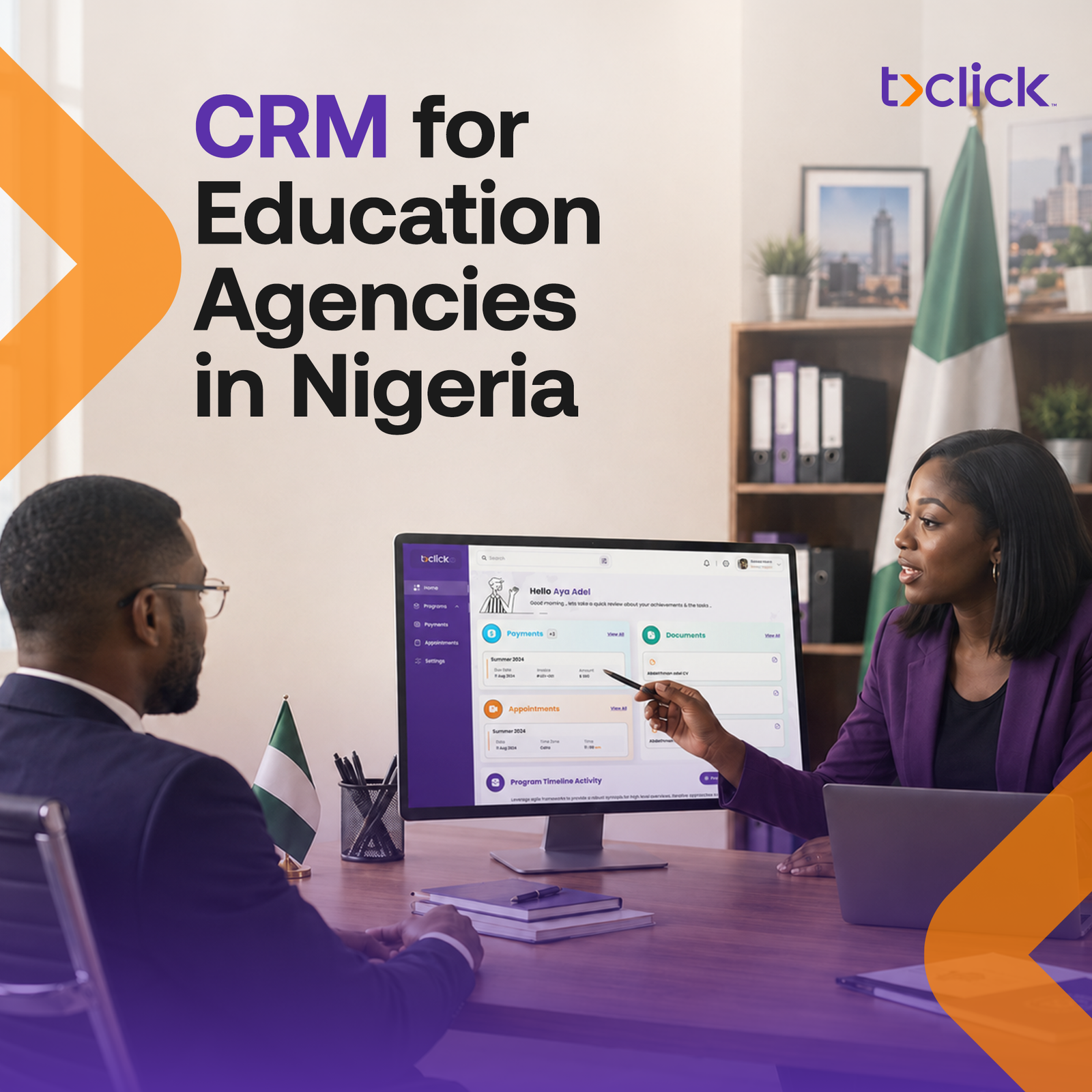
Nigeria is one of the most active student recruitment markets in Africa.
Every year, thousands of Nigerian students explore international education opportunities in destinations such as the United Kingdom, Canada, the United States, Australia, Europe, and other global study markets. For many students, studying abroad is not only an academic decision. It is a long-term investment in career growth, international exposure, professional development, and future opportunities.
For education agencies in Nigeria, this creates a strong growth opportunity.
However, it also creates operational complexity.
Agencies are no longer managing a small number of student inquiries through phone calls and spreadsheets. They are now handling large volumes of leads across websites, social media, WhatsApp, email campaigns, education fairs, referrals, and university partnerships.
At the same time, agencies must manage consultations, applications, documents, admissions requirements, visa processes, university communication, counselor performance, and enrollment tracking.
Without a structured system, these workflows can quickly become difficult to control.
This is why many organizations are investing in a CRM for education agencies in Nigeria.
A modern education CRM helps agencies centralize student recruitment, automate follow-ups, manage applications, organize documents, track visa stages, strengthen university partnerships, and gain complete visibility across the student journey.
Instead of working across disconnected spreadsheets, inboxes, and manual records, agencies can manage their entire recruitment operation from one platform.
Solutions like Ticlick help education agencies build more scalable recruitment systems by connecting student data, communication, admissions workflows, university relationships, and reporting in one organized environment.
In this guide, we will explore why Nigerian education agencies need CRM software, what features matter most, and how the right platform can improve recruitment performance, operational efficiency, and long-term agency growth.
Why Education Agencies in Nigeria Are Growing Rapidly
Rising Demand for International Education
Nigeria has a strong and growing demand for international education.
Many students and families view studying abroad as a pathway to better academic quality, global exposure, career opportunities, and long-term professional mobility.
Popular study destinations often include:
| Destination | Why Nigerian Students Consider It |
| United Kingdom | Strong university reputation and popular postgraduate programs |
| Canada | Study-to-work opportunities and immigration pathways |
| United States | Wide program variety and global academic recognition |
| Australia | International student support and career pathways |
| Europe | Affordable tuition options and specialized programs |
This demand creates significant opportunities for education agencies.
However, it also means agencies must manage more inquiries, more applications, more university relationships, and more student expectations than ever before.
A CRM helps agencies organize this growth instead of allowing it to become operational pressure.
Increasing Competition Among Education Agencies
The Nigerian education recruitment market is highly competitive.
Students can choose from:
- local study abroad agencies
- international education consultants
- university representatives
- online admissions platforms
- destination-specific recruitment companies
This means agencies must compete not only on university partnerships, but also on speed, trust, communication quality, and student experience.
Students are more likely to continue with an agency that responds quickly, explains options clearly, tracks their application professionally, and keeps them updated throughout the process.
A CRM for education agencies in Nigeria helps teams deliver this level of service consistently.
It allows consultants to manage student information, follow-ups, documents, and application updates without depending on memory or manual spreadsheets.
Growing Student Expectations
Today’s students expect a digital and personalized experience.
They want agencies to understand their goals, recommend suitable programs, explain admission requirements, and provide timely updates.
They also expect communication through familiar channels such as WhatsApp, email, phone calls, and social media.
This creates a challenge for agencies.
When student conversations are spread across different consultants and communication tools, it becomes difficult to maintain a complete record of each student’s journey.
A CRM centralizes student history so consultants can provide more informed and personalized support.
This improves the student experience and helps agencies build stronger trust.
Expansion of Global University Partnerships
Education agencies in Nigeria often work with multiple universities, colleges, pathway providers, and international institutions.
Each partner may have different:
- admission requirements
- application deadlines
- tuition structures
- scholarship options
- document requirements
- commission agreements
- communication processes
Managing these partnerships manually becomes difficult as the network grows.
A CRM helps agencies track university contacts, student applications, recruitment outcomes, and partner performance in one place.
This makes partnership management more strategic and less reactive.
The Need for Scalable Recruitment Operations
Growth is valuable, but only when the agency can manage it properly.
An agency may generate hundreds or thousands of leads, but without the right system, many of those opportunities may never convert into applications or enrollments.
Scalable recruitment operations require:
- clear lead pipelines
- organized student records
- structured follow-up workflows
- application tracking
- document visibility
- reporting dashboards
- team performance monitoring
A CRM provides the operational foundation needed to manage higher student volumes without losing quality or control.
Education agencies looking to centralize recruitment, admissions, and student management often invest in CRM software for educational organizations to improve operational efficiency and visibility.
The Biggest Challenges Facing Education Agencies in Nigeria
Managing High Volumes of Student Inquiries
One of the most common challenges Nigerian education agencies face is lead volume.
Students may contact agencies through:
- website forms
- WhatsApp messages
- Instagram and Facebook campaigns
- Google Ads
- education fairs
- referrals
- walk-ins
- university events
Each inquiry represents a potential student.
But when leads are not captured properly, agencies risk losing valuable opportunities.
For example, a student may ask about studying in Canada through WhatsApp, then later send documents by email, while another consultant records notes in a spreadsheet. Without a centralized system, the student journey becomes fragmented.
A CRM helps agencies capture, assign, and track every inquiry from the first interaction.
This ensures that no student is ignored, duplicated, or forgotten.
Student Information Is Scattered Across Multiple Systems
Many agencies rely on different tools for different activities.
A typical agency may use:
| Activity | Common Manual Tool |
| Lead tracking | Excel or Google Sheets |
| Communication | WhatsApp and email |
| Documents | Google Drive or folders |
| Applications | Spreadsheets |
| Team tasks | Notes or messaging apps |
| Reporting | Manual reports |
This creates information silos.
No one has a complete view of the student.
A consultant may know the student’s preferred destination, another team member may have the documents, and the manager may only see partial reporting.
A CRM brings all this information together into a single student profile.
This improves visibility, team collaboration, and service quality.
Following Up With Thousands of Prospective Students
Student recruitment rarely happens after one conversation.
Many students need several touchpoints before they apply.
They may need:
- destination comparisons
- tuition explanations
- scholarship guidance
- visa information
- parent consultation
- document support
- application reminders
When follow-ups are managed manually, they are easy to miss.
A CRM helps agencies create structured follow-up workflows.
For example, once a student completes a consultation, the system can remind the consultant to send program options, request documents, or schedule the next call.
This improves conversion rates because students remain engaged throughout the decision-making process.
Coordinating Applications Across Multiple Destinations
Nigerian students often apply to several destinations at the same time.
A student may compare Canada, the UK, and Australia before choosing the best option.
Each country has different timelines, admission requirements, visa processes, and documentation standards.
Agencies must manage:
- multiple university applications
- destination-specific requirements
- document checklists
- offer letters
- payment deadlines
- visa preparation stages
Without a CRM, this becomes difficult to monitor at scale.
A CRM helps agencies track every application and understand where each student stands across multiple destinations.
Managing Visa and Admissions Processes
Visa support is one of the most sensitive parts of the student journey.
Students expect accurate guidance, clear checklists, and timely reminders.
Agencies often need to track:
- visa documents
- financial proof
- appointment dates
- embassy requirements
- medical or biometric steps
- pre-departure preparation
If these steps are managed manually, delays can happen.
A CRM helps teams create structured visa workflows so students do not miss important requirements.
This improves the student experience and reduces operational risk.
Tracking Recruitment Performance Across Teams
As agencies grow, leadership teams need visibility into performance.
They need to know:
- which campaigns generate the best leads
- which counselors convert the most students
- which destinations are most popular
- which universities produce the strongest outcomes
- where students drop off in the process
Without reporting dashboards, managers often rely on manual updates or assumptions.
A CRM provides real-time recruitment analytics, helping agencies make better decisions and improve performance over time.
As more Nigerian students pursue overseas education opportunities, agencies can benefit from international student placement software global to manage placements, applications, and recruitment activities across multiple destinations.
What Is a CRM for Education Agencies?
More Than a Traditional CRM
A CRM for education agencies is not just a contact database.
It is a specialized platform designed to manage student recruitment, admissions, communication, university partnerships, documents, visa stages, and enrollment workflows.
Traditional CRMs are usually built for sales teams.
Education agencies need more than sales tracking.
They need a system that understands the student lifecycle.
This includes:
- inquiry management
- consultation tracking
- program matching
- application management
- document collection
- admissions tracking
- visa support
- enrollment monitoring
- alumni and referral management
A CRM for education agencies in Nigeria should support these workflows from one centralized platform.
A Complete Student Lifecycle Management Platform
The student journey does not move in a straight line.
A student may inquire today, request information next week, submit documents after one month, apply to multiple universities, receive more than one offer, and need visa support later.
A CRM helps agencies manage this full journey.
The student lifecycle usually includes:
Inquiry → Consultation → Program Matching → Application → Offer → Visa → Enrollment → Alumni
When every stage is visible, consultants can provide better support and managers can monitor agency performance more effectively.
Why Education Agencies Need Specialized CRM Software
Generic CRM platforms may help with basic lead management, but they often lack education-specific functionality.
Education agencies need tools for:
- student profile management
- application tracking
- document workflows
- destination preferences
- university partner management
- visa tracking
- recruitment reporting
- counselor performance monitoring
This is why education-focused CRM software is usually more suitable for agencies managing international recruitment.
Traditional CRM vs Education CRM
| Feature | Traditional CRM | Education CRM |
| Lead Management | Yes | Yes |
| Student Recruitment Pipelines | Limited | Strong |
| Application Management | No | Yes |
| University Partner Management | Limited | Yes |
| Visa Tracking | No | Yes |
| Student Lifecycle Management | Limited | Yes |
| Document Management | Basic | Education-focused |
| Recruitment Reporting | Limited | Advanced |
| Counselor Performance Tracking | Limited | Yes |
| Multi-Destination Workflows | No | Yes |
The difference is clear.
An education CRM is designed to manage the real operational needs of student recruitment agencies.
The Student Recruitment Lifecycle Every Nigerian Agency Should Manage
Stage 1: Lead Capture and Inquiry Management
Every student journey begins with an inquiry.
The first challenge is making sure every inquiry is captured and assigned correctly.
A CRM helps agencies collect leads from different sources and organize them into a structured pipeline.
This allows managers to see:
- how many leads are coming in
- where they came from
- who is responsible for each lead
- which leads need urgent follow-up
- which leads are ready for consultation
This improves accountability and reduces lost opportunities.
Stage 2: Student Consultation and Qualification
Consultation is where the agency begins to understand the student’s goals.
Consultants need to assess:
- academic background
- preferred destinations
- budget
- program interests
- career goals
- English language level
- admission eligibility
A CRM allows consultants to record all this information inside the student profile.
This creates a stronger foundation for personalized guidance.
Stage 3: Program and University Matching
Choosing the right program is one of the most important decisions in the student journey.
A good recommendation should consider:
| Student Need | Matching Consideration |
| Budget | Tuition and living costs |
| Career Goals | Program relevance |
| Academic Profile | Entry requirements |
| Destination Preference | Country and city options |
| Visa Goals | Post-study options |
| Timeline | Intake availability |
A CRM helps consultants manage recommendations more professionally and track which options were presented to each student.
Stage 4: Application and Document Management
Once a student chooses universities, the application process begins.
This stage involves many details.
Agencies must collect, review, and submit documents accurately.
Documents may include:
- academic transcripts
- certificates
- passport copies
- statement of purpose
- recommendation letters
- CV
- English test scores
- financial documents
A CRM centralizes these documents and helps teams see what is missing.
This reduces delays and improves application quality.
Stage 5: Offer Letter and Admissions Tracking
Receiving an offer letter is a major milestone in the student journey, but it is not the end of the admissions process.
Education agencies often manage students who receive multiple offers from different institutions. Consultants must help students evaluate their options, compare programs, understand financial commitments, and make informed decisions.
Without a centralized system, tracking these activities becomes difficult.
A CRM helps agencies monitor:
- Submitted applications
- University responses
- Conditional offers
- Unconditional offers
- Acceptance deadlines
- Deposit payments
- Enrollment status
This visibility ensures that no important deadline is missed and that students receive timely guidance throughout the admissions stage.
For agencies managing hundreds of students simultaneously, admissions tracking becomes significantly more efficient when every application is organized in one system.
Stage 6: Visa Support and Pre-Departure Services
Visa support is one of the most important services provided by education agencies.
Many students depend on agency guidance to navigate complex visa requirements and prepare for international travel.
A CRM helps agencies organize:
- Visa document checklists
- Financial documentation requirements
- Appointment scheduling
- Biometric appointments
- Medical examinations
- Embassy communication
- Pre-departure preparation
When visa workflows are managed manually, important tasks can easily be overlooked.
A CRM creates structured processes that ensure students receive consistent support and complete all required steps on time.
This reduces stress for students and improves operational control for agencies.
Stage 7: Alumni and Referral Management
The relationship with a student does not end once they arrive at their destination.
Many successful education agencies continue engaging students long after enrollment.
Former students often become:
- Referral sources
- Brand advocates
- Success stories
- Future clients for additional programs
- Mentors for prospective students
A CRM helps agencies maintain long-term relationships by tracking alumni engagement and referral activity.
This creates additional recruitment opportunities and strengthens the agency’s reputation over time.
Organizations handling large recruitment pipelines often explore what is the best student recruitment software to improve lead management, conversion tracking, and student engagement.
Features That Define the Best CRM for Education Agencies in Nigeria
Student Lifecycle Management
Student lifecycle management is the foundation of any education CRM.
Rather than viewing recruitment as a collection of separate activities, agencies gain visibility into the complete student journey.
Benefits include:
- Better student tracking
- Improved communication
- More organized workflows
- Greater operational visibility
The ability to view every interaction, application, document, and milestone from one profile helps consultants deliver a more personalized experience.
Lead Management and Recruitment Pipelines
Lead management determines how effectively agencies convert inquiries into enrollments.
A strong CRM should help agencies:
- Capture leads automatically
- Assign leads to counselors
- Track lead sources
- Monitor recruitment pipelines
- Measure conversion performance
This enables agencies to identify bottlenecks and improve recruitment outcomes.
Application Management
Application management is one of the most critical CRM capabilities.
Agencies need visibility into:
- Application status
- Missing documents
- Submission deadlines
- University decisions
- Offer letters
- Enrollment progress
Without this visibility, managing large volumes of applications becomes increasingly difficult.
A CRM simplifies the process and helps agencies maintain better control.
Document Management
International student recruitment generates significant documentation.
A CRM should centralize:
- Academic records
- Identification documents
- Test results
- Financial records
- Visa documents
- University forms
Centralized document management improves accessibility and reduces administrative workload.
University Partner Management
University partnerships are a core asset for education agencies.
A CRM should support:
- University contact management
- Recruitment activity tracking
- Communication history
- Partnership performance reporting
- Opportunity management
This helps agencies build stronger institutional relationships and identify areas for growth.
Visa Tracking
Visa support is a major component of international student recruitment.
A CRM should provide visibility into:
- Visa stage progression
- Outstanding requirements
- Appointment schedules
- Documentation status
- Approval timelines
This helps agencies provide more proactive support.
Workflow Automation
Automation is one of the most powerful features of modern CRM systems.
Common automations include:
- Lead assignment
- Follow-up reminders
- Task creation
- Document requests
- Status updates
- Internal notifications
Automation reduces administrative effort and improves consistency across the organization.
Team Collaboration
Education agencies often involve multiple departments throughout the student journey.
A CRM creates a shared environment where:
- Counselors
- Admissions teams
- Visa specialists
- Program managers
- Leadership teams
can access the same information and collaborate more effectively.
This reduces communication gaps and improves service quality.
Reporting and Analytics
Data-driven decision-making is essential for growth.
CRM reporting helps agencies understand:
| Metric | Business Value |
| Lead Volume | Measures recruitment activity |
| Conversion Rates | Measures effectiveness |
| Enrollment Numbers | Tracks growth |
| University Performance | Evaluates partnerships |
| Counselor Productivity | Improves team management |
| Marketing ROI | Optimizes spending |
These insights help agencies improve operations and make more informed decisions.
Data Security
Education agencies handle sensitive student information.
A modern CRM should provide:
- Role-based access controls
- Secure document storage
- Activity logs
- User permissions
- Data protection measures
Strong security helps protect both the agency and its students.
Consistent follow-up is essential for student recruitment success. Learn how to automate student recruitment process and reduce missed opportunities through workflow automation.
Essential CRM Features for Nigerian Education Agencies
| CRM Feature | Business Impact |
| Student Lifecycle Management | Better recruitment visibility |
| Lead Tracking | Higher conversion rates |
| Application Management | Improved admissions efficiency |
| University Partner Management | Stronger partnerships |
| Visa Tracking | Better student support |
| Workflow Automation | Reduced administrative workload |
| Reporting & Analytics | Better strategic decisions |
| Team Collaboration | Improved productivity |
| Communication Tracking | Enhanced student experience |
| Data Security | Protected student information |
Why Spreadsheets Are Holding Agencies Back
Lost Leads Mean Lost Revenue
Every missed inquiry represents a potential lost enrollment.
Spreadsheets often lead to:
- Missed follow-ups
- Duplicate records
- Delayed responses
- Incomplete visibility
A CRM helps ensure every opportunity is tracked and managed properly.
Limited Visibility Into Recruitment Pipelines
Managers need real-time visibility into recruitment performance.
Without centralized reporting, understanding where students are in the process becomes difficult.
A CRM provides instant access to pipeline data and recruitment performance metrics.
Difficult Team Collaboration
As agencies grow, multiple team members need access to student information.
Spreadsheets are not designed for collaborative recruitment operations.
A CRM improves transparency and coordination across teams.
Manual Reporting Consumes Valuable Time
Preparing reports manually can take hours every week.
CRM systems automate reporting and provide real-time dashboards that help managers focus on strategy rather than data collection.
Scaling Becomes Increasingly Difficult
What works for 100 students rarely works for 1,000.
As recruitment volumes increase, manual processes become operational bottlenecks.
A CRM provides the structure needed for sustainable growth.
Manual Processes vs Education CRM
| Area | Manual Process | Education CRM |
| Lead Management | Spreadsheets | Centralized Pipelines |
| Applications | Manual Tracking | Automated Workflows |
| Communication | Scattered Channels | Unified History |
| Reporting | Manual Reports | Real-Time Dashboards |
| Team Collaboration | Limited | Centralized Access |
| Scalability | Difficult | Built for Growth |
Stage 5: Offer Letter and Admissions Tracking
Once applications have been submitted, education agencies must continue guiding students through the admissions process.
This stage often involves managing multiple offers, comparing universities, coordinating acceptance decisions, and ensuring students complete enrollment requirements on time.
A CRM helps agencies track:
- Application outcomes
- Conditional offers
- Unconditional offers
- Acceptance deadlines
- Tuition deposits
- Enrollment confirmations
- University communications
This visibility allows consultants to provide timely guidance and ensures students do not miss important admissions milestones.
For agencies handling hundreds of active applications, centralized admissions tracking significantly improves efficiency and reduces operational risk.
Stage 6: Visa Support and Pre-Departure Services
Visa processing is one of the most important and sensitive stages of the student journey.
Students often rely heavily on agency support to navigate visa requirements and prepare for international travel.
A CRM helps organize:
- Visa documentation
- Financial evidence requirements
- Appointment schedules
- Biometric appointments
- Medical examinations
- Embassy communications
- Travel preparation checklists
- Pre-departure briefings
By tracking every requirement and deadline in one platform, agencies can provide a smoother experience while reducing the likelihood of delays or missing documents.
Stage 7: Alumni and Referral Management
The relationship with students should not end after enrollment.
Many agencies generate significant business through alumni referrals and long-term student engagement.
Former students often become:
- Referral sources
- Brand advocates
- Mentors for prospective students
- Participants in future programs
- Success stories that strengthen agency credibility
A CRM helps agencies maintain alumni records, manage referrals, and build long-term relationships that contribute to sustainable growth.
Features That Define the Best CRM for Education Agencies in Nigeria
Student Lifecycle Management
Student lifecycle management is the foundation of an effective education CRM.
Rather than viewing recruitment as isolated activities, agencies gain visibility into the complete student journey.
Benefits include:
- Better student tracking
- Improved communication
- More organized workflows
- Enhanced recruitment visibility
- Higher conversion potential
Consultants can quickly understand where a student is in the process and provide more personalized support.
Lead Management and Recruitment Pipelines
Lead management directly impacts recruitment performance.
A strong CRM should help agencies:
- Capture leads automatically
- Organize recruitment pipelines
- Track lead status
- Assign inquiries to counselors
- Monitor conversion performance
- Prioritize high-potential students
This improves accountability and helps agencies optimize recruitment efforts.
Application Management
Application management is one of the most important functions of an education CRM.
Agencies need visibility into:
- Application status
- Missing documents
- Submission deadlines
- University decisions
- Offer letters
- Enrollment progress
A centralized system allows teams to manage applications more efficiently while reducing errors and delays.
Document Management
International student recruitment generates large volumes of documentation.
A CRM should centralize:
- Academic records
- Identification documents
- English language test scores
- Financial documents
- Visa paperwork
- University forms
Centralized document storage improves accessibility, reduces duplication, and supports better collaboration.
University Partner Management
University relationships are a critical asset for education agencies.
A CRM should support:
- University contact management
- Recruitment performance tracking
- Communication history
- Partnership reporting
- Opportunity management
This helps agencies strengthen institutional relationships and identify growth opportunities.
Visa Tracking
Visa support is often one of the most resource-intensive parts of student recruitment.
A CRM should help agencies monitor:
- Visa stages
- Outstanding requirements
- Appointment schedules
- Documentation status
- Approval timelines
This visibility improves student support and operational control.
Workflow Automation
Automation helps agencies reduce administrative workload while maintaining consistency.
Examples include:
- Lead assignment
- Follow-up reminders
- Document requests
- Application updates
- Internal notifications
- Task creation
Automation enables teams to spend more time supporting students and less time managing manual processes.
Team Collaboration
Successful student recruitment requires collaboration across multiple departments.
A CRM creates a centralized environment where:
- Counselors
- Admissions specialists
- Visa teams
- Program coordinators
- Management teams
can access the same information and work together more effectively.
Reporting and Analytics
Recruitment decisions should be based on data rather than assumptions.
CRM reporting helps agencies monitor:
| Metric | Why It Matters |
| Lead Volume | Measures recruitment activity |
| Conversion Rates | Measures effectiveness |
| Enrollment Numbers | Tracks growth |
| University Performance | Evaluates partnerships |
| Counselor Productivity | Improves team performance |
| Marketing ROI | Optimizes recruitment spending |
These insights help agencies continuously improve recruitment performance.
Data Security
Education agencies handle sensitive student information.
A modern CRM should provide:
- Role-based permissions
- Secure document storage
- Activity tracking
- Access controls
- Data protection measures
Strong security protects both students and the organization.
Essential CRM Features for Nigerian Education Agencies
| CRM Feature | Business Impact |
| Student Lifecycle Management | Better recruitment visibility |
| Lead Tracking | Higher conversion rates |
| Application Management | Improved admissions efficiency |
| University Partner Management | Stronger partnerships |
| Visa Tracking | Better student support |
| Workflow Automation | Reduced administrative workload |
| Reporting & Analytics | Better strategic decisions |
| Team Collaboration | Improved productivity |
| Communication Tracking | Enhanced student experience |
| Data Security | Protected student information |
Why Spreadsheets Are Holding Agencies Back
Lost Leads Mean Lost Revenue
Every missed inquiry represents a potential enrollment opportunity.
When agencies rely on spreadsheets, they often experience:
- Missed follow-ups
- Duplicate records
- Delayed responses
- Incomplete visibility
A CRM helps ensure every opportunity is properly managed.
Limited Visibility Into Recruitment Pipelines
Managers need real-time visibility into recruitment activity.
Without centralized reporting, it becomes difficult to understand:
- Pipeline health
- Recruitment bottlenecks
- Student progression
- Counselor performance
A CRM provides instant access to this information.
Difficult Team Collaboration
Spreadsheets are not designed for collaborative recruitment environments.
As agencies grow, information becomes harder to manage and share.
A CRM improves transparency, accountability, and collaboration.
Manual Reporting Consumes Valuable Time
Preparing reports manually requires significant effort.
A CRM automates reporting and provides real-time dashboards that support faster decision-making.
Scaling Becomes Increasingly Difficult
What works for 100 students often fails at 1,000 students.
As recruitment volume increases, manual systems become operational bottlenecks.
A CRM provides the infrastructure needed for sustainable growth.
How CRM Software Improves Student Recruitment Performance
Faster Lead Response Times
Students often contact multiple agencies before making a decision.
The agency that responds first frequently gains an advantage.
CRM software helps reduce response times and improve engagement.
Better Follow-Up Management
Consistent follow-up is essential for conversion.
CRM systems ensure students receive timely communication throughout their journey.
Improved Student Experiences
Centralized information allows consultants to provide more personalized support and create better experiences.
Higher Application Conversion Rates
Structured recruitment processes often lead to improved conversion rates and stronger enrollment outcomes.
Increased Enrollment Numbers
By improving visibility and communication, agencies can increase the number of students who successfully enroll.
More Productive Recruitment Teams
Automation and centralized workflows help teams focus on high-value activities rather than administrative tasks.
How Ticlick Supports Education Agencies in Nigeria
Centralize Recruitment Operations
Ticlick helps agencies manage recruitment, admissions, communication, and student lifecycle activities from one platform.
Manage Applications and Documents Efficiently
Ticlick centralizes application workflows, document management, and admissions tracking to improve operational efficiency.
Improve Recruitment Visibility
Real-time dashboards help agencies monitor lead generation, applications, conversions, enrollments, and team performance.
Strengthen University Relationships
Ticlick supports university partnership management through centralized records, communication tracking, and recruitment reporting.
Automate Administrative Workflows
Ticlick helps automate repetitive activities such as follow-ups, reminders, document requests, and status updates.
Support Agency Growth
As recruitment volumes increase, Ticlick provides the infrastructure needed to scale operations without sacrificing quality or visibility.
Frequently Asked Questions
What is a CRM for education agencies in Nigeria?
A CRM for education agencies in Nigeria is a specialized platform designed to manage student recruitment, admissions, university partnerships, applications, visa processes, and enrollment workflows from a centralized system.
Why do education agencies in Nigeria need CRM software?
As recruitment volumes grow, manual processes become difficult to manage. CRM software improves visibility, communication, efficiency, and student experiences while supporting agency growth.
What features should an education CRM include?
Key features include:
- Student lifecycle management
- Lead tracking
- Application management
- University partnership management
- Visa tracking
- Workflow automation
- Reporting and analytics
- Data security
How does CRM improve student recruitment?
CRM software helps agencies respond faster, manage follow-ups more effectively, organize applications, improve communication, and gain visibility into recruitment performance.
Can CRM software help manage university partnerships?
Yes. CRM platforms help agencies manage university relationships, recruitment performance, communication history, and partnership opportunities more effectively.
How do agencies choose the right CRM?
Organizations should evaluate education-specific functionality, automation capabilities, reporting tools, scalability, security features, and support for admissions and university management workflows.
Conclusion
Nigeria is one of the fastest-growing international student recruitment markets in Africa.
As more students pursue global education opportunities, agencies are managing larger recruitment pipelines, more applications, more university partnerships, and increasingly complex admissions processes.
While this growth creates exciting opportunities, it also requires stronger operational systems.
Manual processes and spreadsheets can no longer provide the visibility, efficiency, and scalability needed to support modern recruitment operations.
A modern CRM for education agencies in Nigeria helps organizations centralize student recruitment, improve communication, streamline admissions workflows, strengthen university partnerships, and gain complete visibility into the student lifecycle.
Solutions like Ticlick empower agencies to move beyond administrative challenges and focus on delivering exceptional student experiences while scaling sustainably.
As competition continues to increase, agencies that invest in education-focused CRM technology will be better positioned to improve recruitment performance, support student success, and achieve long-term growth.