
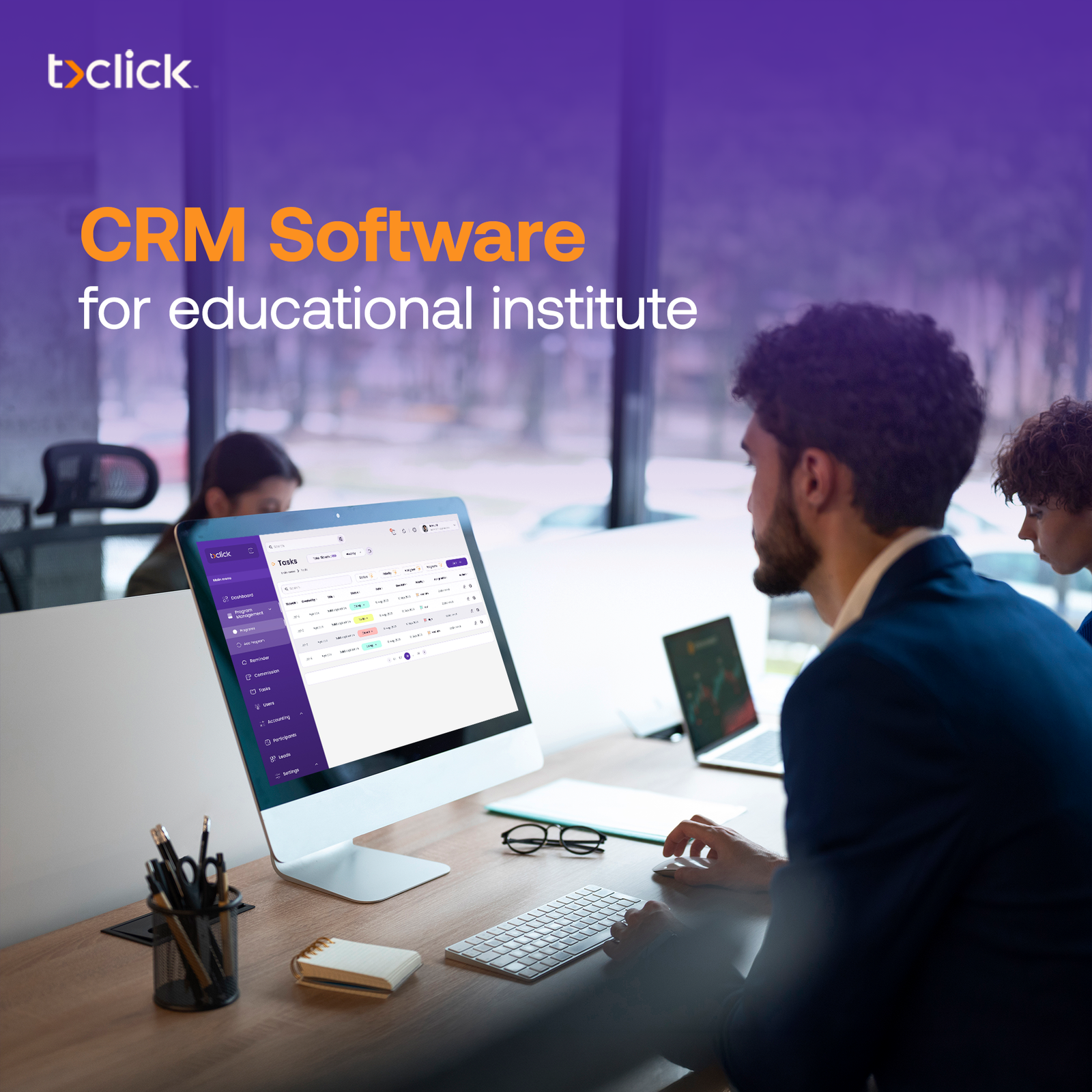
The education sector is experiencing a rapid digital transformation. Universities, colleges, language schools, and training institutes are no longer managing student recruitment and admissions using manual processes alone. Instead, institutions are adopting advanced technologies that help them organize inquiries, track applications, and communicate with prospective students more efficiently.
One of the most important technologies driving this transformation is CRM software for educational institute operations. A specialized CRM system allows educational organizations to centralize student data, manage admissions pipelines, and automate communication across multiple channels. As competition for students increases globally, institutions need systems that allow them to respond quickly to inquiries, track application progress, and maintain strong engagement with prospective students.
Platforms like Ticlick are designed specifically to support these needs. Unlike generic CRM tools originally built for business sales teams, Ticlick focuses on the unique workflows of education recruitment and admissions. It enables institutions to manage student inquiries, documents, communication, and enrollment pipelines from a single structured platform.
Without systems like these, admissions teams often rely on spreadsheets, email inboxes, and messaging apps to manage prospective students. While this approach may work for small teams, it quickly becomes inefficient as inquiry volumes grow. Important messages may be missed, documents can become disorganized, and recruitment pipelines may lose visibility.
This is why more institutions are now exploring CRM software for educational institute environments. The right CRM solution helps educational organizations manage complex admissions processes, improve student communication, and scale their recruitment operations more effectively.
In this guide, we will explore what CRM software for educational institute management actually means, why educational institutions increasingly rely on these systems, and which features organizations should evaluate when choosing the right platform.
What Is CRM Software for Educational Institutes?
Educational institutions interact with thousands of prospective students every year. Managing these interactions efficiently requires more than simple contact databases or spreadsheets. This is where specialized CRM systems designed for education become essential.
Understanding the role of CRM software for educational institute operations helps institutions see how technology can streamline recruitment, admissions, and student engagement processes.
Definition and Purpose of Education CRM Systems
CRM software for educational institute environments is a technology platform designed to manage relationships between institutions and their prospective or current students. The system acts as a centralized database where admissions teams can track student inquiries, manage applications, store documents, and monitor communication history.
Instead of managing these tasks across multiple disconnected tools, education CRM systems bring everything together into one structured platform. This allows institutions to create organized workflows that guide students through the entire recruitment journey.
For example, when a prospective student submits an inquiry through a website form, the CRM system automatically records the information and creates a student profile. Admissions counsellors can then track communication with that student, assign follow-up tasks, and monitor application progress.
By providing a clear overview of each student’s journey, CRM software for educational institutes helps institutions maintain consistency in their recruitment processes and ensure that no prospective student is overlooked.
👉 See how an Internship and Trainee J-1 CRM helps manage participants, documents, and program workflows:
How Education CRMs Differ from Traditional CRM Platforms
Although CRM systems are widely used in business environments, traditional CRM platforms are not always suitable for educational institutions. Most generic CRM tools are designed for sales pipelines where businesses track deals and customer purchases.
Student recruitment, however, is far more complex.
The journey from inquiry to enrollment often includes multiple stages such as counselling sessions, document submission, eligibility verification, application review, admission offers, and visa preparation. Each of these stages requires careful coordination between students, admissions officers, and sometimes external recruitment agents.
Because of this complexity, CRM software for educational institute operations includes features that support application workflows rather than simple sales pipelines. These systems allow institutions to track documents, manage admissions stages, automate communication with applicants, and monitor recruitment performance.
In other words, education CRM systems are designed around the student lifecycle, while traditional CRM platforms are designed around the customer purchase cycle.
Why Educational Institutions Are Adopting CRM Systems
The demand for CRM software for educational institute management has grown significantly as institutions expand their recruitment efforts and adopt more digital marketing strategies.
One of the main reasons institutions implement CRM systems is the increasing volume of student inquiries. Universities and colleges now receive inquiries from websites, social media campaigns, recruitment agents, and international education fairs. Managing these inquiries manually can quickly become overwhelming.
Another reason is the growing expectation for faster communication. Prospective students expect timely responses, clear application instructions, and regular updates on their admission status. Institutions that rely on manual processes may struggle to provide this level of responsiveness.
Additionally, recruitment teams need better visibility into their admissions pipelines. Without structured systems, it becomes difficult to track how many inquiries convert into applications and how many applicants eventually enroll.
By adopting CRM software for educational institutes, organizations gain the ability to manage these complex processes more efficiently while improving both operational performance and the student experience.
Why Educational Institutes Need CRM Software
Educational institutions face several operational challenges in managing student recruitment and admissions. Implementing CRM software for educational institute management helps address these challenges by creating structured workflows and centralized data systems.
Managing Student Inquiries and Admissions Efficiently
One of the most important advantages of CRM software for educational institute operations is the ability to manage student inquiries efficiently.
Prospective students may contact institutions through many different channels. They might fill out inquiry forms on the institution’s website, send messages through social media platforms, attend recruitment events, or communicate through recruitment agents.
Without a CRM system, admissions teams must manually track these inquiries using spreadsheets or email folders. This approach often leads to delays in responses and makes it difficult to maintain consistent communication.
A CRM system automatically collects inquiries from different channels and organizes them into structured student profiles. Admissions teams can then track each inquiry, assign follow-up tasks, and monitor how prospective students progress through the admissions pipeline.
This structured approach allows institutions to respond faster and maintain stronger relationships with prospective applicants.
Centralizing Student Data and Communication
Another key reason institutions adopt CRM software for educational institutes is the need to centralize student data.
Student information is often scattered across multiple systems. Contact details may be stored in email inboxes, application documents may be saved in cloud storage platforms, and communication records may exist across different messaging tools.
When data is fragmented across different platforms, it becomes difficult for admissions teams to maintain a complete understanding of each student’s situation.
A CRM system centralizes all student information into a single platform. This includes contact information, application documents, communication history, and admissions status.
Having this information accessible in one system allows institutions to improve collaboration between admissions officers, counsellors, and recruitment partners.
Improving Recruitment and Enrollment Processes
Recruitment pipelines involve multiple stages that must be carefully coordinated. Without a structured system, admissions teams may lose visibility over where each student stands in the application process.
CRM software for educational institute admissions management provides stage-based pipelines that allow institutions to track application progress in real time.
Admissions teams can quickly see how many students are currently in each stage of the recruitment process, identify bottlenecks, and ensure that follow-up actions are completed on time.
This visibility allows institutions to optimize their admissions workflows and improve overall enrollment outcomes.
Enhancing Student Engagement and Retention
Student engagement plays a critical role in successful recruitment and long-term retention.
Prospective students often interact with institutions for months before making a final enrollment decision. During this time, they may request information about programs, tuition fees, visa requirements, and campus life.
A CRM system helps institutions maintain consistent communication with students through automated messages, reminders, and personalized updates.
By providing timely responses and clear information, CRM software for educational institutes helps institutions build stronger relationships with prospective students and improve their chances of converting inquiries into enrollments.
👉 Learn how a CRM for volunteering organizations can streamline participant management and communication:
Common Challenges Without a CRM System
Many educational institutions still rely on manual processes or disconnected tools to manage student inquiries, admissions, and communication. While these methods may work temporarily, they often create operational challenges as recruitment volumes grow. Without structured CRM software for educational institute operations, institutions can face serious inefficiencies that affect both staff productivity and the student experience.
Below are some of the most common challenges educational institutions encounter when they operate without a dedicated CRM system.
Fragmented Communication
One of the biggest challenges for institutions that do not use CRM software for educational institute communication management is fragmented communication.
Admissions teams often communicate with prospective students through multiple channels such as email, phone calls, social media messages, and messaging platforms like WhatsApp. When these conversations are scattered across different platforms, it becomes difficult for institutions to maintain a complete record of interactions.
For example, a student may ask questions through email, submit documents through a cloud storage link, and follow up through WhatsApp. If these communications are not tracked within a single system, admissions officers may struggle to keep track of the conversation history.
A CRM system solves this problem by centralizing communication records. Every interaction with a prospective student is stored in a single profile, allowing admissions teams to access the full communication history instantly. This improves transparency, prevents miscommunication, and ensures that students receive consistent responses.
Lost Student Inquiries
Another common problem without CRM software for educational institute recruitment is losing track of student inquiries.
Educational institutions receive inquiries from many different sources, including website forms, education fairs, marketing campaigns, social media platforms, and recruitment agents. When these inquiries are not automatically captured in a centralized system, some leads may be forgotten or overlooked.
Missing a student inquiry can have serious consequences. A delayed response may cause the prospective student to apply to another institution that responds faster. Over time, these missed opportunities can significantly impact enrollment numbers.
CRM software automatically captures inquiries from multiple channels and organizes them into structured student profiles. Admissions teams can then assign follow-up tasks, track responses, and monitor which inquiries convert into applications.
By ensuring that every inquiry is properly recorded and followed up, CRM software for educational institutes helps institutions improve their conversion rates and maximize recruitment opportunities.
Manual Administrative Work
Manual administrative tasks are another major challenge for institutions that operate without a CRM system.
Admissions teams often spend significant time performing repetitive tasks such as updating spreadsheets, sending follow-up emails, tracking document submissions, and updating application statuses. These manual processes not only consume valuable time but also increase the risk of human error.
Without CRM software for educational institute operations, staff members may have to repeatedly search through emails or documents to locate information related to a specific student. This inefficiency slows down the admissions process and makes it difficult for institutions to scale their recruitment efforts.
CRM systems automate many of these administrative tasks. For example, automated reminders can notify students about missing documents, scheduled communication workflows can send follow-up emails automatically, and pipeline tracking can update application stages in real time.
By reducing manual workload, CRM software allows admissions teams to focus on higher-value activities such as counselling prospective students and building relationships with applicants.
How Ticlick Supports Educational Institutes with CRM Technology
As institutions search for effective CRM software for educational institute management, many are looking for solutions that are specifically designed for the complexities of student recruitment and admissions.
Platforms like Ticlick provide education-focused CRM technology that helps institutions centralize their recruitment processes, automate communication, and maintain visibility across student pipelines.
Rather than adapting generic CRM tools designed for commercial sales, Ticlick structures its features around the real workflows of admissions and recruitment teams.
Built for International Recruitment and Admissions
Many institutions today recruit students across multiple countries and regions. Managing international recruitment requires systems that can support large inquiry volumes, multiple recruitment partners, and complex admissions workflows.
Ticlick is designed to function as CRM software for educational institute recruitment teams that operate globally. The platform allows institutions to track student inquiries from different markets, manage recruitment agents, and monitor applications across multiple programs and intakes.
This global recruitment capability helps institutions expand their international reach while maintaining clear oversight of their admissions pipelines.
Automation for Student Lifecycle Management
One of the most powerful advantages of modern CRM software for educational institutes is automation.
Ticlick supports automation throughout the student lifecycle, from the first inquiry to final enrollment. Automated workflows can trigger follow-up emails, send reminders for missing documents, and update application statuses automatically.
For example, when a student submits an inquiry, the system can automatically send a welcome message, assign the lead to an admissions counsellor, and schedule a follow-up task. Similarly, document submission reminders can be triggered if a student has not uploaded required materials before a deadline.
This level of automation ensures that no step in the admissions process is missed while significantly reducing the administrative workload for admissions teams.
Centralized Communication and Data Visibility
Another important feature of CRM software for educational institute communication management is centralized data visibility.
Ticlick stores all student-related information within a single platform, including communication history, application documents, admission status, and counselor notes. This centralized structure allows institutions to access a complete overview of each student’s journey.
Admissions officers can instantly see where a student is in the application process, what documents have been submitted, and what communication has taken place. This visibility improves collaboration across departments and helps institutions provide more personalized support to prospective students.
FAQs
What is CRM software for educational institutes?
CRM software for educational institutes is a system designed to help schools, universities, and training centres manage student inquiries, admissions processes, and communication. It centralizes student data and allows institutions to track recruitment pipelines, automate communication, and monitor admissions performance.
Why do educational institutions need CRM software?
Educational institutions need CRM software to manage increasing volumes of student inquiries and applications. CRM software for educational institute operations helps organize recruitment pipelines, automate communication, and improve coordination between admissions teams.
How does CRM software improve the admissions process?
CRM software improves admissions processes by organizing student inquiries into structured pipelines. Institutions can track application progress, manage documents, send automated communication, and monitor enrollment performance from a centralized platform.
Is CRM software suitable for small educational institutions?
Yes. CRM software for educational institutes can benefit organizations of all sizes. Small institutions can use CRM systems to organize inquiries and manage admissions workflows, while larger universities can use them to handle complex international recruitment operations.
What features should institutions look for in education CRM software?
Institutions should look for features such as lead management, admissions pipeline tracking, automated communication, document management, reporting dashboards, and team collaboration tools when selecting CRM software for educational institute operations.
Can CRM software support international student recruitment?
Yes. Many modern CRM platforms are designed to support international recruitment. They allow institutions to manage inquiries from multiple countries, collaborate with recruitment agents, and track applications from global markets.
Conclusion
The education sector continues to evolve as institutions compete globally to attract students and deliver better learning experiences. As recruitment pipelines grow more complex and inquiry volumes increase, relying on manual processes becomes increasingly difficult.
This is why CRM software for educational institute operations is quickly becoming a necessity rather than a luxury. A well-designed CRM system helps institutions organize recruitment activities, centralize student data, automate communication, and improve visibility across admissions pipelines.
By adopting the right CRM platform, educational institutions can streamline their admissions processes, respond more efficiently to prospective students, and make data-driven decisions that support long-term growth.
Platforms like Ticlick demonstrate how modern CRM technology can transform the way institutions manage recruitment and student engagement. With structured workflows, automation tools, and centralized data management, institutions gain the infrastructure needed to scale their operations while maintaining a high level of service for prospective students.
As technology continues to reshape education management, institutions that invest in advanced CRM systems will be better positioned to adapt, grow, and remain competitive in an increasingly global education landscape.