
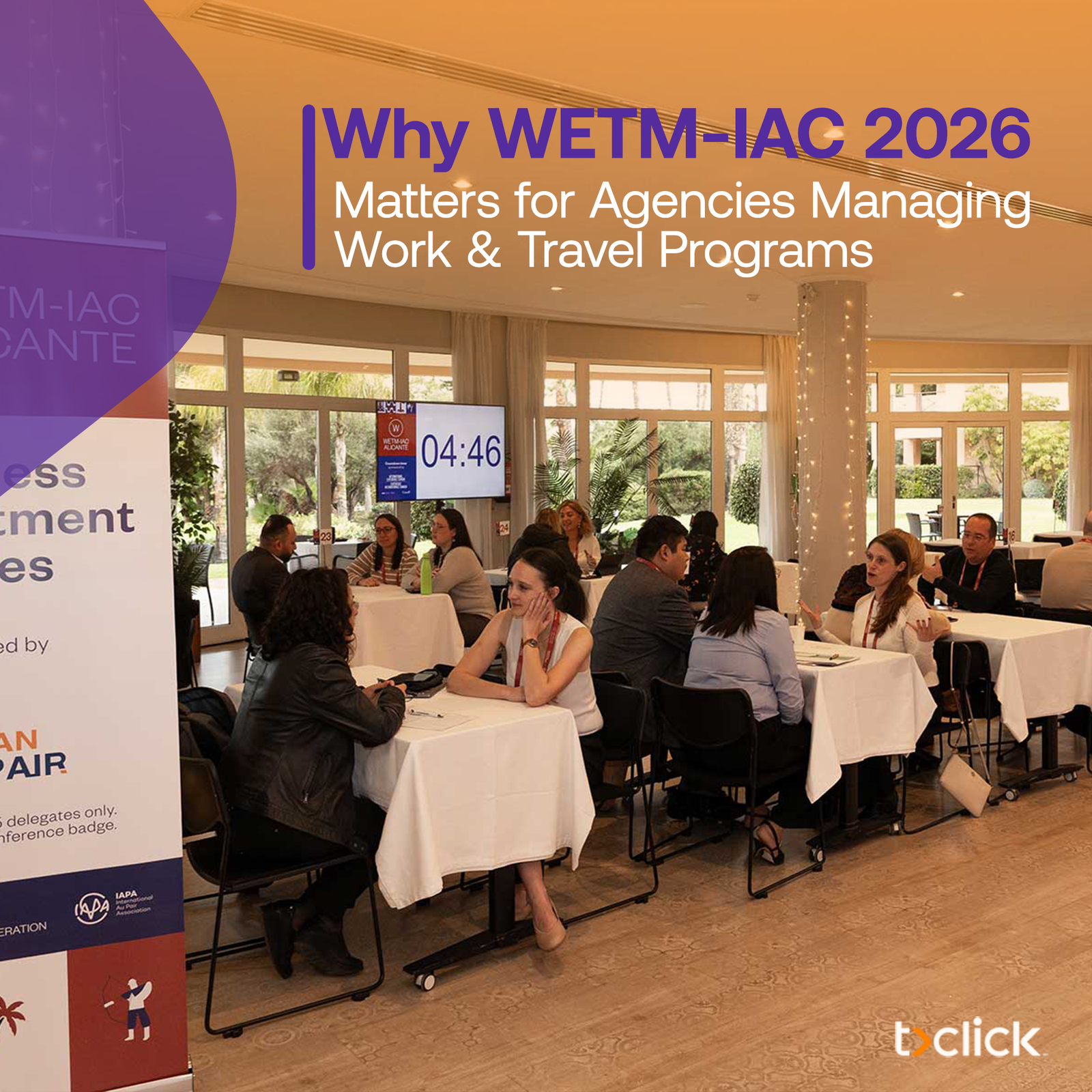
The global work & travel industry is undergoing a significant transformation. What was once a relatively straightforward process of placing participants into international opportunities has evolved into a highly complex operational ecosystem. Today, agencies are responsible for managing full participant lifecycles, coordinating with multiple stakeholders, and maintaining compliance across different regulatory environments.
As demand for international experiences continues to grow, agencies are facing increasing pressure to operate more efficiently while maintaining high standards of accuracy and transparency. Participant expectations are higher, program requirements are stricter, and competition between agencies is intensifying across global markets.
This shift is exactly why WETM-IAC 2026 has become a key event for agencies managing Work & Travel programs. It is no longer just a networking conference—it is a reflection of the real challenges and opportunities shaping the industry.
For Ticlick CRM, participating in WETM-IAC 2026 provided valuable insights into how agencies are adapting to these changes. More importantly, it highlighted a clear industry direction: agencies are moving toward structured systems and digital tools to manage operations more effectively.
This article explores why WETM-IAC 2026 matters for agencies managing Work & Travel programs, the operational realities behind the industry, and what agencies must do to remain competitive in this evolving landscape.
The Reality of Managing Work & Travel Programs Today
Agencies as Full Operational Hubs
One of the most important shifts in the industry is the expanded role of agencies.
Agencies are no longer limited to matching participants with opportunities. Instead, they are responsible for managing the full operational lifecycle, including:
- participant onboarding and screening
- documentation collection and verification
- coordination with sponsors and host organizations
- ongoing communication with participants
- compliance tracking and reporting
This transformation has positioned agencies as central operational hubs within the Work & Travel ecosystem.
To better understand the role of technology in the Work & Travel ecosystem, explore how Ticlick CRM at WETM-IAC 2026 highlights key trends in participant management, program operations, and global partnerships.
Rising Expectations Around Compliance and Accuracy
Compliance has become a defining factor for agencies operating in Work & Travel programs.
Agencies must ensure that all participant documentation is accurate, complete, and submitted within required timelines. They must also maintain detailed records for auditing purposes and meet the expectations of sponsors and regulatory bodies.
Any gaps in compliance can impact partnerships, program approvals, and overall operational credibility.
The Limitations of Manual Processes
Despite the growing complexity of the industry, many agencies still rely on manual tools such as spreadsheets, email communication, and messaging apps.
While these tools may provide short-term flexibility, they create long-term inefficiencies, including:
- scattered participant data
- inconsistent communication
- missed follow-ups
- lack of process visibility
As agencies scale, these limitations become more evident and harder to manage.
What the Market Is Shifting Toward
Moving Toward Specialized Operational Systems
Across the industry, there is a clear shift toward adopting systems specifically designed for exchange programs.
Agencies are increasingly looking for platforms that understand:
- long participant journeys
- multi-stage program workflows
- documentation-heavy processes
- collaboration across multiple stakeholders
This shift reflects a broader move away from generic tools toward solutions tailored for the education and exchange sector.
The Need for Full Visibility Across Operations
Visibility has become a key priority for agencies.
Teams need to know:
- the exact status of each participant
- which documents are pending
- where delays are occurring
- who is responsible for each task
Without this level of visibility, it becomes difficult to manage operations efficiently or scale effectively.
Scalability as a Competitive Advantage
Another major trend is the growing importance of scalability.
Agencies that rely on manual workflows often struggle to manage increased participant volumes. In contrast, agencies that implement structured systems can scale their operations while maintaining control and consistency.
This difference is becoming a major competitive advantage in the market.
Why WETM-IAC 2026 Is a Strategic Event for Agencies
A Focused Environment for Real Industry Conversations
Unlike large exhibitions, WETM-IAC 2026 offers a focused environment where conversations are practical and directly relevant to agency operations.
Attendees are not just exploring ideas—they are actively discussing real challenges and solutions.
High-Intent Networking Opportunities
Participants at WETM-IAC 2026 come with clear objectives:
- building partnerships
- expanding program offerings
- improving operational processes
This results in more meaningful interactions and long-term collaborations.
Where Operational Challenges Meet Technology Solutions
One of the most important aspects of WETM-IAC 2026 is how it connects operational challenges with technological solutions.
Agencies are no longer asking whether they need systems—they are evaluating which systems best fit their workflows.
Key Challenges Highlighted by Agencies at WETM-IAC 2026
Fragmented Participant Data
Many agencies struggle with managing participant data across multiple tools.
This fragmentation leads to:
- duplicated records
- inconsistent data
- difficulty tracking participant progress
Lack of Standardized Workflows
Without structured processes, different team members may handle tasks in different ways.
This creates:
- inconsistent operations
- delays in processing applications
- confusion within teams
Limited Transparency with Partners
Sponsors and host organizations increasingly expect transparency.
Agencies must provide:
- accurate participant updates
- clear communication
- reliable data
Without centralized systems, meeting these expectations becomes difficult.
The Role of CRM Systems in Modern Work & Travel Operations
From Tools to Operational Infrastructure
CRM systems are evolving from simple contact management tools into full operational infrastructure.
They help agencies structure workflows, manage participant data, and maintain consistency across operations.
Centralizing Communication and Data
A CRM system allows agencies to centralize all communication and participant information in one place.
This improves coordination between teams and ensures that all stakeholders have access to accurate information.
Supporting Growth Without Losing Control
One of the most important benefits of CRM systems is their ability to support growth.
Agencies can handle larger participant volumes without increasing operational complexity, allowing them to scale more effectively.
How Ticlick CRM Aligns with Industry Needs
Built Around Real Exchange Program Workflows
Ticlick CRM is designed to support the workflows used in Work & Travel and exchange programs.
This includes:
- participant lifecycle management
- document tracking
- multi-stage pipeline organization
Managing Long and Complex Participant Journeys
Programs often extend over several months, requiring consistent tracking and communication.
Ticlick allows agencies to manage these long timelines while maintaining visibility and control.
Providing Clarity Across Teams
Ticlick helps teams understand:
- participant status
- pending tasks
- next actions
This clarity improves efficiency and reduces operational confusion.
What Agencies Should Take Away from WETM-IAC 2026
Operational Efficiency Is Now a Competitive Factor
Agencies that improve their internal processes gain a clear advantage in the market.
Technology Is Becoming a Core Requirement
Digital systems are no longer optional—they are essential for managing modern work & travel programs.
Structure Enables Sustainable Growth
Agencies that implement structured systems can scale their operations without losing control or efficiency.
Conclusion
WETM-IAC 2026 reflects a broader transformation in the Work & Travel industry.
Agencies are moving beyond basic program management toward more structured, scalable, and data-driven operations. This shift is redefining how programs are managed and how agencies compete in the global market.
The organizations that succeed will be those that invest in operational clarity, adopt the right systems, and build strong partnerships.
For platforms like Ticlick CRM, this transformation highlights the importance of supporting agencies with tools that align with real-world workflows and industry needs.
The future of work & travel programs will not be defined by volume alone but by how effectively agencies manage complexity and deliver consistent, high-quality experiences.