
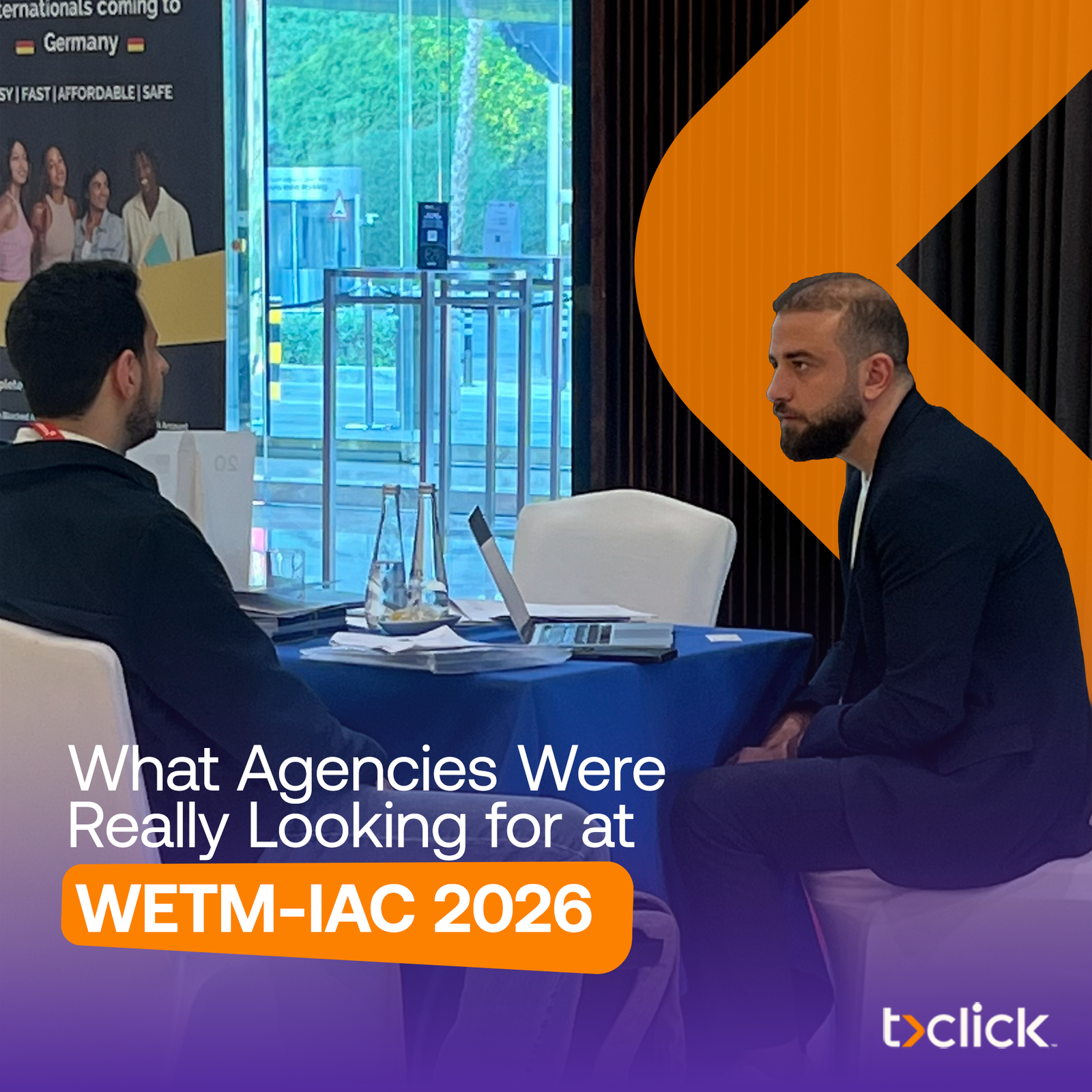
Industry events like WETM-IAC 2026 are often perceived as networking platforms where agencies meet sponsors, build partnerships, and explore new opportunities. However, what truly happens inside these events goes far beyond surface-level interactions.
In reality, WETM-IAC 2026 acts as a mirror of the industry. It reveals what agencies are actually struggling with, what they are prioritizing, and what they need to grow sustainably. The conversations that happen during meetings are not just about expansion—they are about managing complexity, improving operations, and building systems that support long-term growth.
Today, agencies managing Work & Travel and cultural exchange programs are operating in a much more demanding environment. They are expected to handle larger participant volumes, stricter compliance requirements, and more structured partnerships. This shift has created a clear need for operational maturity.
For platforms like Ticlick, being present at WETM-IAC 2026 provided direct access to these conversations. It became clear that agencies are no longer just looking for opportunities—they are looking for ways to manage their operations more effectively.
This article breaks down what agencies were really looking for at WETM-IAC 2026, providing deeper insights into the expectations shaping the Work & Cultural Exchange Programs industry today.
Beyond Networking: What Agencies Actually Prioritize Today
From Partnerships to Operational Efficiency
For many years, success in the Work & Travel industry was closely tied to the number of partnerships an agency could build. The more sponsors, hosts, and partners an agency had, the more opportunities it could offer.
However, this model is no longer sufficient.
At WETM-IAC 2026, it became clear that agencies are shifting their focus from simply building partnerships to managing those partnerships efficiently. Agencies are now asking:
- How do we handle multiple partners without confusion?
- How do we track participant progress across different programs?
- How do we ensure consistent communication with all stakeholders?
This shift highlights a critical change: partnerships alone are no longer a competitive advantage—how you manage them is.
To better understand how these insights were shaped through real industry conversations, explore Ticlick CRM at WETM-IAC 2026 and the key discussions with agencies and sponsors during the event.
Why Growth Alone Is No Longer the Goal
Growth remains important, but agencies are becoming more aware of the risks associated with uncontrolled expansion.
When agencies grow without structured systems, they often face the following:
- delays in processing applications
- inconsistent communication
- increased operational errors
- overwhelmed teams
At WETM-IAC 2026, many agencies expressed that growth without control leads to operational chaos. This is why agencies are now prioritizing controlled scalability—growing their programs while maintaining clarity and efficiency.
This change in mindset is one of the most important shifts in the industry.
What Agencies Were Really Looking for at WETM-IAC 2026
1. Faster and More Structured Communication
Communication is at the heart of Work & Travel program management.
Agencies are constantly communicating with:
- participants
- sponsors
- host organizations
- internal teams
When communication is handled manually across different channels, it becomes difficult to maintain consistency and speed.
At WETM-IAC 2026, agencies emphasized the need for:
- faster response times
- centralized communication systems
- clear communication history
Without structured communication, delays occur, information gets lost, and participant experience suffers.
2. Clear Visibility Across Participant Pipelines
One of the biggest operational challenges agencies face is the lack of visibility.
Agencies need to know:
- how many participants are in each stage
- which applications are incomplete
- where delays are happening
Without this visibility, teams are forced to rely on manual tracking, which is inefficient and prone to errors.
At WETM-IAC 2026, agencies repeatedly highlighted the importance of having a clear overview of their pipelines. Visibility is no longer a luxury—it is essential for managing operations effectively.
3. Simplified Documentation and Compliance Workflows
Documentation is one of the most complex aspects of work & cultural exchange programs.
Each participant must submit multiple documents, and each document must be verified according to specific requirements.
Managing this manually creates several challenges:
- missing documents
- incorrect submissions
- delays in processing
- compliance risks
Agencies are now looking for systems that can simplify these workflows by tracking document status, highlighting missing items, and ensuring compliance requirements are met.
4. Systems That Support Multi-Program Management
Modern agencies rarely operate a single program.
They manage multiple programs simultaneously, each with different workflows and requirements. This creates operational complexity that cannot be handled using basic tools.
At WETM-IAC 2026, agencies expressed the need for systems that can:
- manage multiple programs within one platform
- handle different workflows efficiently
- maintain consistency across programs
This reflects a shift toward more integrated and scalable operations.
5. Reliable Reporting and Performance Insights
Data is becoming increasingly important in decision-making.
Agencies want to move beyond guesswork and understand:
- which programs are performing well
- where bottlenecks occur
- how to improve efficiency
At WETM-IAC 2026, agencies emphasized the need for reliable reporting tools that provide actionable insights.
This shift toward data-driven operations is shaping the future of the industry.
6. Long-Term, Structured Partnerships
Partnerships are evolving from informal agreements to structured collaborations.
Agencies are now expected to:
- provide consistent updates
- meet defined performance expectations
- maintain transparent communication
This requires more organized systems and processes.
At WETM-IAC 2026, it became clear that agencies are looking for partners who can operate within structured frameworks, not just informal relationships.
These expectations are directly influencing system requirements. Learn more about how insights from WETM-IAC 2026 influence CRM needs for Work & Travel agencies:
The Gap Between Expectations and Reality
Fragmented Tools Are Still Common
Despite these expectations, many agencies still rely on multiple disconnected tools.
This creates fragmentation, making it difficult to maintain accurate and consistent data across operations.
Manual Processes Are Slowing Teams Down
Manual workflows require significant effort and time.
They limit productivity and make it difficult to scale operations efficiently.
Lack of System Integration
When tools are not integrated, agencies must duplicate work across platforms.
This increases the risk of errors and reduces operational efficiency.
Why These Expectations Are Increasing Now
Growing Program Complexity
Programs are becoming more complex, requiring better systems and processes.
Rising Competition Between Agencies
Competition is pushing agencies to improve their operations.
Higher Expectations from Sponsors and Partners
Sponsors expect higher levels of professionalism and efficiency.
Where CRM Systems Fit into Agency Needs
Centralizing Communication and Data
CRM systems bring all communication and data into one platform, reducing fragmentation.
Automating Workflows
Automation reduces manual work and improves efficiency.
Providing Real-Time Visibility
CRM systems provide real-time insights, helping agencies make better decisions.
How Ticlick CRM Aligns with What Agencies Are Looking For
Built Around Exchange Program Workflows
Ticlick is designed specifically for agencies managing Work & Travel and exchange programs.
Designed for Long Participant Lifecycles
Ticlick supports complex, multi-stage participant journeys.
Delivering Visibility, Structure, and Automation
Ticlick combines automation with real-time visibility, helping agencies improve efficiency.
What This Means for the Future of Agencies
The conversations and patterns emerging from WETM-IAC 2026 point to a broader structural change across the Work & Cultural Exchange Programs industry. Agencies are no longer operating in an environment where relationships alone are enough to sustain growth. The future belongs to organizations that can combine strong partnerships with strong internal operations.
What agencies were really looking for at WETM-IAC 2026 was not just access to more programs or more sponsors. They were looking for ways to build more resilient, scalable, and efficient businesses. That shift has important implications for how agencies will need to evolve in the coming years.
Operational Excellence Is Becoming Mandatory
Operational excellence is no longer a “nice to have” for agencies managing Work & Cultural Exchange Programs. It is becoming a baseline requirement.
As participant volumes grow and regulatory expectations become more demanding, agencies cannot afford inconsistent workflows, delayed communication, or manual processes that break under pressure. A single operational weakness—such as missing documentation, slow follow-up, or poor visibility into participant progress—can now affect multiple areas of the business at once. It can delay placements, weaken sponsor confidence, reduce participant satisfaction, and create internal stress for teams.
This is why agencies must focus not only on growth, but on how that growth is managed. Operational excellence means building processes that are repeatable, measurable, and reliable. It means creating an environment where teams know exactly what stage each participant is in, what action needs to happen next, and who is responsible for it. It also means reducing dependency on individual memory or ad hoc coordination.
At WETM-IAC 2026, it became clear that agencies are increasingly aware of this reality. The industry is moving toward a model where strong operations are essential for maintaining credibility and competitiveness. Agencies that fail to improve their internal processes may still grow in the short term, but they will struggle to sustain that growth over time.
Systems Will Define Competitive Advantage
In the next phase of the industry, competitive advantage will not come only from market reach or partner networks. It will increasingly come from systems.
For a long time, agencies could differentiate themselves through relationships, experience, and local market knowledge alone. Those factors still matter, but they are no longer enough on their own. As the operational complexity of Work & Cultural Exchange Programs increases, agencies need infrastructure that allows them to manage that complexity efficiently.
This is where systems—especially CRM platforms and workflow-driven operational tools—become critical. The agencies that invest in systems gain advantages that are difficult to replicate manually. They can process applications faster, maintain cleaner records, respond to issues more consistently, and provide better visibility to sponsors and partners. They are also in a stronger position to handle larger volumes without sacrificing quality.
Systems create leverage. They allow agencies to do more without constantly increasing pressure on their teams. They reduce friction, improve collaboration, and make performance more measurable. Over time, this leads to stronger execution and better reputation in the market.
What WETM-IAC 2026 highlighted is that agencies are beginning to recognize this shift very clearly. They are no longer asking only how to win more business. They are also asking how to build the internal capability to manage that business well. In that sense, systems are becoming a defining part of competitive strategy—not just an operational support function.
Agencies Must Evolve Beyond Traditional Models
The traditional agency model in Work & Travel and exchange programs is under pressure.
Historically, many agencies operated through a combination of personal relationships, manual coordination, and individual expertise. This model worked in a less demanding environment, where participant volumes were smaller, workflows were less complex, and expectations around transparency and reporting were lower.
That environment has changed.
Today, agencies are expected to manage more participants, coordinate more stakeholders, and deliver more consistent experiences across the full program lifecycle. Sponsors and partners want transparency. Participants expect speed and clarity. Internal teams need structure to avoid overload. These expectations cannot be met reliably through traditional, manual models alone.
This does not mean the human side of the industry is disappearing. Relationships, judgment, and experience still matter enormously. But they now need to be supported by systems that make operations more structured and scalable. The agencies that succeed will be the ones that combine strong human relationships with strong operational frameworks.
In practical terms, evolving beyond traditional models means shifting from reactive management to proactive management. It means replacing fragmented tools with integrated systems. It means moving from informal processes to structured workflows. And it means recognizing that in a modern work & cultural exchange program environment, operational maturity is as important as recruitment capability.
The direction is clear: the future of the industry will favour agencies that can professionalize their operations without losing the personal value they bring. That balance between human expertise and system-driven execution is what will define the next generation of successful agencies.
To understand how these shifts are shaping long-term strategy, explore the future of international student recruitment software and how agencies are preparing for the next phase of global mobility.
Conclusion
The insights from WETM-IAC 2026 highlight a clear transformation in the Work & Cultural Exchange Programs industry.
Agencies are no longer focused solely on growth—they are focused on managing complexity, improving efficiency, and building structured operations.
What agencies were really looking for at WETM-IAC 2026 were not just new opportunities but better ways to manage their existing ones.
Platforms like Ticlick are helping agencies meet these expectations by providing systems that support scalable and efficient operations.