
The global education landscape is evolving rapidly, and developing markets are playing an increasingly important role in shaping the future of international student recruitment. Countries across Africa, the Middle East, South Asia, and Latin America are experiencing significant growth in the number of students seeking educational opportunities abroad, creating both exciting opportunities and new operational challenges for education organizations.
For universities, study abroad agencies, exchange program providers, language schools, and scholarship organizations, this growing demand means managing more student inquiries, processing larger volumes of applications, coordinating with more institutional partners, and delivering faster, more personalized support throughout the recruitment journey.
While recruitment opportunities continue to expand, many organizations still rely on spreadsheets, email chains, messaging apps, and disconnected systems to manage their operations. These manual processes often become difficult to maintain as recruitment volumes increase, resulting in slower response times, missed follow-ups, fragmented student data, and limited visibility into recruitment performance.
This is where student recruitment software for developing markets becomes a strategic investment rather than simply another technology expense.
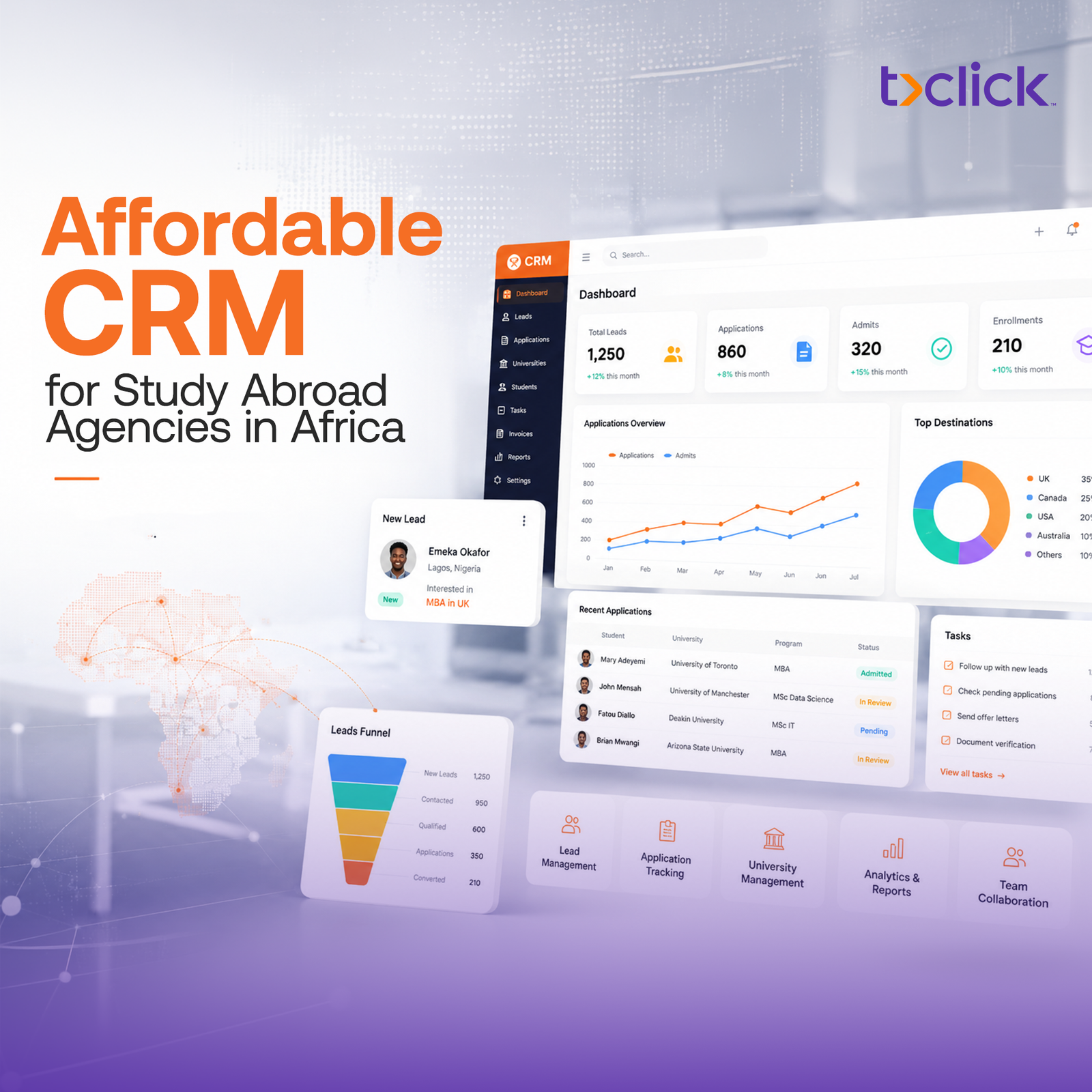
Purpose-built student recruitment software helps organizations centralize recruitment activities, automate repetitive workflows, improve communication, manage applications efficiently, and gain complete visibility into every stage of the student lifecycle.
Rather than managing recruitment across multiple disconnected platforms, education organizations can oversee everything—from the first student inquiry to final enrollment—from a single centralized system.
In this guide, you’ll learn how student recruitment software addresses the unique challenges faced by organizations in developing markets, the features that matter most, and how the right platform can help improve recruitment efficiency, enhance student experiences, and support sustainable organizational growth.
Why Student Recruitment Is Changing Across Developing Markets
Student recruitment has changed dramatically over the past decade.
Increasing internet accessibility, digital marketing, social media, and global mobility have transformed how students research universities and interact with education organizations.
Students today have access to significantly more information—and more choices—than ever before.
As a result, education organizations must compete not only on academic offerings but also on the quality of their recruitment experience.
Rising Demand for International Education
International education continues to attract students from developing markets at an unprecedented rate.
Families increasingly recognize overseas education as an opportunity to gain:
- Internationally recognized qualifications
- Better career opportunities
- Global professional networks
- Advanced research opportunities
- Cultural exposure
- Improved earning potential
Students from developing markets commonly explore destinations such as:
| Study Destination | Why Students Choose It |
| United Kingdom | Prestigious universities and globally recognized degrees |
| Canada | High-quality education with post-graduation work opportunities |
| Australia | Strong student support services and career pathways |
| United States | Diverse academic programs and research excellence |
| Germany | Affordable tuition and engineering programs |
| Ireland | Growing technology sector and business education |
| Netherlands | Innovative universities and English-taught programs |
As demand continues to increase, education organizations must manage significantly larger recruitment pipelines than they did just a few years ago.
Without modern recruitment systems, sustaining this growth becomes increasingly difficult.
Digital Transformation Is Reshaping Recruitment
Today’s student recruitment process looks very different from traditional recruitment models.
Previously, agencies relied primarily on:
- Walk-in consultations
- Telephone inquiries
- Printed brochures
- Education fairs
- Face-to-face meetings
Today, students interact with organizations through multiple digital channels before making any decision.
These include:
- Google Search
- Social media platforms
- Online webinars
- Virtual education fairs
- Live chat
- Referral programs
- Digital advertising campaigns
Each interaction generates valuable student data.
However, when this information is scattered across different communication platforms, it becomes increasingly difficult to maintain a complete picture of every prospective student.
Student recruitment software consolidates these interactions into one centralized environment, enabling organizations to respond faster and manage recruitment more effectively.
Students Expect Faster and More Personalized Experiences
Modern students have higher expectations than ever before.
They no longer compare education organizations only by the universities they represent.
Instead, they evaluate the overall experience.
Students expect organizations to:
- Respond quickly to inquiries
- Understand their academic background
- Recommend suitable programs
- Provide clear admissions guidance
- Keep them updated throughout the process
- Communicate through their preferred channels
For example, a student may first submit an inquiry through a website, continue the conversation on WhatsApp, send documents by email, and attend an online consultation before applying.
Without centralized student records, consultants often struggle to understand the student’s complete journey.
Student recruitment software creates a unified student profile containing communication history, documents, applications, notes, and upcoming tasks.
This enables consultants to deliver highly personalized support while improving operational efficiency.
Competition Is Increasing Across Education Providers
Developing markets have become increasingly competitive.
Students now have access to:
- Local education agencies
- International recruitment companies
- University admissions offices
- Online recruitment platforms
- Independent education consultants
This means organizations must differentiate themselves through:
- Better service quality
- Faster response times
- Personalized student experiences
- Efficient admissions support
- Strong university partnerships
Organizations that continue relying on manual recruitment processes often struggle to maintain these standards as they grow.
Student recruitment software provides the operational infrastructure needed to compete more effectively.
Recruitment Teams Need Better Operational Visibility
As recruitment operations expand, managers need accurate, real-time information to make informed decisions.
Questions such as the following become increasingly important:
- How many active student inquiries do we currently have?
- Which marketing channels generate the highest-quality leads?
- Which counselors achieve the strongest conversion rates?
- Which universities produce the highest enrollment numbers?
- Where are students dropping out of the recruitment process?
- How many applications are currently awaiting documents?
Without centralized reporting, answering these questions often requires hours of manual work.
Student recruitment software provides real-time dashboards and analytics that help organizations monitor performance, identify bottlenecks, and continuously improve recruitment strategies.
👉 Learn how education-focused CRM software simplifies student recruitment and admissions.
What Is Student Recruitment Software?
Student recruitment software is much more than a traditional customer relationship management (CRM) system.
It is a specialized platform designed to help education organizations manage the complete student recruitment lifecycle—from the first inquiry through enrollment and beyond.
Rather than focusing solely on sales activities, student recruitment software supports the unique operational requirements of education providers by centralizing recruitment workflows, student communication, admissions processes, and institutional collaboration.
For organizations operating in developing markets, this means having a single platform that simplifies complex recruitment operations while improving both team productivity and student satisfaction.
More Than a CRM
Traditional CRM systems are primarily designed for sales organizations.
Their main purpose is to manage leads, sales opportunities, and customer relationships.
Education organizations require much more specialized functionality.
A modern student recruitment platform supports:
- Student inquiry management
- Consultation tracking
- Program recommendations
- Application management
- Document collection
- University partner management
- Admissions workflows
- Visa tracking
- Enrollment monitoring
- Alumni engagement
This makes student recruitment software a comprehensive operational platform rather than simply a contact management system.
How Student Recruitment Software Supports the Entire Student Journey
Successful recruitment is not a single interaction—it is an ongoing journey.
Each prospective student moves through several stages before becoming enrolled.
A typical recruitment lifecycle includes:
Inquiry → Consultation → Qualification → Program Matching → Application → Document Collection → Offer Letter → Visa Support → Enrollment → Alumni Engagement
At every stage, education organizations must communicate effectively, manage documentation, coordinate with partners, and monitor progress.
Student recruitment software provides complete visibility across this lifecycle, ensuring that no opportunity is overlooked and every student receives consistent support.
Who Should Use Student Recruitment Software?
Student recruitment software is valuable for a wide range of education organizations, including:
- Study abroad agencies
- Universities and colleges
- Language schools
- Exchange program providers
- Scholarship organizations
- International recruitment companies
- Educational consultants
- Pathway providers
- Vocational training institutions
Whether an organization recruits hundreds or thousands of students each year, centralized recruitment software helps improve efficiency, strengthen collaboration, and support long-term growth.
👉 Compare the essential features of modern student recruitment software.
Student Recruitment Software vs Traditional CRM
Many education organizations initially invest in a generic CRM because it appears to be a cost-effective solution for managing leads. While traditional CRM systems can help organize contacts and basic sales activities, they are not designed to support the complex workflows involved in student recruitment.
Recruiting students is fundamentally different from managing sales opportunities.
Instead of tracking customers through a sales pipeline, education organizations must guide prospective students through a journey that includes consultations, program selection, application processing, document verification, admissions, visa support, and enrollment.
A generic CRM often requires extensive customization to accommodate these education-specific processes, resulting in additional costs, increased complexity, and reduced efficiency.
Student recruitment software, on the other hand, is built specifically for education organizations.
It provides tools that align with the student lifecycle while improving collaboration between recruitment teams, admissions departments, and institutional partners.
| Traditional CRM | Student Recruitment Software |
| Built for sales teams | Built for education organizations |
| Generic sales pipelines | Student recruitment pipelines |
| Basic contact management | Complete student lifecycle management |
| Limited workflow automation | Recruitment and admissions workflows |
| Generic reports | Recruitment analytics and enrollment reporting |
| Requires customization | Education-ready functionality |
For organizations operating in developing markets, selecting software designed specifically for education can significantly reduce operational complexity while improving recruitment outcomes.
The Biggest Recruitment Challenges in Developing Markets
International student recruitment continues to grow across developing markets, but growth also introduces operational challenges.
Many organizations struggle to scale efficiently because manual processes become increasingly difficult to manage as student numbers increase.
Understanding these challenges is the first step toward building a more efficient recruitment operation.
Managing High Volumes of Student Inquiries
Student inquiries can originate from numerous sources.
Common recruitment channels include:
- Google Search
- Social media campaigns
- Agency websites
- Facebook Messenger
- Education fairs
- Referral programs
- University events
- Email campaigns
Each inquiry represents a potential enrollment opportunity.
However, without a centralized system, inquiries may be forgotten, duplicated, or assigned to the wrong consultant.
Student recruitment software automatically captures and organizes inquiries into structured recruitment pipelines, ensuring every opportunity receives appropriate attention.
Limited Administrative Resources
Many education organizations operate with relatively small recruitment teams.
Recruitment consultants often perform multiple responsibilities simultaneously, including:
- Student counseling
- University advising
- Application processing
- Document verification
- Visa guidance
- Parent consultations
- Recruitment reporting
As student volumes grow, administrative work increases dramatically.
Without automation, consultants spend more time managing paperwork than supporting students.
Student recruitment software reduces this burden by automating repetitive processes and centralizing operational activities.
Multiple Communication Channels
Modern student recruitment involves communication across numerous platforms.
Students may contact an organization through:
- Phone calls
- Video meetings
- Social media
- Website chat
Managing conversations across disconnected systems creates communication gaps.
For example, one consultant may not know that another team member has already discussed scholarship options with the student.
Student recruitment software creates a centralized communication history, ensuring every interaction is linked to the student’s profile.
This improves both collaboration and the overall student experience.
Manual Follow-Ups
Recruitment rarely ends after the first consultation.
Students often require multiple follow-up interactions before submitting an application.
These may include:
- Program recommendations
- Scholarship discussions
- Document requests
- Application updates
- Visa guidance
- Enrollment reminders
Managing these follow-ups manually becomes increasingly difficult as recruitment volumes grow.
Student recruitment software automates reminders and workflow tasks, ensuring students receive timely support throughout their recruitment journey.
Complex Admissions Processes
Admissions involve numerous moving parts.
Organizations must coordinate:
- Multiple university applications
- Program requirements
- Document verification
- Application deadlines
- Offer letters
- Tuition deposits
- Enrollment confirmation
Each university may follow different admissions procedures, making manual tracking increasingly difficult.
Student recruitment software provides structured admissions workflows that improve visibility and reduce administrative complexity.
Document Collection Challenges
Every student application requires extensive documentation.
Typical documents include:
- Academic transcripts
- Degree certificates
- Passport copies
- English language test results
- Recommendation letters
- Personal statements
- Financial documents
- Visa paperwork
When documents are stored across multiple folders, email threads, and cloud storage platforms, locating information becomes time-consuming.
Student recruitment software centralizes document management, allowing teams to access files instantly while improving security and collaboration.
Managing Multiple Recruitment Partners
Education organizations rarely operate independently.
They collaborate with:
- Universities
- Colleges
- Language schools
- Scholarship providers
- Exchange program organizations
- International recruitment partners
Managing these relationships manually often results in fragmented communication and limited visibility.
Student recruitment software helps organizations organize institutional partnerships, maintain communication records, and monitor recruitment performance across partner networks.
Limited Recruitment Reporting
Data-driven decision-making is becoming increasingly important.
Recruitment managers need visibility into questions such as:
- Which marketing channels generate the highest-quality students?
- Which consultants achieve the strongest conversion rates?
- Which destinations are growing fastest?
- Which partner institutions produce the best enrollment outcomes?
- Where are students leaving the recruitment process?
Without centralized reporting, answering these questions often requires hours of manual analysis.
Student recruitment software provides real-time dashboards and analytics that help organizations monitor performance and identify opportunities for improvement.
👉 Discover how recruitment automation helps your team save time and convert more students.
Common Recruitment Challenges
| Challenge | Business Impact |
| Missed follow-ups | Lost enrollment opportunities |
| Manual workflows | Reduced staff productivity |
| Scattered student information | Limited operational visibility |
| Slow response times | Lower student satisfaction |
| Poor reporting | Slower business decisions |
| Duplicate records | Inconsistent student experiences |
| Limited collaboration | Communication gaps between departments |
How Student Recruitment Software Solves These Challenges
The purpose of student recruitment software is not simply to digitize existing processes.
Its real value lies in transforming recruitment operations into a more organized, collaborative, and scalable system.
Rather than relying on disconnected tools, organizations can manage the entire recruitment lifecycle from one centralized platform.
This creates greater visibility, improves productivity, and allows recruitment teams to focus on what matters most—helping students achieve their educational goals.
Why Spreadsheets Are No Longer Enough
Many education organizations begin managing recruitment with spreadsheets because they are familiar and inexpensive. However, as recruitment volumes grow, spreadsheets become increasingly difficult to maintain.
Common limitations include:
- Manual data entry
- Duplicate student records
- Missed follow-ups
- Limited collaboration
- No workflow automation
- Time-consuming reporting
Student recruitment software replaces these manual processes with centralized workflows, automated updates, and real-time visibility, allowing organizations to scale more efficiently.
| Spreadsheets | Student Recruitment Software |
| Manual updates | Automated workflows |
| Separate files | Centralized student records |
| Limited collaboration | Shared workspace |
| Manual reporting | Real-time dashboards |
| Difficult to scale | Built for growth |
Benefits of Student Recruitment Software for Developing Markets
Implementing student recruitment software offers benefits that extend beyond improving daily operations. It helps organizations build a more efficient, scalable, and student-focused recruitment process.
Some of the most significant benefits include:
- Faster response times to student inquiries
- Improved lead conversion rates
- Better collaboration across teams
- Reduced administrative workload
- Greater visibility into recruitment performance
- More accurate reporting and forecasting
- Stronger university partnerships
- A better overall student experience
By centralizing recruitment activities, organizations can serve more students while maintaining high service quality.
How to Choose the Right Student Recruitment Software
Choosing the right platform requires more than comparing prices or feature lists. Organizations should look for software that aligns with their recruitment processes and long-term growth plans.
When evaluating solutions, consider:
- Education-specific functionality
- Student lifecycle management
- Workflow automation
- Reporting and analytics
- Scalability
- Data security
- Ease of use
- Customer support
The right platform should simplify operations today while supporting future expansion.
Why Ticlick Is Built for Student Recruitment
Ticlick is designed specifically for education organizations that manage student recruitment, admissions, and international education programs.
The platform helps organizations centralize recruitment operations while improving efficiency across the entire student lifecycle.
With Ticlick, organizations can:
- Manage student inquiries from one platform
- Track applications and admissions progress
- Organize documents securely
- Automate repetitive workflows
- Monitor recruitment performance through real-time reporting
- Strengthen university partnerships
- Scale recruitment operations with confidence
Rather than adapting a generic CRM, education organizations can use a solution built around the way student recruitment actually works.
Frequently Asked Questions
What is student recruitment software?
Student recruitment software is a platform designed to help education organizations manage the complete recruitment process, from lead generation and student inquiries to applications, admissions, and enrollment.
Who should use student recruitment software?
It is ideal for study abroad agencies, universities, colleges, language schools, exchange program providers, scholarship organizations, and other institutions involved in student recruitment.
How is student recruitment software different from a traditional CRM?
Unlike a generic CRM, student recruitment software is built specifically for education organizations and includes features such as application tracking, student lifecycle management, university partnership management, and admissions workflows.
Can student recruitment software improve enrollment rates?
Yes. By improving communication, automating follow-ups, and providing better visibility into the recruitment pipeline, organizations can respond faster and convert more prospective students into enrolled students.
Is student recruitment software suitable for developing markets?
Absolutely. It helps organizations overcome common challenges such as limited administrative resources, fragmented communication, and growing recruitment volumes while supporting long-term scalability.
Conclusion
As student recruitment continues to grow across developing markets, education organizations need more than manual processes to stay competitive. Managing inquiries, applications, university partnerships, and admissions through disconnected systems can limit growth and reduce operational efficiency.
Student recruitment software provides a centralized approach that helps organizations streamline recruitment, improve collaboration, automate repetitive tasks, and gain greater visibility into every stage of the student journey.
By investing in the right platform, education organizations can deliver better student experiences, strengthen recruitment performance, and build scalable operations for the future. Solutions like Ticlick empower recruitment teams to work more efficiently while supporting sustainable growth in an increasingly competitive education landscape.