
Exchange Visitor Program | Complete Guide to the J-1 Visa
The Exchange Visitor Program (J-1) is the United States’ signature cultural and educational exchange initiative, designed to bridge ideas, skills, and experiences across borders. Whether you’re a student seeking immersive training, a researcher collaborating on global innovation, an au pair exploring a new culture, or a teacher expanding your professional horizons, the J-1 program offers structured pathways you might not otherwise access. Unlike traditional study or work visas, the J-1 program emphasizes exchange: participants live, learn, and contribute through temporary placements while promoting mutual understanding. Sponsors, host institutions, and participants all share responsibilities, from paperwork, insurance, and compliance to cultural preparation and support. In this article, we’ll explore the many faces of the Exchange Visitor Program, including the different J-1 categories, eligibility criteria, application steps, and best practices. Whether you’re new to exchange programs or navigating a complex case, this guide will help you understand how the system works and how to make it work for you. Types of J-1 Programs & Categories The strength of the J-1 Exchange Visitor Program lies in its adaptability, it offers multiple tracks tailored to diverse participants. Each category has its own rules, duration, and purpose: Intern/Trainee Ideal for students or early-career professionals, this category allows participants to gain hands-on experience in U.S. businesses. Internships may last up to 12 months (depending on country), while trainees may stay up to 18 months, depending on the field and program design. Student / Scholar This includes college exchange students, visiting scholars, and researchers. Duration depends on your field, funding, and hosting institution’s requirements. Scholars often engage in research, teaching, or advanced study. Camp Counselor Designed for individuals aged 18–28 (varies by country), this track places participants in U.S. summer camps where they mentor, lead activities, and act as cultural ambassadors. The stay typically lasts for the camp season. Au Pair Participants live with an American host family while providing childcare. This gives you a unique cultural immersion, often including room, board, stipend, and participation in local educational activities. Teacher/Research Scholar Teachers and researchers holding significant experience or credentials can take part in J-1 programs to teach at U.S. schools or conduct academic research. These programs usually last one to three years, depending on the institution’s agreement. Short-Term Scholar/Specialist Short-term scholars or specialists travel to the U.S. for brief academic exchanges, conferences, or specialized training. The duration is often limited to six months or less, designed for short visits rather than full guest appointments. Ready to simplify how you manage your Exchange Visitor Program? 👉 Explore Ticlick — the all-in-one CRM that helps agencies, universities, and sponsors track participants, documents, and compliance effortlessly. Eligibility & Sponsor Requirements The J-1 Exchange Visitor Program isn’t open to just anyone—it demands specific qualifications both for participants and for the organizations that host them. Here’s what you need to know: Participant Eligibility Academic or experiential background: Interns or trainees should typically be enrolled in postsecondary programs or hold a degree. Scholars and researchers often need doctoral or advanced credentials. Language proficiency: In many cases, participants must demonstrate English language ability sufficient to perform in the environment. Financial sufficiency: You must provide proof of funds (bank statements, scholarship letters, sponsor guarantees) to cover living costs, travel, and program fees. Intent to return home: You must affirm nonimmigrant intent—meaning a short-term stay, not permanent U.S. residency—unless your country has specific agreements. Health insurance: All J-1 participants (and dependents) are required to carry medical insurance meeting U.S. Department of State standards—covering medical treatment, repatriation, and medical evacuation. Sponsor Organization Standards Designation/Credibility: Sponsors must be approved by the U.S. Department of State and often designated as DS (Department of State) organizations to issue DS-2019 forms. Participant oversight: Sponsors are responsible for monitoring participants’ progress, approving program extensions or transfers, and ensuring compliance with J-1 rules. Financial stability and screening: Organizations need resources to support program infrastructure, screening of host sites, and emergency response. Orientation & cultural training: Sponsors usually provide orientation and ongoing support—preparing participants for cultural adjustment, U.S. norms, and reporting obligations. Recordkeeping & reporting: Approved sponsors maintain accurate records of all J-1 participants, report changes to status or address, and comply with audits as required by the U.S. Department of State. Want to see how Ticlick can simplify your Exchange Visitor management? 👉 Discover Ticlick Features — explore automation, reminders, document tracking, and reporting tools designed for global education agencies and sponsors. Application Process & Documentation Securing a J-1 visa under the Exchange Visitor Program requires several coordinated steps. The smoother the documentation and preparation, the quicker your approval. Below is a breakdown of what’s involved. Step 1: Program Acceptance & Sponsor Matching First, you apply to an approved sponsor or program that offers J-1 opportunities (internship, teaching, research, etc.). Once accepted, the sponsor issues a DS-2019 form—a central document for visa processing and entry into the U.S. Step 2: SEVIS Registration & I-901 Fee (if applicable) Once issued, the DS-2019 is entered into SEVIS (Student and Exchange Visitor Information System), which tracks your status. If required in your country, you pay the SEVIS I-901 fee, which activates your record for visa issuance. Step 3: Fill Out DS-160 & Schedule Visa Interview You complete the online DS-160 nonimmigrant visa application, upload your photo, and review carefully for accuracy. Next, you pay the visa application fee, schedule your consular interview, and receive appointment details. Step 4: Gather Required Documents Prepare a packet including: DS-2019 and travel signature page Valid passport (with at least six months’ validity beyond program end) Proof of funds (bank statements, sponsor letters) Résumé or CV and educational transcripts Proof of English proficiency (if required) Proof of ties to your home country (family, job, property) Health insurance confirmation meeting J-1 standards Any additional documents requested by the U.S. Embassy/Consulate Step 5: Attend Visa Interview Present your documents, answer consular questions truthfully and
CRM for International Student Recruitment | Streamline Global Admissions with Ticlick
Recruiting international students is more competitive and complex than ever. Agencies and universities must manage inquiries from dozens of countries, track application documents, coordinate with visa offices, and maintain communication across time zones. Without a unified system, this process quickly becomes chaotic—lost emails, missed deadlines, and poor student experiences. That’s where a CRM for international student recruitment comes in. A purpose-built CRM centralizes every step of the journey—from lead capture to enrollment—helping institutions stay organized, respond faster, and provide a more personalized experience for each student. It eliminates spreadsheets, scattered WhatsApp messages, and manual follow-ups, giving recruitment teams real visibility and control over their pipeline. In this guide, we’ll explore why international education providers are turning to CRM systems, which features truly matter, and how platforms like Ticlick CRM are reshaping global recruitment through automation, transparency, and smart communication. Why You Need a CRM for International Student Recruitment The international student recruitment process involves multiple touchpoints—students, counsellors, universities, and sometimes government entities. Relying on manual tracking or basic tools makes it easy for critical details to slip through the cracks. A specialized CRM for international student recruitment ensures that every inquiry, document, and interaction is recorded, tracked, and followed up automatically. With a CRM for international student recruitment, agencies and institutions can: Capture leads from multiple sources—website forms, education fairs, partner agencies, and social media. Centralize communication so every counsellor and branch sees real-time updates. Track applications and visa processes without switching between systems. Automate reminders and follow-ups, ensuring students never miss deadlines or document submissions. Generate performance reports to identify high-converting regions, programs, or campaigns. Ultimately, using a CRM for international student recruitment doesn’t just improve efficiency—it transforms the student experience. Instead of confusion and missed messages, students enjoy clear guidance and faster responses, while your team works smarter, not harder. Key Features to Look for in a CRM for International Recruitment Choosing the right CRM for international student recruitment can make or break your recruitment process. While many systems claim to manage student leads, not all are designed for the complex workflows of international recruitment — from visa stages to multi-country programs. Below are the essential features that truly matter: Global Lead Capture & Management A great CRM for international student recruitment should gather leads from every source — your website, education fairs, social media, and partner agents — into a single database. Instead of losing track of inquiries in emails or spreadsheets, you can instantly assign each lead to the right counselor, track follow-ups, and never miss an opportunity. Custom Program & Application Workflows International programs vary by country, visa requirement, and partner institution. Your CRM must allow you to create tailored stages such as Inquiry → Application → Visa → Placement → Travel. Each program should have its own forms, document requirements, and reminders to match real processes. Automated Reminders & Multi-Channel Communication Students often forget deadlines or documents — but your CRM shouldn’t. Automation ensures timely reminders through WhatsApp, SMS, or email, triggered by real events like a pending payment or upcoming interview. This keeps students engaged and reduces the manual workload on your team. Document & Visa Tracking Managing documents manually is one of the biggest pain points for agencies. A strong CRM tracks every upload — passport, offer letter, insurance, DS-160, and more — with clear statuses (Uploaded, Pending, Approved). For international workflows, it also tracks visa progress to ensure compliance and timely submissions. Advanced Analytics & Performance Reports Numbers tell the story. A modern CRM provides dashboards showing where leads come from, which countries convert best, and where bottlenecks exist. With these insights, agencies can invest in the right markets and improve conversion rates strategically. Security, Roles & Permissions International recruitment involves sensitive student data — financials, passports, and visa details. Role-based permissions ensure only authorized users can view or edit specific information, keeping you compliant with privacy laws like GDPR and other regional regulations. Integrations & Compatibility Your CRM should connect seamlessly with tools your team already uses—like Calendly, Zoom, Stripe, and email marketing platforms. Smooth integrations make the system a single source of truth rather than another silo of information. Benefits of Using a CRM for International Student Recruitment The impact of using a CRM goes beyond organization—it reshapes how agencies and institutions operate. A specialized CRM for international student recruitment unlocks efficiency, transparency, and better student experiences in ways manual systems never can. Better Recruitment Efficiency By automating repetitive tasks—from assigning leads to sending reminders—teams save hours each week. Counsellors focus on high-value work: helping students make informed decisions and completing applications on time. Improved Lead Conversion Every lead is tracked from the moment they inquire to the point of enrollment. With instant follow-ups and automated communication, no opportunity slips away—resulting in higher conversion rates and faster decision cycles. Seamless Global Collaboration Agencies often have multiple offices and international partners. A CRM centralizes communication, ensuring that every branch, counselor, and manager works from the same data. No more duplicate entries or lost updates. Compliance and Data Accuracy With document tracking, audit logs, and digital verification, compliance becomes effortless. The CRM ensures that required documents are uploaded, verified, and stored securely—ready for embassy, sponsor, or institutional checks. Enhanced Student Experience Students expect clarity. Through personalized reminders, portals, and transparent progress tracking, they always know what’s next. This builds trust, reduces anxiety, and strengthens your agency’s reputation globally. Smarter Decision-Making With accurate data and performance insights, management can identify top-performing programs, counsellors, and markets—making decisions backed by evidence, not guesswork. Common Challenges Without a CRM Before investing in technology, it’s worth acknowledging what happens when agencies try to manage international student recruitment manually. Many teams rely on a patchwork of spreadsheets, WhatsApp messages, and long email threads—which works for a handful of students but quickly breaks down when numbers grow. Without a dedicated
CRM for Study Abroad Agencies | Manage Leads, Applications & Visas with Ticlick
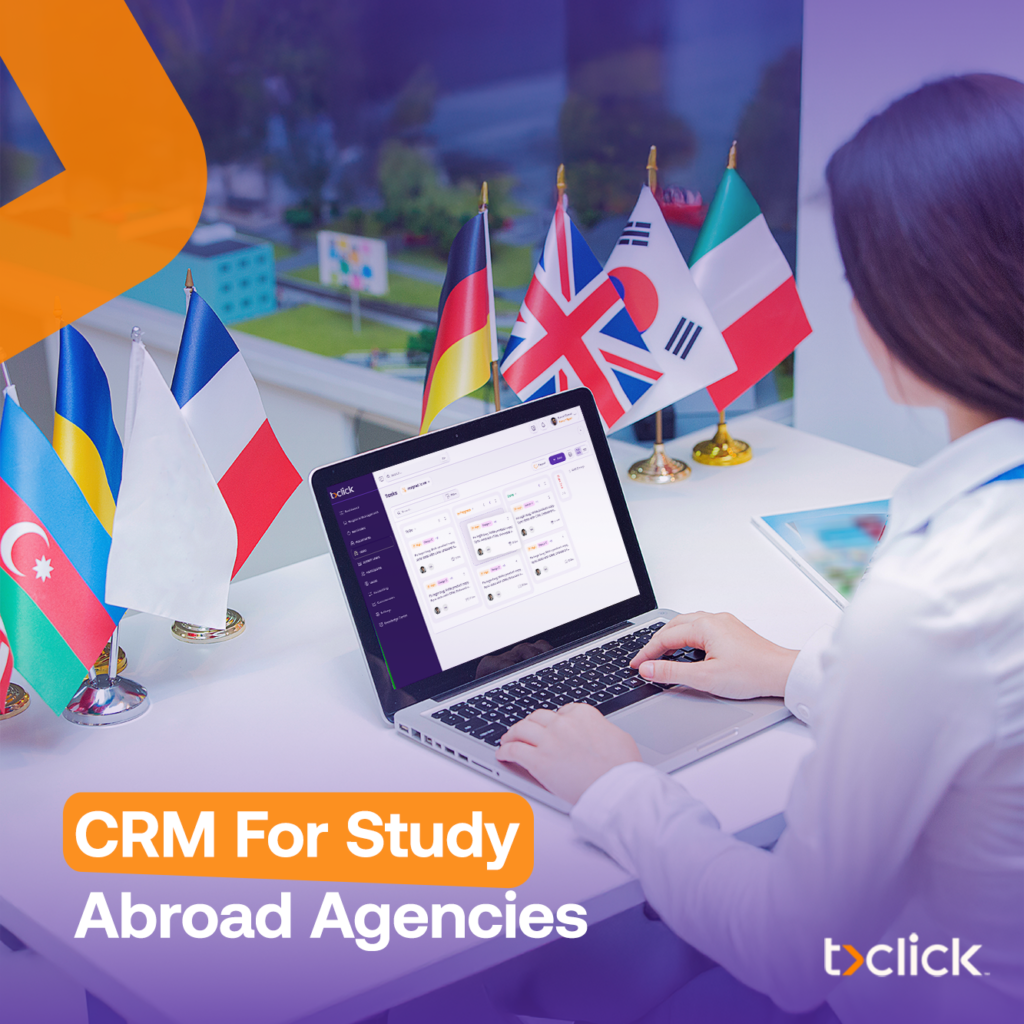
Managing a study abroad agency has never been simple. Between handling student inquiries, coordinating with partner universities, processing applications, managing visa timelines, and maintaining compliance, agencies often juggle dozens of moving parts at once. Without the right system, this complexity leads to missed opportunities, lost documents, and frustrated students. That’s where Customer Relationship Management (CRM) software comes in. A CRM for study abroad agencies isn’t just a contact database—it’s the operational backbone that connects every department, from counselling and admissions to finance and placement. It helps agencies centralize student data, automate reminders, and track progress through every stage of the journey—from the first inquiry to enrollment and beyond. In today’s competitive education landscape, agencies that rely solely on spreadsheets or WhatsApp chats risk falling behind. Students expect clarity, real-time updates, and a professional experience that mirrors the universities they apply to. A purpose-built CRM ensures that every student gets personalized attention while your team stays organized, efficient, and data-driven. And when it comes to specialized solutions, Ticlick stands out as a CRM built specifically for education and mobility programs. Designed for study abroad, internship, and exchange agencies, Ticlick gives you full visibility over leads, programs, participants, documents, payments, and communication—all in one place. In the following sections, we’ll explore why CRMs have become essential for study abroad agencies, which features matter most, and how platforms like Ticlick help agencies scale smarter while improving student satisfaction. Why Study Abroad Agencies Need a CRM Running a study abroad agency means managing hundreds—sometimes thousands—of student journeys at once. Each one involves inquiries, counselling sessions, document submissions, university applications, visa support, and travel coordination. When this process is handled through Excel sheets, WhatsApp chats, or endless email threads, errors are inevitable. Leads are missed, deadlines slip, and both students and staff get overwhelmed. A CRM system solves this by centralizing everything in one place. It connects your marketing, counselling, and operations teams so that every student’s data, stage, and communication history are always up-to-date and visible. Imagine logging into one dashboard and instantly seeing which students are awaiting document uploads, who’s ready for a visa interview, or which leads need a follow-up today—that’s the power of a CRM built for study abroad agencies. Beyond organization, a CRM empowers agencies to work smarter, not harder. Automated reminders keep students on track without manual follow-ups, while performance analytics show which counsellors are converting the most leads or which programs bring the highest ROI. For growing agencies, it’s also a matter of scalability: what works for 50 students will fail at 500 without a proper system. Moreover, regulatory and compliance needs—such as GDPR or country-specific data protection—are becoming stricter. A CRM ensures secure data handling, controlled user permissions, and professional communication that builds student and partner trust. Simply put, a CRM transforms your agency from reactive to proactive—shifting from chasing updates to managing progress in real time. Ready to transform how your agency manages students? Discover why Ticlick is the ultimate CRM for study abroad agencies—built to simplify applications, payments, and communication in one place. Core Features of a CRM for Study Abroad Agencies A modern CRM system built for study abroad agencies goes far beyond storing contacts. It’s a complete ecosystem that connects marketing, counselling, operations, and finance under one roof. Here’s what the most effective systems—like Ticlick—bring to the table: 1. Multi-Source Lead Capture Leads come from everywhere—website forms, education fairs, referrals, walk-ins, and even social media. A CRM collects them all automatically in one place. This means your counsellors never lose track of a potential student, and every inquiry enters a consistent follow-up process. You can also track which sources generate the most conversions to focus your marketing budget more effectively. 2. Customizable Lead Stages & Pipelines Each agency has its own process—from initial inquiry to enrollment. A strong CRM lets you define custom stages such as Inquiry → Application Submitted → Offer Received → Visa Approved → Enrolled. At every step, team members see exactly what’s next, deadlines are clear, and progress is visible in real time. 3. Student & Program Management Every student’s journey is unique, but keeping it organized shouldn’t be a challenge. CRMs like Ticlick link each student to a specific program (Work & Travel, Internship, Study Abroad, etc.), making it easy to view details, requirements, and timelines at a glance. Your counsellors can manage hundreds of students simultaneously while still giving each one personalized attention. 4. Automated Reminders & Communication Tools Manual follow-ups waste time and lead to errors. A CRM automatically sends reminders via WhatsApp, SMS, or email when a student forgets to upload a document, misses a deadline, or has an upcoming appointment. By using the channels students actually check, agencies see faster responses and fewer delays—without chasing every update manually. 5. Document Tracking & Verification Visa documents, transcripts, and recommendation letters—these are critical for compliance. A CRM provides a secure place where students upload their files, and staff can approve, reject, or request updates with one click. This eliminates confusion, maintains full traceability, and ensures embassies or universities always receive complete, verified documentation. 6. Financial Tracking & Payment Integration From tuition invoices to program fees, every transaction is logged and linked to the student profile. Students can view and pay invoices directly through their portal, while your finance team gets real-time updates and reports. This reduces missed payments and gives both sides full transparency. 7. Reporting & Analytics Dashboards You can’t improve what you can’t measure. CRMs generate visual reports on leads, conversions, counsellor performance, payment status, and more. Managers can make data-driven decisions—like identifying top-performing programs or spotting bottlenecks before they become problems. 8. User Roles & Secure Permissions Data protection is crucial when dealing with passports, bank details, and personal information. A good CRM allows administrators to control who can view, edit, or download sensitive data. This keeps your agency compliant with privacy
US Visa Application Guide 2025 | Steps, Requirements & Expert Tips
Securing a U.S. visa is often the most important step for anyone planning to study, work, or travel in the United States. It’s more than filling out forms and attending interviews—it’s your eligibility to live abroad for a defined period, follow your academic or professional goals, and return home without complications. Yet many applicants treat the visa process as a formality and end up facing delays, rejections, or complications that could have been avoided with proper preparation. Whether you’re a student applying for an F or J visa, a professional seeking an H visa, or a tourist applying for a B1/B2 visa, the core principles remain the same: foresight, accuracy, and confidence. In this guide, we’ll break down the essentials of the US visa application process: from choosing the right visa category and gathering documents to passing the embassy interview and staying compliant. Plus, we’ll explore how modern tools—like Ticlick—help agencies streamline the student/exchange visa journey, reduce errors, and keep applicants organized every step of the way. Get ready to demystify the U.S. visa pathway and set yourself up for success. Understanding the U.S. Visa System When you embark on a US visa application, understanding how the American visa system is structured is the first step toward success. The U.S. divides visas into two major categories: nonimmigrant visas for temporary stays and immigrant visas for permanent residency. Nonimmigrant vs Immigrant Visas Nonimmigrant visas are for people who plan to enter the U.S. for a fixed period—such as students, tourists, exchange visitors, and temporary workers. They include categories like F-1, J-1, H-1B, and B-1/B-2, among others. Immigrant visas, on the other hand, are for those intending to live permanently in the U.S., often through family or employment sponsorship (e.g., the green card process). Purpose & Duration Matter Each visa type has its own rules regarding why you’re going to the U.S., how long you may stay, and whether or not you can work. For example, an F-1 student visa allows study in a full-time program, sometimes with work-study or curricular practical training components, but not full-time off-campus employment without authorization. Meanwhile, a B-2 tourist visa generally doesn’t allow work or study beyond short visits. Key Components of the Visa System Visa Classification: Every visa falls under a specific code (like “F-1” for academic students). Visa Petition or Approval: Some visas require a sponsoring employer or institution to file petitions—e.g., H-1B, L-1. Visa Issuance & Stamping: After the application is approved, the visa is stamped in the passport and tied to that specific visa class and conditions. Status and Maintenance: Entering the U.S. legally and maintaining your visa status (e.g. staying enrolled, not working illegally) is critical to compliance. How It Relates to Your Application For someone preparing the US visa application, identifying the correct visa category is essential. Applying for the wrong one, or misunderstanding how long you may stay or what your permissions are, can lead to denials or status violations. Ready to simplify your visa process? Explore how Ticlick helps agencies and institutions manage every step of the US visa application efficiently—from documents to interviews and payments. Types of U.S. Visas When beginning your US visa application, one of the first and most important steps is choosing the right visa category. Each visa serves a specific purpose, has unique eligibility criteria, and comes with its own benefits and restrictions. Understanding these differences helps you apply correctly and avoid unnecessary rejections or delays. 1. Visitor Visas (B1/B2) The B1/B2 visa is for travellers visiting the United States temporarily for business (B1) or tourism (B2) purposes. B1 covers business meetings, conferences, or negotiations. B2 is for leisure travel, visiting family, or medical treatment. Key tip: Applicants must prove they intend to return to their home country after the visit. 2. Student Visas (F1, M1, J1) The F1 visa is the most common for academic students enrolled full-time in accredited U.S. institutions. It allows on-campus work and limited training opportunities like OPT (Optional Practical Training). The M1 visa is for vocational or technical programs. The J1 visa covers exchange visitors—students, interns, researchers, or teachers in cultural or educational exchange programs. These categories fall under the Student and Exchange Visitor Program (SEVP), managed through SEVIS (Student and Exchange Visitor Information System). 3. Work Visas (H, L, O, and more) Work visas allow foreign professionals to contribute to the U.S. economy through specialized skills or intra-company transfers. H-1B: for professionals in specialty occupations (like IT, engineering, or finance). L-1: for employees transferring within multinational companies. O-1: for individuals with extraordinary ability in science, arts, education, or business. Each requires a U.S. employer to file a petition before the visa application. 4. Immigrant Visas (Green Card Categories) For individuals seeking to live permanently in the U.S., immigrant visas are the route. These are generally based on: Family sponsorship (e.g., spouse or parent petitions) Employment-based categories (EB-1 to EB-5) Diversity Visa Lottery Successful applicants eventually receive a Green Card, granting permanent residency. 5. Special Visas Other visa types include K-1 (fiancé/fiancée), R-1 (religious workers), and U/T visas for victims of crimes or trafficking. Want to manage every stage of the US Visa Application smarter? Discover how Ticlick’s Features help agencies, schools, and sponsors automate tasks, track applications, and simplify document management—all in one place. U.S. Visa Application Requirements Before you schedule an interview or pay any fees, make sure you understand what your US Visa Application requires for your specific category. The lists below cover what almost everyone needs, plus the extras for students, workers, visitors, exchange programs, and immigrant cases. 1) Eligibility & the Right Form Choose the correct visa category first (visitor, student/exchange, work, immigrant). DS-160 for most nonimmigrant visas (B1/B2, F-1, J-1, H-1B, etc.). DS-260 for immigrant visas (permanent residence). Petition-based visas (e.g., H-1B, L-1, O-1) require an approved I-129 and I-797 Notice of Approval before you apply. Students/Exchange (F/M/J)
Student and Exchange Visitor Information System (SEVIS)
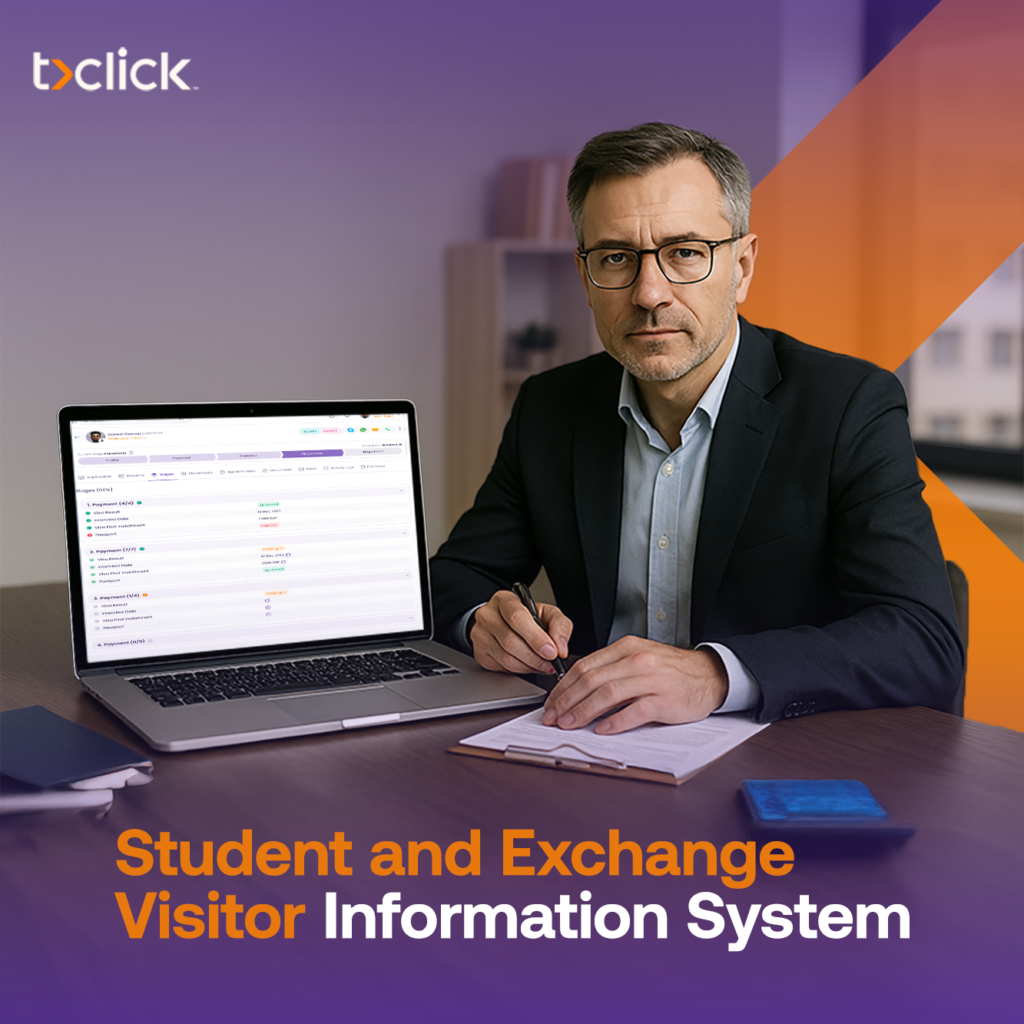
The Student and Exchange Visitor Information System (SEVIS) is the digital backbone that keeps America’s international education ecosystem running smoothly. Managed by the U.S. Department of Homeland Security (DHS), SEVIS monitors and records essential information about international students, exchange visitors, and their dependents during their stay in the United States. Every time a student receives a Form I-20 or an exchange visitor gets a DS-2019, that document is tied to a SEVIS record. This record ensures that their visa status, academic activities, and program progress are tracked accurately—protecting both the participant and the institution’s compliance with U.S. immigration law. Understanding how SEVIS works isn’t just important for universities — it’s also crucial for student recruitment agencies, exchange sponsors, and education consultants who prepare students before they ever reach U.S. soil. Keeping data accurate, managing documents, and ensuring smooth communication between students and institutions all contribute to maintaining valid SEVIS records. That’s where Ticlick helps bridge the gap. While SEVIS manages compliance inside the United States, agencies around the world rely on systems like Ticlick to organize pre-departure documentation, automate follow-ups, and ensure every student’s file is SEVIS-ready. By centralizing applications, payments, and reminders, Ticlick helps agencies send well-prepared students—reducing errors, delays, and compliance risks once their SEVIS journey begins. How SEVIS Works The Student and Exchange Visitor Information System (SEVIS) is a secure online platform used by the U.S. Department of Homeland Security (DHS) to monitor and manage international students (F and M visa holders). exchange visitors (J visa holders), and their dependents throughout their academic journey in the United States. Here’s how the system operates in practice: 1. Record Creation and SEVIS ID When a student is accepted into an Student and Exchange Visitor Information System-certified school, the institution’s Designated School Official (DSO) issues Form I-20. This automatically creates a SEVIS record for the student, containing a unique SEVIS ID. Exchange visitors receive Form DS-2019 from their program sponsor—the key document used for visa applications. 2. Continuous Data Updates Schools and program sponsors are required to update Student and Exchange Visitor Information System with accurate student and visitor information. Any changes in enrollment status, address, field of study, program dates, or employment authorization must be recorded promptly. This keeps all records current and ensures immigration compliance. 3. Monitoring Student Status and Compliance Through Student and Exchange Visitor Information System, authorities can confirm whether each participant maintains lawful status—such as enrolling full-time, following approved training, and not overstaying their visa. If a student withdraws, transfers, or fails to report updates, the SEVIS record is flagged or terminated. 4. Integration with Visa and Immigration Systems Student and Exchange Visitor Information System is linked with the U.S. Department of State and U.S. Citizenship and Immigration Services (USCIS). Consular officers and border officials rely on the system to verify enrollment and legal status before issuing or renewing visas. 5. SEVIS Fee and Record Activation Before applying for an F, M, or J visa, each applicant must pay the I-901 SEVIS fee. This activates their record and funds the continued operation of the system that tracks and supports more than a million international students each year. Key Requirements & Obligations For Student and Exchange Visitor Information System to function effectively, both educational institutions (and exchange sponsors) and students must fulfill strict responsibilities. These obligations ensure that every participant remains compliant and that the system maintains accuracy and credibility. Institutional Obligations SEVP Certification: Schools and program sponsors must be authorized (SEVP-certified) before they can issue SEVIS-related documents like I-20 or DS-2019. Timely Reporting of Changes: Institutions must report changes such as program start or end dates, transfer or termination of students, changes in student’s status or major, and address changes. Record Maintenance: They must retain student/visitor records and status updates in SEVIS faithfully and make sure the data remains accurate. Training & Audit Compliance: Designated officials (DSOs or RO/ARO) must be trained to use SEVIS correctly. Institutions can be audited for compliance and face penalties for neglect. Student & Exchange Visitor Obligations Maintain Valid Status: Students must remain enrolled full-time, avoid unauthorized employment, and adhere to program parameters. Report Updates Promptly: Changes in address, program of study, or personal information must be communicated to their institution, which then updates SEVIS. Respect Program Rules: Students must follow the terms of their visa (e.g., only work on campus if authorized) and cannot stay beyond the authorized period. Keep SEVIS ID Active & Fee Paid: They must pay required SEVIS fees and ensure their record remains active through consistent compliance. When either side fails—if a student misses updating Student and Exchange Visitor Information System or an institution delays a reporting change—the SEVIS record can be terminated or flagged, which can lead to visa revocation or expulsion from the program. Benefits & Importance of SEVIS Regulatory clarity and compliance SEVIS provides U.S. institutions and program sponsors with a unified system to track and report nonimmigrant student and exchange visitor information. It reduces confusion about maintaining legal status and ensures institutions stay aligned with federal immigration policies. Reliable visa verification and oversight Government agencies use SEVIS to verify student and exchange visitor eligibility, confirm active status, and monitor compliance throughout their programs. Accurate SEVIS data helps prevent delays and strengthens the credibility of both institutions and visa holders. Data integrity and student accountability By requiring timely updates for changes such as address, enrollment, or program type, SEVIS ensures transparency and fosters accountability. Students and institutions can easily identify and correct issues before they escalate into visa complications. Enhanced trust and institutional reputation Consistent SEVIS compliance demonstrates professionalism and reliability, building confidence among regulators, partner organizations, and prospective students. It signals that an institution takes student welfare and legal obligations seriously. Actionable data insights The centralized nature of SEVIS data allows for meaningful analysis—helping administrators understand trends in enrollment, retention, and compliance across programs. These insights improve long-term strategic planning and operational efficiency.
All-in-One Student CRM System for Study Abroad & Exchange Programs
In today’s hyper-competitive education landscape, managing student relationships piecemeal is no longer viable. Inquiries come from websites, fairs, social media, agents, and email campaigns—and each one is a potential student. Without a unified system, leads vanish in spreadsheets, follow-ups are forgotten, and teams waste precious time chasing down documents or status updates. That’s where a true student CRM system becomes essential. Unlike generic CRMs designed for sales or corporate customers, a student CRM is built to speak the language of education—capturing inquiries, guiding applications, tracking progress, sending reminders, and delivering insights. It bridges the gap between marketing, admissions, student services, and finance, keeping everyone aligned and every student journey visible. For institutions and agencies that demand more than just software, Ticlick was built from the ground up as a comprehensive student CRM solution. With Ticlick, every step of the student lifecycle is connected—from lead intake to document management, program workflows, automatic reminders, placements, and even payment tracking. In this article, we’ll explore what defines a strong student CRM, the features you need, real examples, and how Ticlick delivers it all in one platform. Why Institutions Need a Student CRM System Every educational institution—whether a university, language school, agency, or exchange program—faces the same core challenge: managing relationships. From the moment a prospective student raises their hand, through applications, acceptance, visa steps, and orientation, there are hundreds of micro-touchpoints. Without a system that centralizes them, things unravel fast. A student CRM system fills that gap by giving every department a shared picture. Marketing sees leads, admissions tracks progress, student services handles documents, and finance monitors payments—all within one unified platform. That removes silos, speeds response times, and ensures nobody misses critical steps. Beyond efficiency, it becomes a tool for insight. With built-in analytics, leadership can see funnel conversion, bottlenecks, counsellor performance, and seasonal trends. That kind of visibility isn’t possible when you rely on email chains, spreadsheets, or disconnected tools. And let’s be honest: today’s students expect seamless digital journeys. If they have to ask, “What’s next?” or worry their documents were lost, you lose credibility. A student CRM ensures transparency for them—updates, deadlines, and document statuses are all visible in a portal that feels modern and trustworthy. Ready to make your student recruitment process smarter and more efficient? Visit Ticlick CRM and see how our student CRM system can transform the way your institution manages leads, students, and programs. Essential Features of an Effective Student CRM System A modern student CRM goes far beyond storing names and contact details—it’s the operational backbone of every successful recruitment team. Here’s what truly sets a strong system apart: 1. All Your Leads in One Place Instead of juggling spreadsheets and email threads, a good CRM brings every inquiry—from fairs, agencies, and websites—into a single, easy-to-navigate dashboard. This ensures that no lead gets lost, and every potential student receives the right follow-up at the right time. 2. Automated Communication That Feels Personal Smart CRMs do the heavy lifting for your team of counsellors by sending out reminders, follow-ups, and application updates automatically—but with a personalized touch. Whether through WhatsApp, SMS, or email, Communication happens naturally without your counsellors having to remember each step. 3. Simple Document & Application Management Forget chasing students for missing paperwork. With integrated document tracking, students upload files securely while staff verify everything in real time. It keeps both sides organized and eliminates back-and-forth emails. 4. Student Portal for Clarity and Confidence Students love transparency. A CRM with a student portal gives them a clear view of their progress—what’s done, what’s next, and what’s missing. This reduces confusion, boosts engagement, and saves your team from endless “what’s next?” questions. 5. Integrated Payments and Finance Tracking Managing invoices and payments manually leads to delays and mistakes. A student CRM with built-in payment tools helps institutions issue invoices, send reminders, and record payments automatically. It keeps finances clean and builds student trust. 6. Actionable Insights and Reports The best systems don’t just collect data—they turn it into insight. From lead sources to conversion rates, a CRM shows you exactly what’s working and where to improve, helping institutions make data-driven decisions that actually impact results. 7. Data Security and Access Control Privacy is critical in education. Role-based permissions ensure that only the right people see sensitive data, keeping your operations compliant with international standards like GDPR and FERPA. If you’d like to explore all the tools and automation features that make Ticlick the most complete student CRM system, check out the full feature list here. The Real Impact of a Student CRM System Beyond organization and automation, the true value of a student CRM lies in its results. When institutions adopt a centralized system for recruitment, communication, and program management, the impact is measurable—both in efficiency and student success. 1. Faster Response, Higher Conversion Speed matters in recruitment. Studies show that responding to inquiries within an hour can increase conversion rates by up to 60%. A student CRM automates lead capture and follow-ups, ensuring no inquiry is left waiting—turning interest into enrollment faster. 2. Better Student Experience When students can track their journey, upload documents, and make payments all in one place, they feel more confident and cared for. This clarity builds trust—and trust leads to higher retention and referrals. 3. Reduced Administrative Workload Manual data entry, reminders, and follow-ups consume valuable hours. A CRM automates these repetitive tasks, freeing staff to focus on counselling, partnerships, and personalized student support. 4. Data-Driven Decisions With every interaction tracked, institutions gain insights into which programs attract the most interest, which markets perform best, and where bottlenecks occur. This turns guesswork into strategy—and strategy into growth. 5. Consistent Communication Across Channels From emails to WhatsApp, the CRM ensures students get the right message at the right time, without overlap or missed follow-ups. This consistency reflects professionalism and strengthens your institution’s
Best Student Recruitment Software for Agencies & Universities | Ticlick
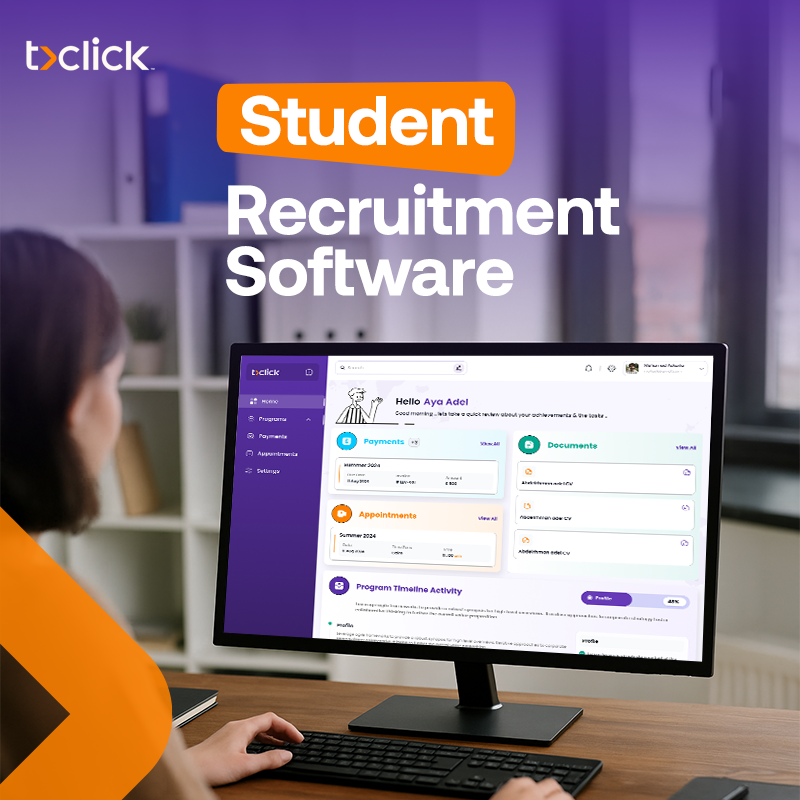
Student recruitment has become more complex than ever. Institutions are no longer dealing with a handful of local inquiries; they’re managing hundreds (sometimes thousands) of leads coming from websites, social media, education fairs, and referrals. Without the right system, those leads slip through the cracks: emails get buried, spreadsheets break, and opportunities are lost. That’s why many universities, agencies, and training providers are turning to student recruitment software. The right platform doesn’t just capture inquiries; it organizes them, tracks every step of the journey, and gives teams the clarity they need to move students from “interested” to “enrolled.” Ultimately, that’s why we built Ticlick, a student recruitment software designed to bring structure, automation, and clarity into every step of the enrollment journey. From capturing leads and managing documents to sending reminders and tracking payments, Ticlick keeps everything in one system so your team works smarter, and your students always know what’s next. What is student recruitment software? Student recruitment software is a digital platform designed to help educational institutions, agencies, and training providers manage the entire recruitment journey from the moment a student shows interest until they officially enroll. Instead of juggling spreadsheets, scattered emails, and manual follow-ups, recruitment software brings everything into one place. It typically includes tools for capturing leads, managing applications, tracking documents, scheduling appointments, sending reminders, and even handling payments. The main idea is simple: make the student journey clearer and the recruiter’s job easier. By automating repetitive tasks and giving both students and staff a structured view of progress, recruitment software reduces errors, saves time, and increases conversion rates. For example, a good system won’t just store a student’s details—it will track which stage they’re in (inquiry, application, interview, acceptance), remind them about missing documents, and allow counsellors to monitor progress in real time. This level of organization is what turns an inquiry into a successful enrollment. Ready to stop losing leads and start enrolling more students? Ticlick was built specifically for international education teams who are tired of juggling spreadsheets, WhatsApp chats, and scattered tools. With one unified platform, you can capture leads, manage applications, track payments, and send reminders automatically—all while giving students the clarity they expect. 👉 Book your free demo today and see how structured, smart recruitment really feels. Key Features of Student Recruitment Software When evaluating a student recruitment platform, it’s important to look beyond the buzzwords and focus on the features that truly make an impact. Here are the core capabilities that the best systems bring to agencies and institutions: 1. Multi-Channel Lead Capture Good recruitment software should centralize inquiries from all sources: your website forms, email campaigns, WhatsApp messages, or event registrations. Instead of scattered spreadsheets, every inquiry is logged in one place, making sure no potential student slips through the cracks. 2. Customizable Pipelines & Stages Every recruitment process is different. Some students move from inquiry to application to interview to enrollment, while others may have visa steps or placement requirements. A flexible system lets you build pipelines tailored to your own workflow, so staff and students always know what comes next. 3. Document & Application Management Student applications often involve passports, transcripts, CVs, or financial records. A strong platform provides secure upload portals, status tracking (e.g., Uploaded, Pending, Approved), and easy verification. This not only saves staff time but also reduces compliance risks. 4. Automated Reminders & Notifications One of the biggest time-savers: automated reminders. Whether it’s nudging a student to upload a missing document, reminding them about an interview, or notifying them of an overdue payment, the system handles follow-ups through email, SMS, or WhatsApp. Staff stop chasing, and students stay on track. 6. Integrated Payments & Invoicing Finance is part of recruitment. Advanced platforms link program fees to student profiles, generate invoices, and allow secure payments (credit card, bank transfer, etc.). Both students and admins benefit from clear visibility into what’s paid and what’s pending. 7. Placements & Appointments Tracking For agencies managing internships, camps, or work-and-travel programs, placements are crucial. Recruitment software should connect students to placements, track offer letters, and sync appointments or embassy interviews with reminders, reducing errors and stress. 8. Reporting & Analytics At the management level, visibility matters. Good systems provide dashboards and exportable reports: how many leads converted, which counsellors performed best, which programs drive the most applications, and where bottlenecks occur. This turns day-to-day activity into actionable insights. 9. Roles & Permissions Finally, security cannot be overlooked. Recruitment platforms must allow admins to define access levels so finance teams see invoices, counsellors see their students, and external partners only see what’s relevant. This protects data while empowering teams. Ready to See How Ticlick Transforms Student Recruitment? Most agencies and institutions still rely on scattered spreadsheets, WhatsApp chats, and email threads to manage their student pipeline. The result is missed leads, late follow-ups, and frustrated students. Ticlick changes that. By combining lead management, program setup, student portals, reminders, payments, and placements in one platform, we give you a single system that keeps everything structured and transparent. Want to see how it all comes together? Explore every feature that makes Ticlick the ultimate student recruitment solution. From lead management and program tracking to reminders, payments, and student portals—everything is built to keep your team organized and your students engaged. 👉 Discover Ticlick’s full feature suite and see how you can transform your recruitment process today. Benefits of Using Student Recruitment Software Centralized Lead Management Instead of tracking student inquiries in scattered spreadsheets or inboxes, recruitment software keeps everything in one system. This means agencies and universities never lose a potential student and can easily see where each lead is in the journey. The result is faster responses and higher conversion rates. Improved Efficiency and Time Savings Manual follow-ups, repeated data entry, and switching between tools waste hours every week. With automation features like reminders,