
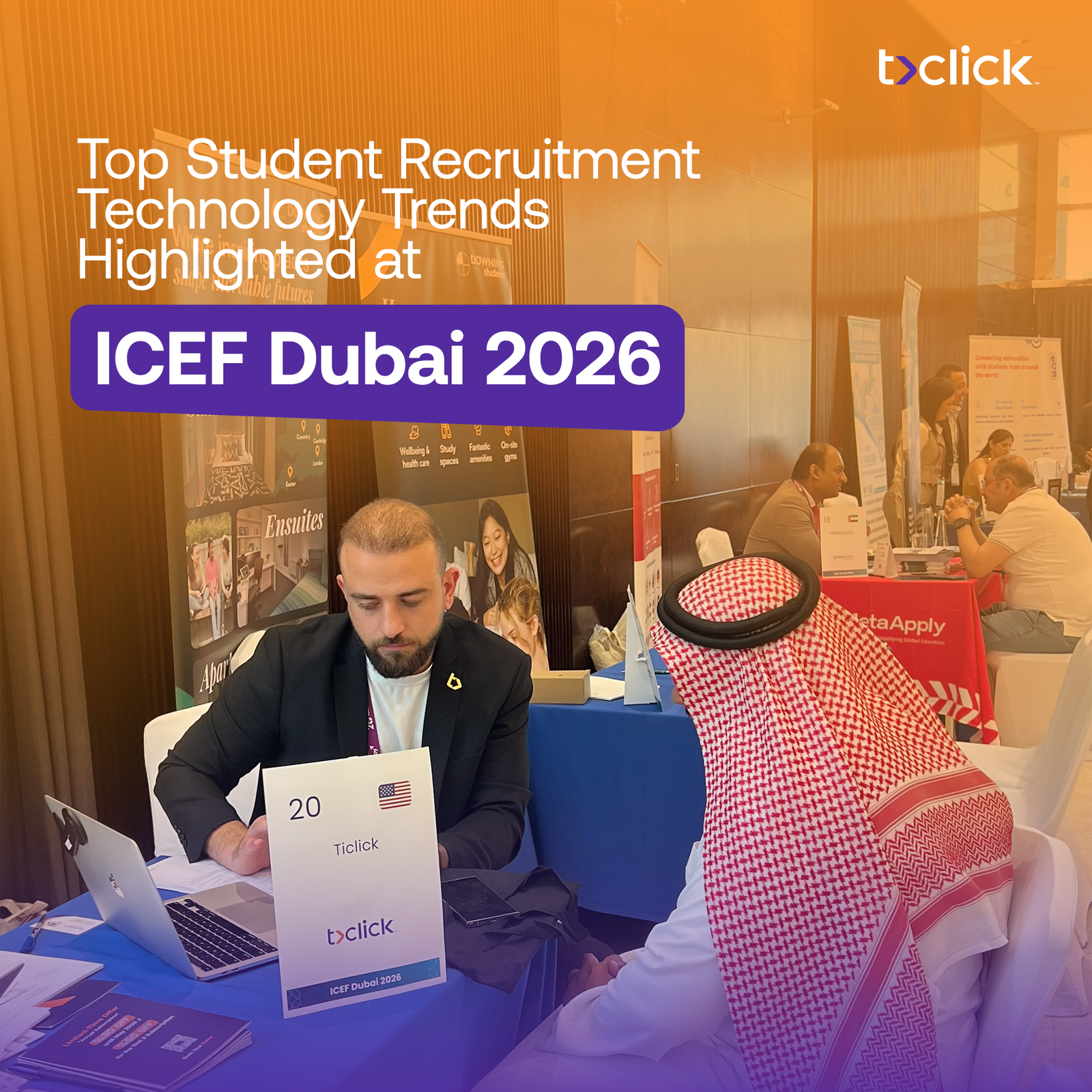
ICEF Dubai has long been recognized as one of the most strategic global hubs for international education partnerships. In 2026, however, the conversations felt different. Beyond program discussions and market expansion plans, one topic consistently dominated meetings across universities, agencies, and service providers: technology.
For the team at Ticlick, participating in ICEF Dubai 2026 offered a front-row view into how rapidly student recruitment operations are evolving. Across structured B2B meetings, one theme became unmistakable—recruitment is no longer just about relationships; it is about infrastructure.
The year 2026 marks a clear acceleration in digital transformation across international education. Institutions are facing higher student expectations, longer and more complex application journeys, and increased pressure to scale across multiple markets. Technology is no longer a support function; it is central to operational success.
This article explores the top student recruitment technology trends highlighted at ICEF Dubai 2026, based on recurring themes, real conversations, and strategic observations from the event. These student recruitment technology trends are not theoretical—they reflect what recruitment leaders are actively prioritizing right now.
Why Technology Dominated Conversations at ICEF Dubai 2026
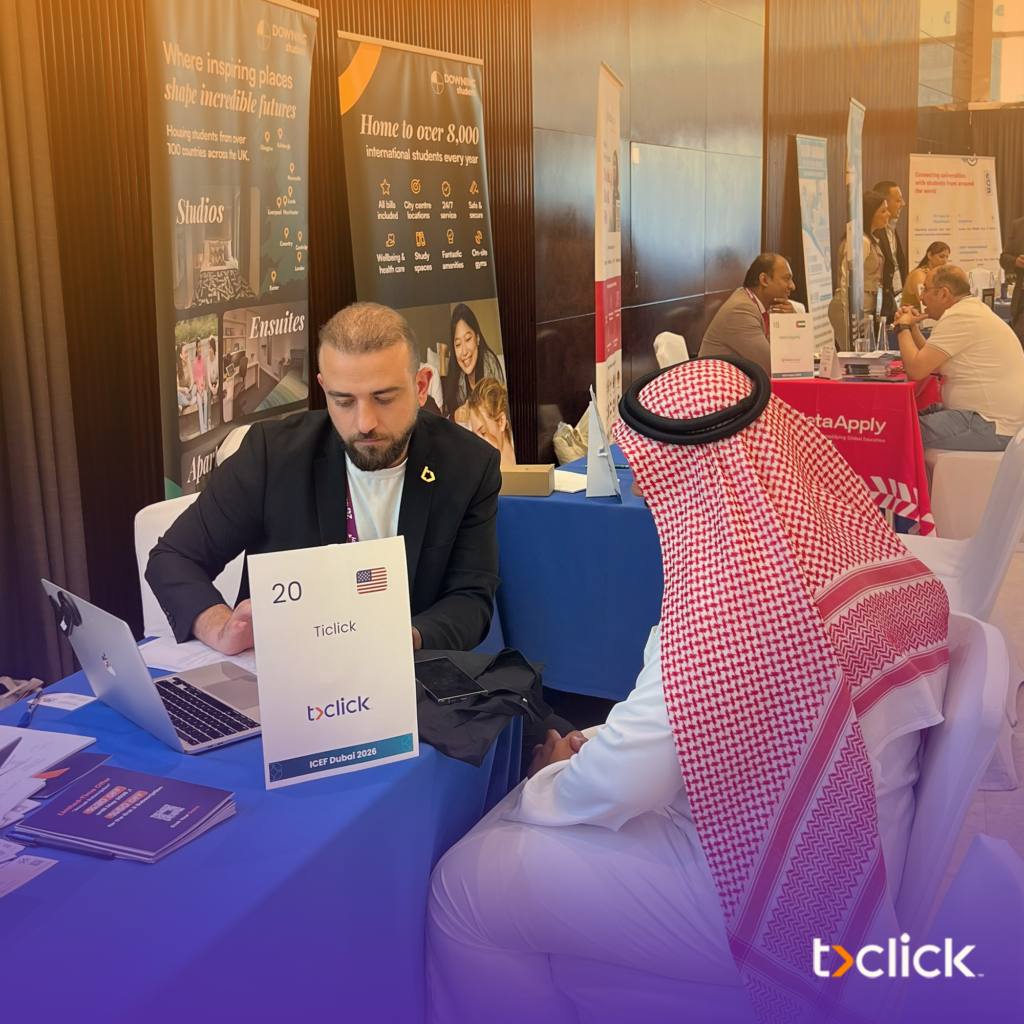
Technology did not appear as a side topic at ICEF Dubai 2026. It was embedded in nearly every strategic discussion. The reason is simple: recruitment operations have reached a level of complexity where manual systems are no longer sustainable.
Increasing Operational Complexity
International recruitment today involves:
- Multi-market coordination
- Agent partnerships across regions
- Documentation-heavy application processes
- Visa tracking and compliance requirements
- Multiple intake cycles
Managing this complexity through spreadsheets, email threads, and disconnected tools creates operational risk.
One of the top student recruitment technology trends highlighted at ICEF Dubai 2026 was the urgent need to centralize and structure operations. Institutions are realizing that fragmented workflows slow down growth and reduce conversion efficiency.
Rising Expectations from Students and Institutions
Students in 2026 expect the following:
- Faster responses
- Transparent application tracking
- Clear documentation guidance
- Real-time updates
At the same time, institutions expect the following:
- Better-qualified applicants
- Accurate documentation
- Performance visibility
- Predictable processing timelines
These rising expectations are driving adoption of student recruitment technology trends focused on automation, transparency, and lifecycle visibility.
The Pressure to Scale Without Increasing Overhead
Recruitment teams are being asked to grow enrollment numbers without proportionally increasing staff size. This creates pressure on efficiency.
Scaling without structured systems leads to the following:
- Burnout
- Missed follow-ups
- Document errors
- Communication gaps
Technology is becoming the scalability engine. At ICEF Dubai 2026, leaders repeatedly discussed how digital infrastructure allows teams to handle higher volumes without losing control.
Want a closer look at our experience on the ground?
Explore how Ticlick CRM at ICEF Dubai 2026 engaged with global recruitment leaders, identified key trends, and contributed to conversations shaping the future of international student recruitment.
Top Student Recruitment Technology Trends Highlighted at ICEF Dubai 2026
The following trends consistently surfaced as priority areas during the event.
1. CRM Systems as Operational Infrastructure
One of the most significant student recruitment technology trends highlighted at ICEF Dubai 2026 is the evolution of CRM systems.
CRM platforms are no longer viewed as simple contact databases. They are becoming fully operational infrastructure.
Modern student recruitment CRM systems now support:
- Application lifecycle management
- Document tracking
- Stage-based pipeline progression
- Agent collaboration
- Performance reporting
The shift is clear: CRM is no longer about storing contacts—it is about structuring recruitment operations end-to-end.
2. Automation Across the Recruitment Lifecycle
Automation was another dominant theme among the top student recruitment technology trends highlighted at ICEF Dubai 2026.
Recruitment teams are automating:
- Follow-up emails
- Document reminders
- Interview scheduling
- Payment notifications
- Pipeline stage transitions
Automation reduces repetitive manual work while improving consistency. Instead of relying on memory or inbox searches, workflows trigger actions automatically.
This trend is directly linked to efficiency and conversion improvement.
3. Centralized Communication Platforms
Fragmented communication was widely acknowledged as a major operational risk.
Agencies and institutions operate across:
- SMS
- Internal chat tools
One of the top student recruitment technology trends highlighted at ICEF Dubai 2026 is the integration of communication channels into centralized systems.
When WhatsApp and email communication are logged within recruitment platforms, teams gain:
- Full conversation history
- Reduced miscommunication
- Improved accountability
- Faster decision-making
Centralization enhances both internal coordination and external collaboration.
4. Data-Driven Enrollment Strategy
Data visibility has become non-negotiable.
Institutions are moving away from intuition-based recruitment decisions and toward analytics-driven strategies.
Real-time dashboards and performance tracking now allow teams to monitor:
- Conversion rates
- Drop-off stages
- Lead source performance
- Agent productivity
- Processing time
This data-driven approach was one of the strongest student recruitment technology trends emphasized at ICEF Dubai 2026.
5. Agent & Partner Portal Transparency
Transparency between institutions and agents is evolving through shared digital access.
Modern recruitment platforms now include the following:
- Agent portals
- Shared document tracking
- Status visibility
- Task notifications
This shared visibility reduces friction and strengthens collaboration. Agent transparency was a consistent discussion point throughout ICEF Dubai 2026.
6. AI-Assisted Lead Qualification & Workflow Optimization
Artificial intelligence is increasingly influencing recruitment technology.
AI-driven features are being used to:
- Score and prioritize leads
- Identify high-conversion prospects
- Predict bottlenecks
- Suggest workflow improvements
While still evolving, AI-assisted recruitment processes were clearly emerging among the top student recruitment technology trends highlighted at ICEF Dubai 2026.
Technology was a major theme at ICEF Dubai 2026 — but agent expectations shaped the conversations just as strongly.
Discover what education agents were looking for at ICEF Dubai 2026, from structured communication to transparent workflows and long-term partnerships.
What These Technology Trends Mean for Agencies and Institutions

Understanding these student recruitment technology trends is not enough — institutions must interpret what they mean strategically.
Operational Maturity Is Now a Competitive Advantage
Recruitment is no longer defined solely by marketing strength. Operational maturity now differentiates institutions.
Teams that implement structured CRM systems, automation, and analytics outperform those relying on disconnected tools.
Systems Replace Fragmented Tools
Spreadsheets, inboxes, and informal tracking methods cannot support modern recruitment scales.
One clear message from ICEF Dubai 2026: structured systems are replacing fragmented tools.
Technology is consolidating operations into unified environments.
Recruitment Teams Must Think Infrastructure
Perhaps the most important shift highlighted by the top student recruitment technology trends at ICEF Dubai 2026 is mindset.
Recruitment is no longer just outreach and relationship building. It is infrastructure management.
Institutions and agencies that treat recruitment as an operational system — supported by CRM platforms, automation, analytics, and communication integration — are positioning themselves for sustainable international growth.
How Ticlick Aligns with the Student Recruitment Technology Trends Highlighted at ICEF Dubai 2026
The conversations at ICEF Dubai 2026 made one thing clear: recruitment teams are looking for structured systems that reflect the operational realities of international education.
While many platforms claim to support enrollment management, few are built specifically around the workflows that agencies and institutions discussed during the event. This is where purpose-built recruitment platforms like Ticlick align naturally with the emerging student recruitment technology trends.
Built Around Recruitment Workflows — Not Generic Sales Pipelines
One of the top student recruitment technology trends highlighted at ICEF Dubai 2026 was the shift from generic CRM systems to recruitment-specific infrastructure.
Ticlick is designed around the following:
- Multi-stage student journeys
- Agent collaboration workflows
- Document-heavy application processes
- Visa tracking stages
- Intake-based progression
Instead of adapting sales logic to education, the platform mirrors how recruitment teams actually operate.
Automation Without Operational Complexity
Automation was one of the most discussed student recruitment technology trends at ICEF Dubai 2026. However, automation must be structured—not overwhelming.
Ticlick enables:
- Automated follow-up reminders
- Document submission alerts
- Pipeline stage triggers
- Task assignments
- Communication scheduling
The goal is not to replace human interaction but to support it with consistency and clarity.
Centralized Communication and Visibility
Fragmented communication was repeatedly identified as a major risk during event discussions.
Ticlick centralizes:
- Email records
- WhatsApp integrations
- Internal notes
- Student status updates
- Partnership progress
This visibility supports transparency — one of the strongest student recruitment technology trends highlighted at ICEF Dubai 2026.
Scalable Structure for Growing Recruitment Teams
As recruitment operations expand across markets, structured systems become essential.
Ticlick supports scalability by offering:
- Role-based task ownership
- Performance dashboards
- Agent tracking tools
- Stage-based partnership pipelines
- Real-time reporting
Scalability without chaos is the underlying objective behind many of the technology trends discussed at ICEF Dubai.
Learn how student recruitment CRM software supports agencies after ICEF Dubai by structuring follow-ups, centralizing contacts, and turning meetings into measurable recruitment growth.
Conclusion
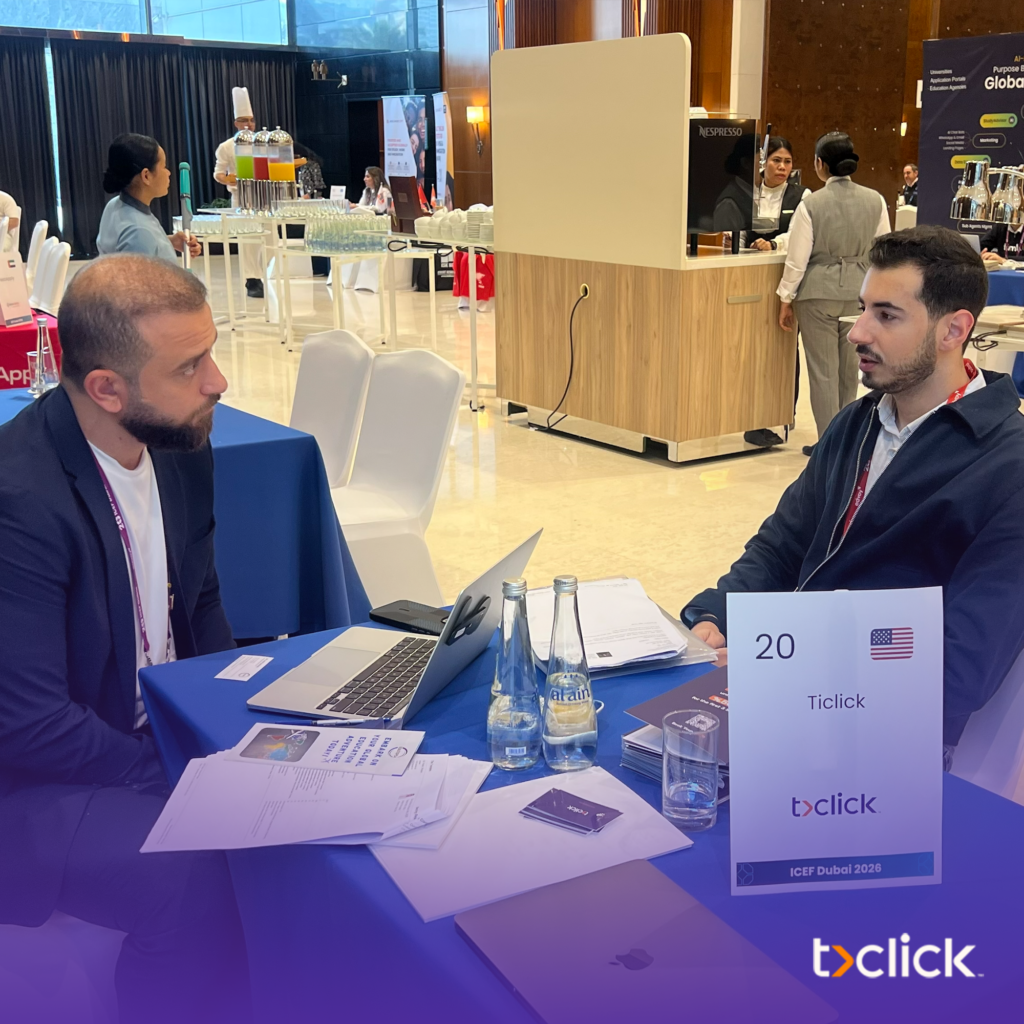
ICEF Dubai 2026 did more than facilitate partnerships — it exposed a structural transformation within international student recruitment.
The top student recruitment technology trends highlighted at ICEF Dubai 2026 reflect a market that is maturing operationally. Recruitment is no longer sustained by informal processes or disconnected tools. It is increasingly driven by infrastructure—CRM systems, automation workflows, centralized communication, analytics dashboards, and collaborative transparency.
Institutions and agencies that recognize this shift are repositioning recruitment as an operational discipline rather than a purely relationship-driven function.
The direction is clear:
- Technology is no longer optional.
- Operational maturity is now a competitive advantage.
- Structured systems outperform fragmented tools.
- Data-driven decision-making defines growth.
ICEF Dubai opened important conversations. But the real transformation happens when recruitment teams implement systems that align with these trends.
The organizations that invest in structured recruitment technology today will define the next phase of international education growth tomorrow.