
The global landscape of work & cultural exchange programs is undergoing a fundamental transformation. Over the past few years, the industry has shifted from relatively simple participant placement models to highly structured operational ecosystems that require coordination across multiple countries, stakeholders, and regulatory frameworks.
Agencies today are no longer operating as intermediaries. They are managing full participant lifecycles that involve recruitment, screening, documentation, compliance, placement, and ongoing support. This shift has significantly increased the operational burden on agencies, especially as participant volumes continue to grow.
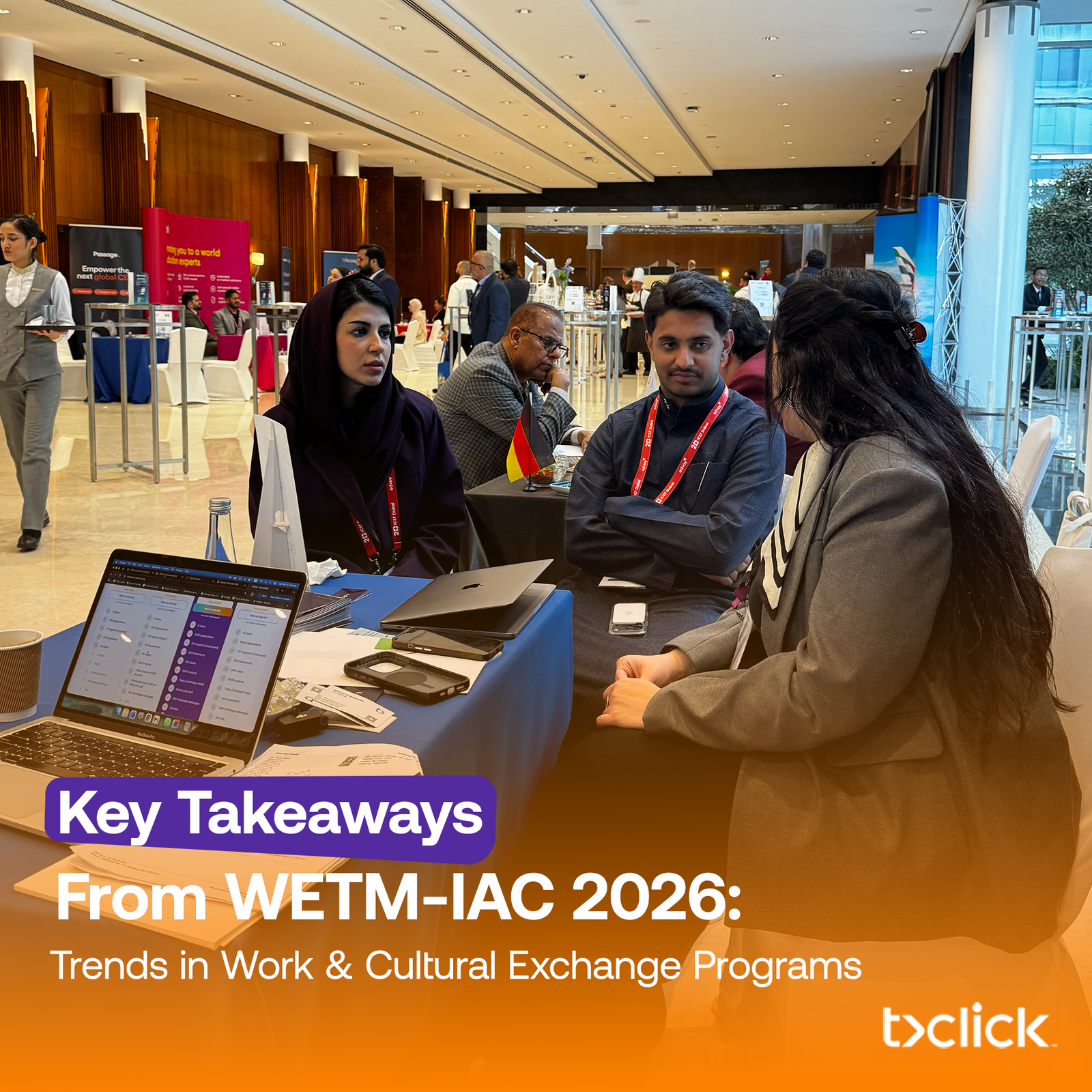
Events like WETM-IAC 2026 provide a real-time snapshot of how the work experience travel market is evolving. The conversations happening inside these events are no longer about growth alone—they are about how to manage that growth effectively.
For organizations like Ticlick, these insights are critical. They highlight a clear direction in the industry: agencies need structured systems to manage complexity, improve efficiency, and scale sustainably.
This article explores the key takeaways from WETM-IAC 2026, providing deeper insights into the trends shaping work & cultural exchange programs and what these changes mean for agencies moving forward.
WETM-IAC 2026 as a Reflection of Industry Evolution
Why This Event Matters for Work & Cultural Exchange Programs
WETM-IAC 2026 is not just another industry event—it is a concentrated environment where the most relevant stakeholders in the work experience travel market come together.
Because attendees include decision-makers, program sponsors, and experienced agencies, the discussions reflect real operational challenges rather than theoretical ideas. This makes the event a strong indicator of what is actually happening inside Work & Cultural Exchange Programs.
The value of WETM-IAC 2026 lies in its ability to surface patterns. When multiple agencies from different regions highlight similar challenges, it becomes clear that these are not isolated issues—they are industry-wide trends.
To explore how these conversations translated into real interactions and insights, take a closer look at Ticlick CRM at WETM-IAC 2026 and the key discussions with agencies and sponsors during the event.
From Networking to Strategic Insight
In the past, industry events were primarily focused on networking and partnership building. While this remains important, WETM-IAC 2026 shows a clear evolution toward more strategic conversations.
Agencies are now using these meetings to discuss:
- internal operational challenges
- workflow inefficiencies
- scaling limitations
- system requirements
Key Takeaways from WETM-IAC 2026
1. Growing Complexity Across Exchange Programs
One of the strongest signals from WETM-IAC 2026 is that work & cultural exchange programs are becoming significantly more complex.
Agencies are no longer managing a single program type. Instead, they are handling multiple program categories simultaneously, each with different requirements and workflows.
For example, Work & Travel programs may require specific visa processes, while internship programs involve host matching and skill alignment. Volunteer programs, on the other hand, may require additional coordination with NGOs.
This layered complexity creates operational pressure that cannot be handled effectively without structured systems.
2. Agencies Are Shifting Toward Operational Excellence
Another key takeaway is the shift in mindset from growth to operational excellence.
Agencies are realizing that increasing participant numbers without improving internal processes leads to inefficiencies, errors, and poor participant experiences.
As a result, there is a growing focus on:
- standardizing workflows
- improving internal coordination
- reducing manual work
Operational excellence is becoming a key differentiator in the work experience travel market.
3. Demand for Transparency Is Increasing
Transparency is no longer optional—it is expected.
Sponsors and host organizations want visibility into:
- participant progress
- document status
- program timelines
Agencies must provide accurate and timely updates to maintain trust and credibility.
This increasing demand for transparency is pushing agencies to adopt systems that allow them to track and share information more effectively.
4. Technology Is Becoming Central to Program Management
Technology is now at the core of work & cultural exchange programs.
At WETM-IAC 2026, agencies showed a clear interest in tools that can help them manage operations more efficiently. This includes CRM systems, automation platforms, and centralized dashboards.
The shift toward technology is driven by the need to reduce manual work, improve accuracy, and gain better control over operations.
5. Data-Driven Decision Making Is Becoming Standard
Another important trend is the increasing reliance on data.
Agencies are no longer relying solely on experience or intuition. They are using data to understand:
- program performance
- participant conversion rates
- operational bottlenecks
Data-driven decision-making allows agencies to optimize their processes and improve outcomes.
6. Partnerships Are Becoming More Structured
Partnerships in the Work Experience Travel Market are evolving.
Instead of informal collaborations, agencies are now expected to operate within structured frameworks that include:
- defined processes
- clear communication standards
- performance expectations
This shift requires agencies to adopt more organized systems and workflows.
As these needs extend beyond exchange programs, many institutions are adopting CRM software for educational organizations to centralize operations and improve efficiency.
Emerging Trends in Work & Cultural Exchange Programs
Scaling Programs Without Losing Control
Scaling is no longer just about growth—it is about controlled growth.
Agencies must find ways to increase participant volumes without compromising quality or operational efficiency. This requires structured systems that can handle larger workloads without introducing errors.
Managing Multi-Country Operations
Work & cultural exchange programs often involve multiple countries, each with its own regulations and requirements.
Managing these differences requires:
- strong coordination
- clear communication
- consistent processes
Without proper systems, multi-country operations can become difficult to manage.
Improving Participant Experience
Participant experience is becoming a key focus.
Agencies must ensure that participants receive:
- timely updates
- clear instructions
- smooth application processes
Improving participant experience requires well-organized workflows and reliable communication systems.
Balancing Growth with Compliance
As agencies grow, maintaining compliance becomes more challenging.
They must ensure that all regulatory requirements are met, even as participant volumes increase. This requires systems that can track documentation and monitor compliance in real time.
Understanding these shifts is critical for long-term success. Explore the future of international student recruitment software and how agencies are preparing for the next phase of global mobility.
The Operational Challenges Behind These Trends
Fragmented Systems
Many agencies still rely on multiple disconnected tools.
This fragmentation leads to inefficiencies and makes it difficult to maintain accurate records.
Manual Workflows
Manual processes slow down operations and increase the risk of human error.
Lack of Visibility
Without centralized systems, agencies struggle to track participant progress and identify issues.
Communication Gaps
Communication gaps can lead to delays, misunderstandings, and reduced efficiency.
Where CRM Systems Fit into the Future of Exchange Programs
Centralizing Participant and Program Data
CRM systems allow agencies to store all participant data in one place, making it easier to access and manage.
Automating Workflows and Communication
Automation reduces manual tasks and ensures that processes run smoothly.
Enabling Real-Time Visibility
CRM systems provide real-time insights into operations, helping agencies make better decisions.
How Ticlick CRM Aligns with These Industry Trends
Built for Work & Cultural Exchange Programs
Ticlick is designed specifically to support agencies managing complex exchange programs.
Designed for Complex Participant Lifecycles
Ticlick enables agencies to manage multi-stage participant journeys with clarity and control.
Supporting Scalable and Structured Operations
By combining automation and data visibility, Ticlick helps agencies scale their operations efficiently.
What These Takeaways Mean for Agencies Moving Forward
Operational Maturity Is Now Required
Agencies must adopt structured processes to remain competitive.
Systems Will Define Competitive Advantage
The use of CRM systems will determine which agencies can scale successfully.
Agencies Must Think Beyond Recruitment
The focus is shifting toward full lifecycle management.
Conclusion
The insights from WETM-IAC 2026 highlight a clear transformation in the work experience travel market.
Agencies are moving toward more structured, technology-driven operations that prioritize efficiency, transparency, and scalability.
Platforms like Ticlick are helping drive this transformation by providing tools that align with the real needs of exchange programs.
As the industry continues to evolve, agencies that invest in structured systems and operational excellence will be best positioned to succeed.