
Best CRM with Resume Maker for Students | Ticlick
If you look at the student journey today, it’s no longer just about grades or completing program requirements. Students are constantly preparing for internships, exchange programs, volunteering opportunities, part-time work, and scholarships—each one needing a polished, professional resume. And this is exactly why interest in a CRM with resume maker for students has grown so rapidly. Students aren’t only managing documents; they’re building their future identity. But the reality is that most students keep their certificates in one folder, their achievements in another, and their personal information scattered between emails and apps. When the moment comes to apply, they scramble to collect everything—and the resume they end up with rarely reflects their real potential. A CRM that includes a built-in resume maker changes this entirely by giving students a single space where their information is organized, updated, and instantly usable. The Challenges Students Face Without a CRM with Resume Maker Without a structured system, students often struggle to present themselves professionally. They lose track of achievements, forget important dates, misplace certificates, or rely on template resumes that fail to tell their story. Many don’t know how to structure a CV or what programs expect from applicants. This makes opportunities feel out of reach—not because students lack talent, but because they lack tools. This is where the need for a CRM with resume maker for students becomes clear. Instead of starting from scratch each time, students benefit from a platform that organizes their milestones, suggests resume sections, auto-fills information from their profile, and helps them present a résumé that actually reflects who they are. It turns a stressful, last-minute task into an ongoing habit of professional growth. Looking for a CRM that supports every part of the student journey? Discover how Ticlick transforms education workflows with modern tools, automation, and student-focused features built for real institutional needs What Students Expect from a CRM with Resume Maker Students today aren’t simply looking for a place to store files—they want a system that helps them present who they are. When they choose a CRM with resume maker for students, they expect a platform that guides them, organizes their achievements, and makes creating a professional résumé feel effortless. It’s not just a tool; it’s part of the journey of becoming more confident and career-ready. 1. A Resume Builder That Feels Simple and Supportive Students want a resume creator that doesn’t overwhelm them. They expect templates that look polished, suggestions that make sense, and a step-by-step experience that turns resume building into something they actually enjoy—not fear. 2. Auto-Filled Information Pulled from Their Student Profile A modern CRM with resume maker for students should eliminate repeated data entry. Students look for a system that automatically fills in their academic background, skills, certifications, and experiences using the information already stored in their CRM profile. 3. A Place to Track Achievements, Skills, and Certificates Students expect a centralized space where every milestone—internships, volunteering, projects, workshops—is collected and ready to be added to their resume. No more lost documents. No more “Where did I save that certificate?” How a CRM with Resume Maker Transforms the Student Experience A resume builder inside a CRM isn’t just convenient—it completely changes the way students prepare for opportunities. Instead of rushing to create a resume at the last minute, students gradually build it as they grow. The system becomes a living archive of their accomplishments, ready for internships, scholarships, exchange programs, and future jobs. 1. Students Build Their Resume as They Build Their Story Every time a student updates their profile or completes a new achievement, the CRM with resume maker for students transforms that information into a polished part of their resume. The CV evolves with them, not after them. 2. Advisors Can Provide Better, More Targeted Guidance Instead of reviewing messy, last-minute documents, advisors and counsellors can directly view the student’s resume inside the CRM, add comments, suggest improvements, and help them position their strengths more effectively. 3. Faster, More Confident Applications for Programs and Internships When resumes are already organized and polished, applying becomes simple. Students don’t waste time searching for files or rewriting information—they download and apply. This boosts confidence and increases acceptance rates in competitive programs. 👉 Running a language school and looking for a smoother, more organized way to manage students, classes, documents, and communication? Explore how Ticlick transforms daily operations for language institutions—simple, structured, and built for growth. Introducing Ticlick | The CRM That Helps Students Build Their Resume and Their Future Most CRMs focus on forms, documents, and deadlines—but students need more than that. They need a system that helps them translate their experiences into something meaningful. That’s where Ticlick becomes more than just a management tool. As a CRM with resume maker for students, Ticlick gives learners a structured way to collect their achievements, shape their story, and present themselves confidently whenever an opportunity arises. Ticlick automatically connects everything students do inside the platform—courses, milestones, certificates, volunteering activities, exchange programs, and internships—and transforms it into polished, professional resume content. Instead of building their CV from scratch, students watch it grow with them. 1. A Resume That Builds Itself as Students Progress Every update in the student’s profile feeds directly into the resume builder. Skills, achievements, completed stages, language levels, and experiences are captured automatically—creating a CV that evolves over time, not at the last minute. 2. Ready-Made Templates Designed for Academic and Professional Applications Ticlick offers clean, modern templates optimized for scholarships, internships, exchange programs, and early-career roles. Students don’t need design skills—they simply review and export. 3. A Unified Space for Students, Advisors, and Program Coordinators Because the resume is integrated into the CRM, advisors can review it, suggest additions, correct phrasing, and help students highlight their strengths. This guidance becomes part of the student journey, not an extra task outside the system. Why Ticlick Is the Most Complete CRM with Resume
Best CRM Designed for Study Abroad Agencies | Ticlick

The study abroad industry has become more competitive and more complex than ever. Agencies today handle thousands of leads from websites, social media, WhatsApp, education fairs, referral partners, and global sub-agents. Each student requires personalized guidance through program selection, university admissions, visa documentation, payment stages, interview preparation, and accommodation arrangements. Managing all of this manually—or through generic CRMs—creates delays, errors, and lost opportunities. This is exactly why agencies now search for a CRM designed for study abroad agencies rather than adapting business or sales tools. A specialized CRM understands the unique journey of an international student and supports every step with structured pipelines, automated reminders, document management, financial tracking, and seamless communication. When the entire student lifecycle is organized in one system, agencies improve conversion rates, reduce administrative pressure, and deliver a higher-quality student experience. This is the foundation that modern study abroad operations require to scale globally. What Makes a CRM “Designed for Study Abroad Agencies”? Not every CRM can support the complexity of international student recruitment. A CRM designed for study abroad agencies must handle far more than basic lead tracking—it needs to support admissions workflows, visa processes, document collection, financial stages, agent networks, and cross-border communication. What makes a CRM truly “designed” for this sector is its ability to mirror the real student journey from inquiry to enrollment, while automating tasks that typically overwhelm counselors and coordinators. Multi-Channel Lead Capture for Global Recruitment Study abroad agencies receive leads from fairs, websites, ads, WhatsApp, email, and international partners. A suitable CRM must centralize these inquiries automatically to prevent lost opportunities. Customizable Admissions & Visa Pipelines Unlike generic CRMs, a specialized system includes pipelines for: Application stages Document verification Visa preparation Interview scheduling Final enrollment These pipelines must match real agency workflows—not generic sales funnels. Document Management Built for Visa Requirements A CRM designed for study abroad agencies must support secure uploading, review, and approval of: Passports Transcripts Bank statements Visa forms University documents This saves hours of manual follow-ups. Automated Reminders for Deadlines & Embassy Requirements Students often forget deadlines. A proper CRM automates WhatsApp, SMS, and email reminders for: Missing documents Payments Offer acceptance deadlines Visa appointments This increases conversion and reduces counselor workload. Student & Agent Portals Agencies need separate portals for students and recruitment partners so everyone can track progress in real time—without endless messages or confusion. Integrated Payment Tracking Study abroad applications often require multiple fee stages. The CRM must track deposits, tuition payments, service fees, and overdue balances clearly. Built-In Communication Tools The CRM must support global communication directly inside the platform—especially WhatsApp, email, and SMS—so counsellors don’t lose messages across apps. 👉 Looking to streamline admissions, classes, payments, and student communication? Explore how Ticlick transforms language school management Challenges Study Abroad Agencies Face Without a Specialized CRM Running a study abroad agency is a fast-paced operation where small delays can cost students their acceptance, visa, or scholarship opportunity. Agencies that rely on spreadsheets, WhatsApp chats, and scattered documents quickly lose control of the student journey. Without a CRM designed for study abroad agencies, the workflow becomes reactive instead of strategic—counsellors spend more time searching for information than supporting students. One of the biggest challenges is the sheer number of moving parts: multiple destinations, universities, entry requirements, deadlines, payment schedules, agents, and parents involved in the decision. When this information isn’t centralized, miscommunication becomes inevitable. Students send documents across different platforms, counsellors manually chase missing files, and managers struggle to understand the real status of applications. Over time, the agency becomes dependent on individual staff memory rather than a structured system—leading to errors, stress, and slower processing. Another major issue is the lack of visibility. Without a specialized CRM, managers can’t see which students are stuck, which counsellors are overloaded, or which markets need attention. This makes it difficult to scale operations, expand into new regions, or maintain consistent service across teams. Ultimately, agencies without a proper CRM lose efficiency, lose students, and lose revenue—simply because they lack a system built specifically for their industry. Why Generic CRMs Fail to Support Study Abroad Agencies Many agencies initially experiment with general CRMs—only to realize they don’t fit the international education workflow. Generic systems are built for corporate sales cycles, not student admissions or visa processing. They force agencies to “hack” the system using endless custom fields, tags, external spreadsheets, and workarounds that create more confusion than structure. A generic CRM can track leads—but it cannot manage: visa preparation workflows university documentation requirements conditional and unconditional offers multiple payment stages embassy-specific deadlines internship or accommodation matching compliance documents communication with parents and agents These are critical steps in the student journey—and they simply don’t exist in traditional CRMs. Even worse, customizing a generic CRM to support these tasks requires consultants, developers, and expensive add-ons. The result? Agencies end up paying far more for a system that still doesn’t work the way they need. This is why agencies eventually switch to a CRM designed for study abroad agencies—one that already understands application cycles, visa processes, document flows, and international student needs. And this is exactly where Ticlick excels: it eliminates complexity by offering purpose-built tools that match the real operations of global recruitment teams. The Best CRM Designed for Study Abroad Agencies In a market crowded with generic software tools, Ticlick stands out as the only CRM truly designed for study abroad agencies. Built around real workflows rather than sales pipelines, Ticlick reflects the exact journey that international students—and the agencies guiding them—go through. Every feature inside the platform is intentional: from application stages to visa workflows, from document management to international payments, and from agent collaboration to student communication. It’s a system shaped by the needs of global mobility teams—not adapted from another industry. What makes Ticlick exceptional is its ability to bring clarity to even the most complex operations. Instead of forcing
Affordable Education CRM Software | Manage Students with Ticlick
The education sector is evolving rapidly, and institutions of all sizes—schools, language centres, colleges, universities, and study abroad agencies—are under pressure to streamline operations while keeping costs under control. With rising enrollment numbers, growing administrative demands, and increasing expectations for digital communication, relying on spreadsheets, manual tracking, or disconnected tools is no longer sustainable. This is why the demand for affordable education CRM software has reached an all-time high: institutions need a system that improves efficiency without consuming their entire budget. An affordable CRM helps educational institutions centralize student data, automate follow-ups, track documents, manage payments, and coordinate admissions—all while reducing daily workload for staff. Instead of paying high prices for enterprise platforms that require customization and technical expertise, schools today are looking for an accessible, cost-effective CRM designed specifically for education workflows. And this is where solutions like Ticlick stand out: a powerful, education-focused CRM that delivers enterprise-level features at a price institutions can actually afford. What “Affordable” Really Means in the CRM Market When searching for affordable education CRM software, many institutions quickly discover that “low price” doesn’t always mean “low cost.” Some generic CRMs appear cheap at first but require expensive add-ons, paid integrations, or long development cycles to create even the most basic education workflows. Others lack essential features like application pipelines, document tracking, payment management, or student portals—which forces schools to purchase extra tools, making the overall cost much higher. In the education sector, “affordable” means more than just a small subscription fee. It means: No hidden costs or required development work No premium plugins just to unlock essential features No expensive onboarding or long implementation cycle A CRM that works immediately for education—not after months of setup A system that reduces operational costs by automating manual tasks This is exactly the value offered by Ticlick, an all-in-one CRM built specifically for educational institutions. With ready-made pipelines for admissions, visas, programs, placements, and payments, institutions get everything they need without additional charges or technical complexity—making Ticlick one of the most cost-effective CRM choices in 2024–2026. 👉 Looking for an affordable CRM designed specifically for language schools? Discover how Ticlick streamlines classes, applications, payments, and student communication Key Features Every Affordable Education CRM Software Should Include When institutions search for affordable education CRM software, they expect a system that reduces workload, improves student engagement, and simplifies complex processes—without sacrificing functionality. Even at a budget-friendly price, the CRM must offer strong, education-specific tools that streamline the entire student lifecycle. The right system should centralize leads, automate follow-ups, and provide clear visibility into admissions, programs, documents, and financial activity. At minimum, any affordable CRM for education should include: Lead & Inquiry Management All student inquiries from websites, social media, WhatsApp, fairs, and partner agencies should be captured automatically in one dashboard. Application Pipelines Customizable pipelines allow institutions to track progress across admissions, visas, placements, and onboarding. Document Upload & Verification A secure portal for students to upload passports, transcripts, certificates, and forms—without the chaos of email or WhatsApp attachments. Payment Tracking & Invoicing Schools and agencies need real-time visibility into fees, deposits, and overdue payments. Automated Reminders & Notifications Automation saves staff hours every week by sending reminders for missing documents, deadlines, payment dates, interviews, and events. Integrated Communication Tools WhatsApp, email, and SMS must be built-in, ensuring fast contact with students and parents. Reporting & Analytics Managers should be able to monitor performance, conversion rates, counselor activity, and program demand instantly. These features are typically rare—or expensive—in most generic CRMs. But they all come included by default in Ticlick, making it one of the most complete and affordable solutions in the education CRM market. Challenges Educational Institutions Face Without an Affordable CRM Schools, agencies, and universities that operate without an affordable education CRM software quickly face operational bottlenecks that slow down performance and hurt student experience. Manual tools like Excel, WhatsApp threads, and scattered emails make it difficult to track the student journey clearly, especially when teams handle hundreds or thousands of applications. Disorganized Data & Missed Leads Without a CRM, student inquiries easily get lost—especially when they come from multiple channels. This leads to missed opportunities and lower enrollment numbers. Document Chaos & Delayed Approvals Tracking passports, transcripts, certificates, and financial documents manually creates confusion and compliance risks. Slower Communication Students today expect immediate updates. Manual reminders mean slower responses, missed deadlines, and frustrated applicants. No Visibility Into Staff Productivity Without proper tracking tools, managers can’t identify bottlenecks, allocate workloads, or measure counselor performance. Repetitive Administrative Tasks Staff spend hours sending follow-ups, checking payments, verifying documents, or updating spreadsheets—time that could be used for student support or growth. Higher Operational Costs Ironically, working manually or with generic CRMs often costs more in the long term due to inefficiencies, errors, and the need for multiple additional tools. This is exactly why institutions are turning to affordable education CRM software like Ticlick, which replaces messy manual work with automation, structure, and clarity—at a price any institution can manage. 👉 Discover the best CRM for the education sector—see how Ticlick manages admissions, documents, payments, and student lifecycle in one platform! The Best Affordable Education CRM Software for Modern Institutions When institutions start comparing different platforms, one solution consistently stands out as the most complete and affordable education CRM software: Ticlick. Instead of forcing schools, colleges, and student recruitment agencies to adapt generic business tools, Ticlick was designed from day one for the education sector—offering all the essential features in one simple, cost-effective platform. Unlike many CRMs that appear low-cost but require extra plugins, paid integrations, or developer support, Ticlick includes everything institutions need out of the box. This makes it the ideal choice for organizations that want to keep budgets under control while still benefiting from powerful automation, structured workflows, and a professional student experience. Built Specifically as Affordable Education
Best CRM for Student Recruitment Agencies 2026 | Ticlick CRM
The global student mobility market is undergoing major expansion, and 2026 is expected to be one of the most competitive years for international recruitment agencies. With more students applying to study abroad, more programs entering the market, and more communication channels to manage, agencies need smarter and faster ways to organize applications, documents, deadlines, and payments. Relying on spreadsheets, WhatsApp messages, scattered emails, or generic CRMs is no longer enough—agencies need structured pipelines, automation, and real-time visibility to stay ahead. That’s why the demand for the best CRM for student recruitment agencies in 2026 is higher than ever. Agencies are actively searching for systems that manage the entire student journey—lead capture, applications, visas, documents, placements, and fee tracking—all in one centralized platform. And this is exactly where Ticlick stands out. Built specifically for international education and student recruitment, Ticlick offers ready-made workflows, automated reminders, and a full student portal that eliminates confusion and boosts conversion rates. As the industry evolves in 2026, the agencies that adopt purpose-built technology like Ticlick will outperform competitors and deliver a smoother experience to both students and partners. What Makes a CRM Essential for Student Recruitment Agencies Student recruitment agencies handle hundreds—sometimes thousands—of inquiries from different markets, communication channels, and agent networks. Without a dedicated CRM, leads get lost, applications get delayed, documents go missing, and follow-ups slip through the cracks. This directly affects the agency’s reputation and conversion rate. A modern CRM designed for student recruitment gives agencies everything they need to manage students efficiently: Multi-channel lead capture from websites, agents, WhatsApp, fairs, and social media Structured application workflows to track every stage clearly Document management to avoid errors and missing files Automated reminders for deadlines, payments, interviews, and missing documents Payment tracking for tuition, deposits, and program fees Agent and partner management tools for subcontracting networks Centralized communication so every message is saved and never lost These are the fundamentals any agency in 2026 must have—and this is exactly the ecosystem Ticlick provides. Unlike generic CRMs, Ticlick is purpose-built for international education workflows, making it the most reliable and efficient choice for student recruitment agencies growing in 2026. Challenges Student Recruitment Agencies Face Without a CRM in 2026 Student recruitment agencies operate in a dynamic environment where everything depends on speed, accuracy, and organized workflows. Without a powerful CRM, agencies quickly find themselves overwhelmed with manual tasks, disconnected communication, and inconsistent student follow-up. This affects both operational efficiency and student satisfaction. Lost Leads Across Channels Students contact agencies through WhatsApp, email, Instagram, Facebook ads, websites, and referral partners. Without a centralized system, these leads get lost, forgotten, or duplicated. Unstructured Application Journeys From inquiry to enrollment, students go through dozens of steps. Without a CRM, counsellors cannot track progress or identify bottlenecks, leading to delays and missed deadlines. Document Chaos Student recruitment requires passports, transcripts, certificates, financial documents, and visa forms. Storing these in WhatsApp chats or email threads leads to errors and frustration. Slow Follow-Ups and Missed Deadlines Manual reminders drain time and increase the risk of students missing interviews, payments, or document submissions. No Visibility on Counselor Performance Managers struggle to identify which team members are performing well and where improvements are needed. Inefficient Collaboration with Sub-Agents Agencies often work with partners, franchisees, or sub-agents. Without a CRM, data sharing becomes messy and insecure. All of this makes it clear why agencies in 2026 can’t rely on outdated tools—and why smart CRMs like Ticlick are becoming essential to maintaining competitiveness and professionalism. Top Features to Look for in the Best CRM for Student Recruitment in 2026 Choosing the best CRM for student recruitment agencies in 2026 means selecting a platform that manages the entire student lifecycle—not just leads. Agencies must look for tools that simplify operations, automate repetitive tasks, and improve student communication. Student Lifecycle Automation From inquiry to application to visa to enrollment, agencies need automated pipelines that reflect real recruitment processes. Application & Visa Workflow Pipelines The CRM should allow agencies to customize stages for each program—language schools, universities, internships, work & travel, and more. Student Portal for Documents & Payments A modern recruitment experience requires transparency. Students must be able to upload documents, view deadlines, track progress, and make payments easily. Integrated WhatsApp, SMS & Email Communication Fast communication is the key to higher conversion rates. The best CRM must offer automated reminders across multiple channels. Finance & Payment Dashboard Recruitment agencies handle deposits, tuition fees, program payments, and commissions. A CRM must track all of this clearly. Roles & Permissions for Teams & Agents Different counsellors, managers, and external partners should have controlled access to data. Placement, Program & Host Management Especially for agencies offering work & travel, internships, and cultural exchange programs. Real-Time Reporting & Analytics To help agencies evaluate leads, conversion rates, counsellor performance, markets, and partner success. These features are exactly what Ticlick provides—out of the box—making it the strongest and most scalable CRM for student recruitment agencies entering 2026. Best CRM Platforms for Student Recruitment Agencies in 2026 With the rapid growth of the international education market, agencies in 2026 are actively searching for modern CRMs that help them stay organized, automate their workflows, and deliver a superior student experience. While several CRM categories exist, not all of them are designed to handle the unique complexity of student recruitment. 1. Education-Focused CRMs These systems are built specifically for schools, colleges, universities, and student recruitment agencies. They include pipelines for applications, document tracking, payments, and placements. Ticlick falls into this category but stands out with more automation and flexibility than typical education CRMs. 2. Admissions Management Platforms These tools focus mainly on forms, application submissions, and document handling. They often lack financial tracking, placement workflows, student portals, and multi-channel communication tools. 3. Generic CRMs with Customization Platforms like Salesforce or HubSpot can be customized for education—but
Best CRM for Education Sector | Streamline Admissions with Ticlick
The education sector has become increasingly complex and competitive. Schools, colleges, universities, language institutes, and international recruitment agencies all face the same challenge: managing thousands of inquiries, applications, documents, payments, and student interactions across multiple channels. Traditional tools—spreadsheets, email threads, WhatsApp conversations, and generic CRMs—simply can’t keep up with the growing demand for structure, automation, and real-time visibility. Educational institutions are not like standard businesses. They deal with multi-step student journeys, diverse program types, enrollment cycles, compliance requirements, academic records, and stakeholder coordination. When systems are disconnected, teams waste hours searching for information, following up manually, and trying to understand where each student stands in their process. The result is slow response times, missed opportunities, lost applications, and frustrated students. That’s why modern institutions are shifting toward purpose-built CRM systems designed specifically for the education sector. These platforms centralize every step of the student lifecycle—from the moment a lead expresses interest to enrollment, onboarding, placement, payments, and beyond. And this is exactly where Ticlick excels. As a dedicated CRM built for international education, academic institutions, and training providers, Ticlick brings clarity, structure, and automation to processes that were previously scattered and chaotic. What Makes an Education-Focused CRM Different from a Generic CRM? A generic CRM treats every interaction as a “sales pipeline,” but education doesn’t work like a traditional sales process. Students are not customers making a quick purchase—they go through multiple stages, academic requirements, documentation steps, interviews, payments, and sometimes visa or placement processes. This means institutions need a CRM that understands student lifecycle management, not just sales tracking. An education-specific CRM supports the unique needs of institutions: Multi-channel lead capture from websites, agents, events, referrals, and social media. Application and enrollment workflows with clear stages, deadlines, and document requirements. Academic record and document management, including transcripts, IDs, certificates, and compliance files. Program, course, batch, or internship tracking, depending on the type of institution. Payment schedules, invoices, fee tracking, and reminders. Role-based permissions for admissions, academic teams, finance teams, and student services. Student portals that simplify communication and provide transparency. This is where Ticlick stands out as the best CRM for the education sector. Unlike generic systems that require heavy customization, Ticlick is engineered with education workflows already built in: pipelines for admissions, visa steps, documents, payments, placements, programs, classes, and more. Whether the institution is a language school, a study abroad agency, a college, or an exchange program provider, Ticlick adapts to its structure instantly—without technical complexity. By offering automation, centralized communication (email/WhatsApp/SMS), full visibility across departments, and powerful analytics, Ticlick helps institutions run smoothly, improve student satisfaction, and dramatically increase enrollment efficiency. 👉 Explore how Ticlick helps study abroad agencies manage leads, applications, documents, placements, and payments—all in one powerful CRM. Key Features That an Education CRM Must Have Choosing the best CRM for the education sector means focusing on features that support the complete student lifecycle—not just lead tracking. Institutions handle everything from inquiries and applications to classes, documents, payments, placements, and long-term communication. A powerful education CRM should centralize all these processes into one integrated system. Multi-Channel Lead Capture & Inquiry Management Educational institutions receive inquiries from multiple sources—web forms, landing pages, agents, WhatsApp, social media, education fairs, and referral partners. A strong CRM must automatically capture all leads, tag their sources, assign them to the right counselors, and prevent any inquiry from slipping through the cracks. Ticlick excels here with fully automated lead capture, smart pipelines, and customizable workflows for different departments. Application & Enrollment Workflow Management Applications in education involve several stages—initial interest, form submissions, interviews, document reviews, approvals, and final enrollment. A proper education CRM should map these phases clearly and allow institutions to track students’ progress with full visibility. Ticlick offers customizable pipelines that reflect each program’s admission journey, whether it’s a university degree, English course, exchange program, or internship. Document Collection & Verification Tools Students often need to submit IDs, transcripts, recommendation letters, financial documents, and sometimes visa-related paperwork. Managing these manually creates unnecessary delays and errors. With Ticlick, students upload documents through their portal, while staff track status (Pending, Approved, Rejected) in real time. Fees, Invoices & Payment Tracking Education involves multiple payment structures: tuition fees, deposits, application fees, installment plans, accommodation payments, and more. Ticlick integrates invoicing, fee tracking, payment reminders, and automated records, giving finance teams complete financial transparency. Class, Program, or Placement Scheduling Whether a school is running language classes, university programs, camps, internships, or exchange placements, a CRM must handle scheduling. Ticlick organizes classes, batches, placements, interviews, and deadlines, and syncs them with automated reminders. Communication Tools (Email, WhatsApp, SMS) Education depends heavily on consistent communication—updates, reminders, deadlines, and student support. Ticlick’s built-in communication centre ensures every message is tracked and sent through the student’s preferred channel. Reporting & Analytics A strong education CRM should provide insights into leads, conversion rates, counsellor performance, program demand, financial reports, and student progress. Ticlick offers advanced dashboards that turn every interaction into actionable insights. 👉 Explore Ticlick’s all-in-one student CRM system: manage leads, applications, payments & more. Why Ticlick Is the Best CRM for the Education Sector While many CRMs attempt to serve the education industry, Ticlick outperforms them by being purpose-built for academic workflows, not adapted from business sales pipelines. It understands the unique challenges institutions face—complex student journeys, multi-step workflows, compliance, agency networks, and high volumes of documents and communication. Built Specifically for Education Workflows Ticlick is designed for universities, colleges, language schools, study abroad agencies, exchange programs, training providers, and cultural immersion programs. This means every feature aligns with real educational operations—not generalized sales processes. All-in-One System for Every Student Stage From the moment a student shows interest until graduation or program completion, Ticlick covers everything: Lead capture Applications Documents Payments Class/Program management Placements & internships Communication Reporting Student portal This eliminates the need for multiple tools, spreadsheets, or scattered communication channels.
CRM for Volunteering Organizations | Manage Volunteers with Ticlick

Volunteering organizations today operate in a fast-paced, community-driven environment where coordination, communication, and impact measurement are essential. Whether the organization manages youth volunteers, corporate volunteering programs, community events, or social initiatives, the administrative workload can quickly become overwhelming. Volunteers sign up from different sources—web forms, social media, WhatsApp, email, and partner networks—and without a centralized system, their data becomes scattered across spreadsheets and inboxes. As a result, teams struggle to track volunteer availability, assign tasks, monitor attendance, or follow up on upcoming events. This lack of structure often leads to missed opportunities, low engagement, repeated work, and limited visibility into the organization’s true impact. That’s why nonprofits, NGOs, and community initiatives are increasingly turning to CRM for volunteer organizations, systems that bring clarity and automation to the entire volunteer management process. Instead of relying on manual tracking and inconsistent communication, a dedicated CRM helps organizations coordinate volunteers efficiently, streamline program workflows, and build stronger, long-term relationships with their communities. Platforms like Ticlick elevate this process even further by centralizing registration, scheduling, communication, and reporting—ensuring volunteers feel supported, valued, and engaged every step of the way. What Is a CRM for Volunteering Organizations? A CRM for volunteering organizations is a specialized management platform designed to help nonprofits and community groups organize volunteers, events, tasks, communication, and impact reporting—all from a single, unified system. Unlike traditional business CRMs that focus on sales pipelines, a volunteer-focused CRM is built around people, skills, availability, and service hours. It allows organizations to register volunteers, match them with suitable roles, track their hours, manage event schedules, communicate updates, and measure the overall contribution each volunteer makes. This type of CRM streamlines every stage of the volunteer lifecycle: onboarding, training, role assignment, attendance tracking, and recognition. It centralizes data that would otherwise be spread across WhatsApp messages, paper sign-in sheets, or outdated spreadsheets. With features like automated reminders, skill-based matching, document management, and detailed analytics, the system ensures nothing falls through the cracks. Ticlick, for example, provides volunteering organizations with a comprehensive toolset tailored to real operational challenges—making it easier to run structured programs, maintain consistent communication, and demonstrate measurable community impact to leaders, partners, and donors. 👉 Discover how Ticlick streamlines language school operations—leads, classes, payments, and student progress in one CRM. Challenges Volunteering Organizations Face Without a CRM Unorganized Volunteer Data and Scattered Communication Volunteering organizations often receive volunteer applications from multiple channels—web forms, community partners, WhatsApp, email, and social media. Without a centralized system, data becomes fragmented across documents, spreadsheets, and inboxes. This makes it difficult to maintain accurate records, track availability, or identify engaged volunteers. Difficulty Tracking Training, Tasks, and Attendance Most programs require volunteers to attend training sessions, complete onboarding tasks, or participate in scheduled activities. Without a structured CRM, coordinators struggle to track who attended training, which volunteers completed required tasks, or who is available for upcoming events. Limited Visibility into Engagement and Retention Without proper tracking, organizations cannot see which volunteers are highly active, who needs follow-up, or who has disengaged. This makes it challenging to maintain strong volunteer relationships or build long-term loyalty to the organization. Manual Follow-Ups for Events and Community Programs Sending reminders manually through WhatsApp or email leads to inconsistent communication and missed deadlines. Volunteers may forget event details, training dates, or assigned tasks—resulting in low turnout. No Reliable Reporting for Sponsors and Partners Most volunteering initiatives rely on donors, partners, or community sponsors who expect measurable impact reports. Without a CRM, collecting accurate attendance, volunteer hours, and activity summaries becomes time-consuming and error-prone. Lack of Workflow Structure Across Teams When teams use different tools, communication becomes messy. Coordinators, trainers, field leaders, and communication officers often operate without a shared view—causing duplicated work and operational bottlenecks. 👉 See how Ticlick streamlines Spring Work & Travel programs with automated reminders, placements, documents, and payments—all in one CRM. Key Features of a CRM Designed for Volunteering Organizations Volunteer Registration & Onboarding Forms A dedicated CRM allows volunteers to register online, upload documents, complete onboarding steps, and receive confirmations instantly—saving administrative time and simplifying recruitment. Skill-Based Matching & Role Assignment Ticlick and other volunteer CRMs enable organizations to match people with suitable tasks based on their skills, interests, language abilities, and availability—improving program effectiveness. Event & Program Scheduling with Automated Reminders Organizations can create events, assign volunteers, and send automated reminders for timing, locations, required materials, and preparation steps—ensuring smooth attendance. Attendance and Hour-Tracking Dashboards A CRM tracks volunteer check-ins, service hours, task completion, and cumulative contributions. This data is essential for recognizing volunteer efforts and reporting impact to donors. Document & Certificate Management Volunteers often require IDs, background checks, or training certificates. A CRM stores these documents securely and makes them accessible whenever needed. Multi-Channel Communication (Email, WhatsApp, SMS) Coordinators can communicate directly through the CRM, ensuring consistent messaging and reducing the need for scattered WhatsApp groups or manual reminders. Donor & Partner Management Tools Some CRMs, including Ticlick, allow organizations to manage donors, track sponsorships, send updates, and share impact reports—strengthening partner relationships. Analytics on Engagement, Impact, and Retention Dashboards help teams measure volunteer activity, peak engagement periods, event performance, and overall community impact—supporting strategic decision-making. How Ticlick Transforms Volunteer Management Complete Volunteer Lifecycle Tracking Ticlick brings every step of the volunteer journey into one organized system—from registration and onboarding to task assignment, attendance, and reporting. Coordinators instantly see who is available, who completed training, and who is ready for deployment across programs and events. This level of structure eliminates confusion and ensures that every volunteer is placed where they can make the most impact. Automated Reminders for Events, Tasks, and Training Instead of relying on manual WhatsApp messages, phone calls, or scattered follow-ups, Ticlick automates communication. Volunteers receive timely reminders for upcoming events, assigned tasks,
CRM for Language Schools | Smart Student & Class Management
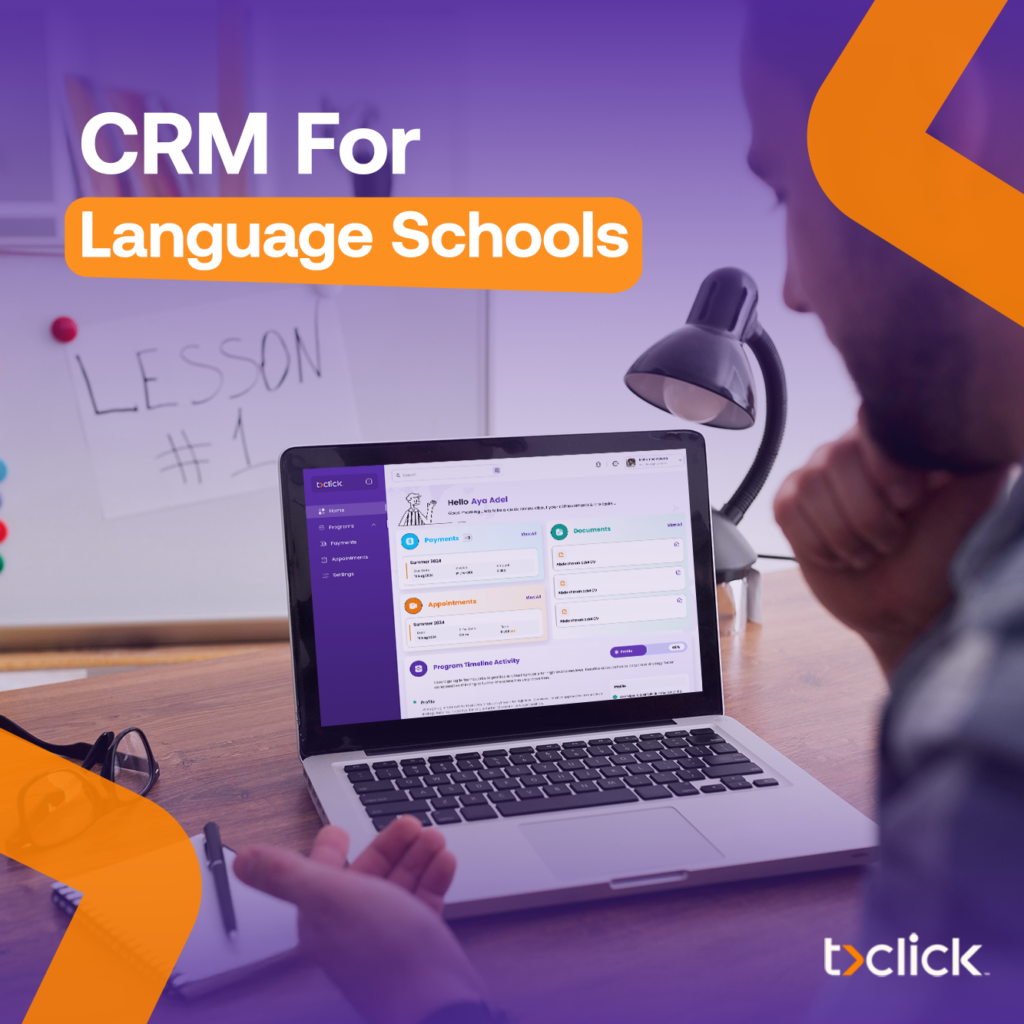
The language education industry has become more competitive than ever, with schools receiving inquiries from websites, WhatsApp, social media, agents, and walk-ins every day. Whether you’re offering English programs, test-prep courses, online classes, or seasonal language camps, every lead matters—and every missed follow-up can mean losing a potential student to another school. Without a centralized system, teams struggle to manage inquiries, track placement tests, update class schedules, or follow up with students who haven’t completed enrollment. This leads to inconsistent communication, duplicated work, and a poor student experience. That’s why more modern institutions are turning to specialized CRM for language schools—platforms designed to bring structure, automation, and clarity to the entire student lifecycle. From capturing leads and assigning them to the right program to scheduling placement tests and managing class availability, a purpose-built CRM helps schools operate more efficiently and respond faster. Tools like Ticlick push this even further by centralizing communication, documents, payments, and student progress into one easy-to-use system—allowing language schools to deliver a smoother, more professional experience to students and parents alike. What Is a CRM for Language Schools? A CRM for language schools is a specialized platform designed to manage student recruitment, class scheduling, communication, and academic workflows—all in one place. Unlike general CRMs made for sales teams, a language-school CRM is built around the unique needs of academic institutions: managing different language levels, tracking placement test results, organizing class groups, monitoring student attendance, and handling the high volume of inquiries that language schools receive each term. This type of CRM centralizes every step of the student journey. It captures leads from multiple channels, organizes them into pipelines, and gives staff real-time visibility into where each student stands—whether they’re inquiring about a beginner course, booking a placement test, confirming payment, or attending their first class. It also automates reminders for deadlines, class start dates, placement test schedules, and follow-ups—reducing manual work and ensuring consistent communication. Platforms like Ticlick take this to the next level by offering customizable pipelines, automated messaging, student portals, and advanced analytics tailored specifically for language schools, helping them boost enrollment, improve retention, and operate with far greater efficiency. 👉 Discover how Ticlick streamlines international student recruitment—leads, documents, payments, and placements in one smart CRM. Challenges Language Schools Face Without a CRM Disorganized Lead Management from Multiple Channels Language schools often receive inquiries from websites, WhatsApp, Instagram, agents, and walk-ins—but without a centralized CRM, these leads get scattered across inboxes and spreadsheets. This results in missed opportunities and slow responses that can push students to competing schools. Manual Follow-Ups and Inconsistent Communication Without automated reminders, staff must manually chase students for placement test bookings, missing documents, or unpaid fees. This inconsistency leads to delays, misunderstandings, and lower enrollment conversion. Difficulty Tracking Class Schedules and Availability Managing different language levels, group sizes, instructors, and time slots becomes extremely challenging without a structured system. Schools often struggle with overbooked classes, empty seats, or scheduling conflicts. Lost Documents and Enrollment Forms When students send documents through WhatsApp or email, files are easily lost or mixed up. This creates bottlenecks in enrollment and reduces efficiency across departments. No Visibility into Student Progress or Retention Rates Without real-time data, schools can’t track attendance, engagement, or performance. This makes it hard to identify at-risk students and improve program outcomes. Limited Reporting and No Insights for Growth Language schools often lack accurate data to evaluate marketing performance, conversion rates, or instructor productivity—making strategic decisions difficult. 👉 See how Ticlick empowers study-abroad agencies with all-in-one CRM: lead capture, placements, payments & reporting. Key Features of a CRM Designed for Language Schools Multi-Channel Lead Capture & Centralized Pipelines A strong CRM gathers inquiries from all sources—website forms, WhatsApp, social media, referral agents—into one dashboard, ensuring no lead is lost. Staff can track every stage from inquiry to enrollment with complete clarity. Custom Pipelines for Courses and Language Levels Language schools manage multiple levels (beginner, elementary, intermediate, and advanced). A CRM allows customized pipelines for each program, making it easy to assign students, track their status, and prepare classes. Automated Reminders for Placement Tests, Classes & Payments Automated communication ensures students receive reminders about placement test schedules, class start dates, tuition payments, and required documents—saving hours of manual work. Student Portal for Schedules, Homework & Progress Tracking A modern CRM provides students with a portal where they can check class schedules, upload homework, receive updates, track their progress, and communicate with instructors—creating a professional learning experience. Document & Payment Management in One System Transcripts, IDs, payment receipts, invoices, and financial records stay organized in a single location. This eliminates confusion and makes it easier for administrators to verify information quickly. Instructor Dashboards for Attendance & Performance Tracking Teachers can mark attendance, upload progress notes, track student engagement, and coordinate with admin teams—all through the CRM. Powerful Analytics on Enrollment, Conversion & Retention Leadership can monitor performance across intakes, identify peak enrollment periods, evaluate marketing channels, and make data-driven decisions for growth. 👉 Explore the full capabilities of Ticlick’s all-in-one student CRM system : manage leads, applications, payments & more. Best Practices for Implementing a CRM in Language Schools Standardize Pipelines for Each Course and Level Before implementing a CRM, language schools should map out clear workflows—beginner, intermediate, advanced, online, and seasonal programs. Standardized pipelines make automation effective and keep teams aligned. Automate Key Touchpoints for Better Efficiency Automated reminders for placement tests, class schedules, payment deadlines, and missing documents minimize manual follow-ups and create consistent communication across all programs. Encourage Students to Use the Portal Instead of Manual Channels A CRM becomes most effective when students rely on the portal to check schedules, upload documents, receive updates, and track their progress—instead of using WhatsApp or scattered messages. Align Academic, Admissions, and
Higher Education CRM Solutions | Streamline University Workflows with Ticlick
In today’s competitive global market, universities, colleges, and international education providers are under more pressure than ever to attract, engage, and support students at every step of their journey. Inquiries now come from websites, social media, education fairs, agents, and email campaigns—often across multiple countries and time zones. Without the right higher education CRM solutions, teams end up juggling spreadsheets, shared inboxes, and disconnected tools. The result? Missed leads, slow responses, repeated data entry, and a student experience that feels fragmented instead of guided. This is exactly why more institutions are moving to dedicated higher education CRM platforms that centralize recruitment, admissions, communication, and program management in one place. A purpose-built CRM helps universities capture every lead, track applications in real time, manage documents securely, and keep students informed with automated reminders and clear timelines. Instead of guessing what’s happening in each department, leadership gets a single source of truth for enrollment performance and student engagement. Solutions like Ticlick take this even further by offering an all-in-one CRM designed specifically for international programs and mobility workflows—so higher education teams can work smarter, respond faster, and deliver a more modern student experience. What Are Higher Education CRM Solutions? A Higher Education CRM solution is a specialized platform designed to help universities and academic institutions manage the entire student lifecycle—from the moment a prospective student shows interest to their final enrollment and beyond. Unlike traditional CRMs built for corporate sales teams, higher-education systems are tailored to academic workflows such as application tracking, document verification, lead nurturing, admissions communication, program matching, and financial processes. These platforms centralize data across marketing, admissions, recruitment teams, finance, and student services, ensuring that every department has the clarity it needs to support students efficiently. A strong higher-education CRM doesn’t just store information; it actively guides both students and staff through a structured, automated journey. It captures multi-channel leads, organizes inquiries into customizable pipelines, and provides real-time visibility into each student’s progress. It also enables institutions to send automated reminders, track missing documents, manage payments, and maintain compliance—all from a single, unified dashboard. This is where purpose-built solutions like Ticlick stand out. Unlike generic university systems, Ticlick is engineered specifically for international programs, exchange initiatives, and cross-department academic workflows, giving institutions the automation, accuracy, and scalability they need to improve enrollment outcomes and deliver an exceptional student experience. 👉 Explore how Ticlick can streamline your Spring Work & Travel programs. Common Challenges Universities Face Without a Higher Education CRM Without a dedicated higher education CRM, universities and international programs often struggle to manage the increasing volume and complexity of student interactions. Leads arrive from multiple sources—web forms, social media, recruitment fairs, partner agents, and email inquiries—and quickly become scattered across inboxes or outdated spreadsheets. This lack of centralization leads to slow follow-ups, inconsistent communication, and a higher chance of losing potential students to more responsive institutions. The challenges don’t stop at recruitment. Admissions teams often have to chase missing documents manually, send repetitive reminders, and manage hundreds of application files across shared drives. Finance departments struggle with tracking invoices, payments, and scholarships. Meanwhile, student services must handle onboarding, orientations, and program updates without real-time visibility into each student’s status. These disconnected processes create delays, administrative overload, duplicated work, and a poor experience for students who expect clarity and timely updates. This is exactly why institutions are shifting toward specialized CRM systems that streamline every touchpoint of the student journey. 👉 Discover how Ticlick enhances international student recruitment with smarter workflows and automation. Essential Features of Modern Higher Education CRM Solutions Modern higher education CRM solutions go far beyond traditional data management—they function as the operational backbone of recruitment, admissions, international programs, and student support. At the core of an effective system is multi-channel lead capture, allowing institutions to gather inquiries from websites, fairs, email campaigns, WhatsApp, and partner networks in one centralized dashboard. Customizable pipelines help admissions teams track every stage, whether it’s inquiry, application, document verification, interview scheduling, or final enrollment. Advanced communication tools are another essential feature. A strong CRM sends automated reminders for deadlines, missing documents, payments, and appointments through email, SMS, or WhatsApp—ensuring students never miss critical steps. Secure document management lets students upload files directly and allows staff to verify them in real time. Integrated payment tracking supports invoices, receipts, scholarships, and financial records with complete transparency. Dashboards and analytics empower leadership to monitor performance, identify bottlenecks, and make data-driven decisions. Integrations with tools like Calendly, Google, Twilio, and Mailchimp ensure institutions operate without switching between dozens of disconnected systems. And with role-based permissions, universities maintain high data security and compliance standards. These are exactly the features that Ticlick brings together in a single, unified ecosystem—making it one of the most complete higher education CRM solutions available today. How Ticlick Transforms Higher Education Workflows Centralized Management for the Entire Student Lifecycle Ticlick replaces scattered tools, shared inboxes, and manual spreadsheets with a unified platform that organizes every stage of the student journey. From the moment a lead is captured, the system assigns it to the correct pipeline, logs all interactions, and gives counselors complete visibility into each student’s status—whether they’re applying for undergraduate study, language programs, internships, or international exchange opportunities. Streamlined Document Collection and Verification With Ticlick, students upload transcripts, passports, financial forms, and supporting documents directly through their personalized portal. Staff can verify submissions instantly, reducing delays and eliminating the back-and-forth typically caused by email or WhatsApp. This structure saves hours of administrative work and ensures nothing gets overlooked. Automated Reminders for Deadlines and Key Milestones Ticlick automates communication around deadlines, missing documents, interviews, payments, and required updates. Students receive timely notifications through email, WhatsApp, or SMS—helping them stay on track while minimizing manual follow-ups for staff. Integrated Communication Across All Channels Instead of switching between platforms, staff can communicate directly within Ticlick using built-in messaging tools. All conversations are recorded, organized,
J-1 Visa Program Guide for Agencies | Manage Students with Ticlick CRM
In today’s global education market, the J-1 Visa Program has become one of the most important pathways for cultural exchange, internships, training opportunities, and Work & Travel experiences. Universities, cultural exchange agencies, and designated sponsors rely on the J-1 program to connect international students with life-changing experiences in the United States. But with this growth comes complexity—multiple visa categories, strict documentation requirements, DS-2019 processing, host placements, interview scheduling, and continuous communication with students. For many organizations, managing all of this manually quickly becomes overwhelming. Leads come from fairs, websites, agents, and email campaigns. Students upload documents in different formats. Counsellors chase missing files. Sponsors request updates. And every step must comply with U.S. Department of State regulations. Without a structured system, agencies risk delays, errors, and lost opportunities. That’s why more institutions now rely on dedicated systems to manage the J-1 workflow. A purpose-built student CRM brings all leads, documents, reminders, and placements into one unified platform—eliminating spreadsheets and reducing admin work dramatically. And among modern solutions, Ticlick stands out as a complete CRM system designed specifically for international programs, cultural exchange, and education mobility. What Is the J-1 Visa Program? The J-1 Visa Program is a U.S. government-approved exchange visitor program designed to promote cultural understanding through educational and professional experiences. Unlike other visa types, the J-1 is built around learning, skill-building, and cultural integration. Students, interns, trainees, teachers, au pairs, camp counsellors, and seasonal workers can participate depending on their category, each with its own requirements and duration. At its core, the J-1 program connects international participants with host organizations in the United States—whether for internships, academic study, or cultural exchange. Every participant must be sponsored by an authorized organization, which oversees documentation, DS-2019 issuance, SEVIS compliance, health insurance verification, and program monitoring. This makes the process highly structured, with multiple checkpoints throughout the student journey. Because these workflows involve strict timelines, visa requirements, and continuous communication, agencies and sponsors often struggle to manage everything through email and spreadsheets. This is where a student CRM becomes essential. With Ticlick, agencies can centralize J-1 leads, track applications, automate reminders, manage documents like DS-2019 or passports, and maintain real-time communication with participants—all in one place. 👉 Explore how Ticlick simplifies your Exchange Visitor Program workflows. Why Institutions Need a Dedicated System for Managing the J-1 Visa Program Managing the J-1 Visa Program isn’t just about collecting applications—it’s a multi-stage, highly regulated process that requires precision, clarity, and continuous communication. Agencies and designated sponsors must coordinate host placements, verify documents, issue DS-2019 forms, track SEVIS updates, guide students through embassy interviews, and ensure compliance from start to finish. When these tasks are handled manually through email threads or spreadsheets, even the most experienced teams face delays, missed steps, and unnecessary administrative pressure. A dedicated student CRM changes that. It centralizes everything—from inquiries and program selection to document submission, interviews, and payment records. Every counsellor, student, and host organization gains a shared view of progress, reducing confusion and improving response times. Instead of reacting to issues, teams can proactively manage each stage with clear workflows, automated reminders, and real-time visibility. That’s why more agencies running J-1 Intern, Trainee, Work & Travel, and Camp Counselor programs are adopting modern systems to stay organized and competitive. And for many, Ticlick is becoming the preferred solution because it’s built specifically to handle complex international mobility programs with structure, automation, and compliance in mind. Key Requirements & Stages of the J-1 Visa Program The J-1 Visa Program follows a defined set of requirements and steps that every participant must complete before travelling to the United States. While specific details vary by category (intern, trainee, WAT, etc.), the overall process includes several universal components. First, participants must meet eligibility criteria, such as being a student or recent graduate, demonstrating English proficiency, and securing a qualified host organization. Sponsors then verify documents, prepare training or internship plans, and issue the DS-2019 form—an essential document needed for the visa interview. Once the DS-2019 is issued, students must pay the SEVIS fee, schedule their embassy appointment, and attend a visa interview. After approval, they complete pre-departure orientations, confirm housing and insurance, and maintain communication with their sponsor throughout their stay. Sponsors, in return, are responsible for ongoing monitoring, ensuring participants comply with program rules, and submitting periodic reports. These requirements make the J-1 workflow both detailed and time-sensitive. Every missing document or delayed reminder can slow down the entire process. That’s why tools like Ticlick are so valuable. With automated reminders, document tracking, customizable J-1 pipelines, and real-time updates, agencies can manage DS-2019 steps, SEVIS tasks, visa timelines, and communication effortlessly from one centralized platform. Top Workflow Challenges Agencies Face When Managing the J-1 Visa Program Even with strong experience, managing the J-1 Visa Program comes with a long list of operational challenges that agencies and sponsors face every single season. One of the biggest issues is handling large volumes of leads coming from fairs, websites, and referrals. Without a centralized system, it becomes difficult to track who is interested, who submitted documents, and who needs follow-up. As a result, agencies often lose qualified applicants simply because communication wasn’t organized. Another challenge is document collection and verification. J-1 programs require passports, transcripts, DS-7002 forms, financial proof, and multiple host-related documents. Collecting these through email or WhatsApp often leads to missing files, duplicates, or confusion about what’s still pending. Add interview scheduling, SEVIS fee reminders, and visa timelines—and the workflow quickly becomes unmanageable. Miscommunication or missed deadlines can create delays for participants and increase the pressure on counsellors and coordinators. This complexity is why agencies need a structured, automated workflow. A dedicated CRM helps eliminate errors, ensure compliance, and streamline communication at every step of the process. Discover how Ticlick streamlines international student recruitment from lead capture to enrollment. How Ticlick Solves J-1 Visa Program Challenges with an All-in-One CRM System
Winter Work and Travel | Earn, Explore & Gain Global Experience

Winter doesn’t have to be a season of staying indoors—it can be a time to explore, grow, and experience the world in a completely new way. The Winter Work and Travel program gives students and young professionals the chance to spend their winter break working abroad, gaining international experience, and immersing themselves in new cultures. Whether it’s assisting at a ski resort in the U.S., working at a cozy lodge in Canada, or joining a cultural program in Europe, this opportunity allows participants to earn money, meet people from around the globe, and create unforgettable memories. Unlike summer programs that are often overcrowded, Winter Work and Travel offers a more relaxed environment, shorter wait times, and unique seasonal experiences. For agencies and coordinators managing hundreds of participants each winter, organization is key. That’s where Ticlick CRM makes a difference. It simplifies how agencies handle student applications, documents, and visa tracking—keeping every detail on schedule while providing participants with clear communication and updates. If you’ve ever dreamed of combining travel, work, and professional growth—winter might just be the perfect season to make it happen, with Ticlick ensuring every step of the journey runs smoothly. What Is the Winter Work and Travel Program? The Winter Work and Travel program is a cultural exchange initiative designed for students who want to gain short-term work experience while discovering life abroad. Typically lasting 8–12 weeks, these programs allow participants to work in hospitality, retail, or tourism during the winter season—from December to March, depending on the destination. It’s more than just a job abroad; it’s a structured program that promotes cultural exchange and skill-building. Students learn how to adapt to new environments, improve their English or local language skills, and develop independence—all while exploring some of the world’s most iconic winter destinations. Many programs are coordinated through universities or authorized agencies, making it easy to find safe, verified opportunities. From ski resorts in Colorado to holiday markets in Germany, Winter Work and Travel opens doors to global adventure even when the world is covered in snow. Why Join a Winter Work and Travel Program? Joining a Winter Work and Travel program is more than just taking a seasonal job abroad—it’s a chance to grow personally and professionally in a completely new environment. Many students choose this program to make the most of their winter break by gaining practical work experience, improving their language skills, and exploring new cultures. Unlike the busy summer season, winter programs often offer smaller groups and more personalized support. That means you’ll have a greater opportunity to connect with local communities, build meaningful friendships, and develop valuable communication and teamwork skills. Whether you’re working in a mountain resort, a holiday market, or a cozy café, every day becomes a chance to learn something new. Beyond professional benefits, Winter Work and Travel provides a once-in-a-lifetime cultural exchange experience. You get to discover local traditions, celebrate global holidays, and see the world from a fresh, snowy perspective—all while earning money to support your adventure. Top Destinations for Winter Work and Travel The Winter Work and Travel program opens doors to some of the most exciting destinations around the world, each offering unique experiences for students. Here are some of the top picks: United States – Popular for its ski resorts in Colorado, Utah, and Vermont. Students can find seasonal work in hospitality, customer service, or outdoor activities while exploring famous winter landscapes. Canada—Known for its friendly atmosphere and stunning scenery, Canada offers jobs in hotels, lodges, and restaurants, especially in Banff and Whistler. Germany—A great choice for students interested in culture and tourism. You can work in Christmas markets or retail shops while learning about traditional German festivities. Japan—Perfect for adventure seekers! Many Winter Work and Travel participants join ski resorts in Hokkaido or Nagano, combining work with breathtaking snow adventures. Each destination provides a blend of work, travel, and cultural immersion, giving participants hands-on experience while making memories that last a lifetime. Ready to manage your Winter Work and Travel applications more efficiently? Discover how Ticlick CRM helps agencies and universities simplify student tracking, document collection, and visa management—all in one smart system. Types of Winter Jobs Available The Winter Work and Travel program offers a variety of job opportunities that allow participants to gain hands-on experience while exploring a new country. Most positions are in tourism, hospitality, and customer service—industries that thrive during the winter season. Common roles include working at ski resorts, lodges, and holiday markets, as well as positions in cafés, retail stores, and hotels. Participants might assist with guest services, food preparation, ticketing, or even outdoor activities like ski instruction and equipment rental. These roles not only develop professional skills such as teamwork, time management, and communication but also allow participants to engage directly with travellers from around the world. What makes winter placements special is the atmosphere—festive, lively, and full of cultural exchange. It’s not just about the work; it’s about the people you meet, the language you practice, and the experiences that shape your perspective. 6. How to Apply for a Winter Work and Travel Program Applying for a Winter Work and Travel program is a straightforward process, but success depends on planning ahead. Start by selecting a trusted agency or university partner that offers verified programs. They’ll help match you with the right employer, guide you through visa requirements, and ensure your placement meets program standards. Here’s a quick overview of the typical process: Choose your destination and job type – Decide where you want to go and what kind of experience you’re seeking (hospitality, retail, or cultural exchange). Submit your application early—most programs open months in advance; applying early increases your chances of securing your preferred position. Prepare your documents—this includes your CV, passport, student verification, and sometimes a short interview or reference check. Apply for your visa—for U.S. programs, this typically means
Spring Work and Travel | Earn, Explore & Grow Abroad

Summer Work and Travel programs have long dominated student exchange opportunities—but lately, Spring Work & Travel is gaining momentum. Why? Because it offers many of the same cultural and employment benefits in a shorter, less crowded window. Instead of competing over summer slots, adventurous students now explore unique spring-season jobs, avoid peak-season rushes, and take advantage of offseason pricing and flexibility. Imagine working in a scenic U.S. resort just as it prepares for the tourist influx, or assisting in a national park during the budding spring season. It’s a chance to experience American life on a smaller scale, test new regions, and build international work experience without committing to a full summer schedule. Whether your school breaks in March, April, or May—this guide will walk you through how Spring Work & Travel works, who’s eligible, and how to make the most of the season. Eligibility & Requirements Spring programs follow similar rules to their summer counterparts, but timing, job availability, and documentation deadlines demand extra precision. Below is what applicants need to know to qualify for Spring Work & Travel. Who Can Apply? Must be enrolled full-time at a university outside the U.S. Usually aged 18 to 28, though age limits may vary by country. Basic English proficiency is expected—enough to communicate in a workplace environment. Good academic standing and proof of registration for a future semester or year. Key Documentation & Sponsor Requirements A valid passport, with at least six months’ validity beyond your planned stay. A designated sponsor agency authorized to issue DS-2019 forms under the J-1 Exchange Visitor Program. Proof of financial support sufficient to cover living expenses, travel, and emergency funds. University transcripts, student certificates, or enrollment letters. Additional sponsor compliance paperwork—background checks, housing agreement forms, and medical insurance confirmation. Program Timing & Deadlines Spring Work & Travel slots often open earlier (sometimes in the preceding autumn). Job matching must finish well before the visa interview window. Fly-out dates typically align with academic breaks (March to May), with work durations often shorter than summer terms. Some countries may not offer spring cycles, so applicants must confirm program availability via their sponsor. With the right preparation and attention to deadlines, Spring Work & Travel offers a unique way to gain international experience without waiting for summer. How the Program Works, Step by Step Understanding the flow of Spring Work and Travel lets students and agencies plan confidently. Here’s a typical process from application to program conclusion: Select a Licenced Sponsor / Agency First, students must partner with a U.S. Department of State–approved sponsor network. The sponsor vets students, coordinates with host employers, and ensures legal compliance for the spring program cycle. Match with a Host Employer After acceptance, the sponsor helps participants review available job offers. Employers may list roles suited to spring demand—like resort prep, seasonal hospitality, or event support. Students compare wages, location, housing, and travel logistics before confirming an offer. Receive DS-2019 & Begin Visa Process Once the employer is confirmed, the sponsor issues a Form DS-2019, certifying your program participation and duration. You then complete DS-160, pay the SEVIS and visa fees, and schedule your embassy interview. Pre-Departure Orientation & Arrival Preparation Sponsors often organize orientation sessions covering cultural adjustment, workplace expectations, safety, and emergency protocols. Students coordinate travel, housing arrangements, and arrival logistics with their host employer. Work Period & Cultural Exchange You travel to the U.S., begin your job duties, and simultaneously absorb local culture by interacting with colleagues and exploring regional sites. The spring work window may be shorter than summer, depending on the role and the state. Grace / Travel Time & Return After your work segment ends, participants may be granted brief time to travel within the U.S. before returning home. The program concludes with required reporting to your sponsor and a return flight by the program’s end date. 👉 Ready to simplify how you manage seasonal programs? Discover how Ticlick CRM helps agencies handle applications, documents, reminders, and placements for both Spring and Summer Work & Travel programs—all in one place. Types of Jobs Available During Spring Spring job opportunities differ somewhat from summer, but many positions still align with seasonal demand. Below are common roles and what participants should expect: Hospitality Prep & Resorts Resorts often begin staffing up before peak summer months. Roles may include groundskeeping, housekeeping, pool preparation, or guest support, ideal for those who arrive early and prepare for the season. Maintenance & Grounds Work Spring brings a lot of prep work: trail maintenance, gardening, painting, and outdoor facility prep. These roles tend to be physically active and suitable for early arrivals. Retail & Customer Service Some retail chains open earlier with spring collections, especially in tourist areas. Spring participants may assist with restocking, cashiering, or floor support ahead of summer rushes. Theme Parks & Attractions In warm-weather states or tourist hubs, attractions may reopen seasonally. That opens opportunities for ride operation, guest services, food concessions, or park readiness roles. Resort & Event Staffing Event-driven roles (like weddings, conferences, and pre-season festival work) are common in spring. Staff support may include setup, guest services, or process coordination. Because spring programs often have smaller cohorts and shorter terms, participants should be agile and ready for less variety than summer but still meaningful work and cultural growth. You can also read our full guide on the Summer Work and Travel Program to learn how thousands of students spend their summer gaining experience, exploring U.S. culture, and building global skills. Key Benefits of a Spring Work & Travel Program Spring Work & Travel isn’t just a smaller version of summer—it offers its own advantages that make it ideal for flexible, ambitious students and forward-thinking agencies. Less Competition, More Opportunities Since most students apply for summer programs, the spring intake sees fewer applicants. That means faster job matching, easier visa
Summer Work and Travel Program | Experience, Work & Explore

Every year, thousands of university students from around the world take part in the Summer Work and Travel program, an opportunity to spend their summer break in the United States working, exploring, and experiencing American culture firsthand. The idea behind the program is simple but powerful—to promote cultural exchange while giving students a chance to gain real-world work experience and financial independence. Participants typically spend three to four months working in seasonal positions—like hospitality, amusement parks, or retail—followed by a short period of travel before returning home. Beyond just earning money, students develop language skills, confidence, and cross-cultural awareness that last a lifetime. It’s not just a summer job; it’s a life-changing experience that bridges education and global opportunity. Eligibility and Requirements To qualify for the Summer Work and Travel program, students must meet certain criteria set by the U.S. Department of State. Applicants are generally: Full-time university students enrolled outside the U.S. Between 18 and 28 years old (requirements may vary by country). Proficient in English to communicate effectively in the workplace. Students must also secure sponsorship through a designated U.S. sponsor organization, which issues the DS-2019 form—the key document required for the J-1 Exchange Visitor Visa application. Along with the DS-2019, participants need: A valid passport (with a sufficient validity period). Proof of financial stability. Proof of student status and ongoing enrollment. Most programs run from May to September, depending on the academic calendar in the student’s home country. Early preparation is essential, as the visa process, job matching, and pre-departure orientations can take several weeks. How the Program Works (Step by Step) The Summer Work and Travel program follows a structured process designed to ensure a smooth and safe experience for every participant. Here’s how it typically works: Find a Licensed Sponsor or Agency Students begin by selecting a designated sponsor organization approved by the U.S. Department of State. This sponsor connects students to verified employers, helps with documentation, and guides them through every step of the process. Choose a Job Offer Once matched with a sponsor, participants browse job opportunities that fit their skills and language level — often in hospitality, amusement parks, or retail. Each job offer includes essential details like pay rate, housing, and location. Secure Required Documentation After confirming a job, students receive a DS-2019 form, which is needed to apply for the J-1 visa. Sponsors usually provide additional support for completing the DS-160 form, paying the SEVIS fee, and scheduling the visa interview. Pre-Departure Orientation Sponsors and agencies hold online or in-person orientations to prepare students for life in the U.S. — covering topics like workplace expectations, cultural adjustment, and emergency contacts. Travel and Work Period Once approved, students travel to the U.S., begin working for their assigned host company, and immerse themselves in American life. The work period usually lasts up to three months, followed by a short travel grace period before returning home. Program Completion and Return Home After finishing their work and travel experience, students submit a final report to their sponsor. They return home with new skills, memories, and often lifelong friendships. 👉 Ready to simplify your Summer Work and Travel operations? Explore Ticlick — the all-in-one CRM that helps agencies manage applications, placements, payments, and student comms from one smart platform. 4. Finding the Right Job and Host Company Choosing the right employer is one of the most important parts of the Summer Work and Travel experience. A good match ensures a rewarding summer, while poor preparation can lead to unnecessary stress. Most positions are seasonal roles in sectors like Hospitality and tourism (resorts, hotels, restaurants) Theme parks and attractions (ride operators, cashiers, lifeguards) Retail and customer service Camps and outdoor activities When selecting a job, students should pay attention to: Hourly wage and working hours: Ensure fair pay and compliance with local labor laws. Housing and transportation: Many employers offer accommodation; confirm cost and conditions before signing. Support and supervision: Reliable hosts provide clear communication, proper training, and assistance with adaptation. A good sponsor or agency helps students verify that employers are legitimate and compliant with U.S. regulations, reducing the risk of fraud or exploitation. Ultimately, the right placement doesn’t just pay the bills—it builds confidence, language fluency, and valuable international work experience. 👉 Want to explore everything Ticlick can do? Check out the Ticlick Features page to see how automation, reminders, and participant tracking help agencies work smarter, faster, and more efficiently. Key Benefits of Joining the Program Participating in the Summer Work and Travel program is more than just a summer job—it’s an experience that can shape your personal and professional future. Here’s why so many students around the world apply every year: Earn While You Explore Students get the rare chance to earn money while living abroad. This income helps cover travel, housing, and even some tuition costs when they return home—making the program both educational and financially rewarding. Gain Real Work Experience Working in the U.S. gives students exposure to international work standards, customer service, and teamwork—skills that employers value globally. Many participants find this experience helps them stand out in future job applications. Improve English and Communication Skills Immersing yourself in an English-speaking environment boosts language fluency naturally. Participants build confidence in daily communication, both in professional and social settings. Cultural Exchange and Global Perspective Beyond work, the program encourages cultural immersion. Students meet people from all over the world, share their own culture, and return home with a broader, more open-minded worldview. Independence and Self-Growth Living and working abroad teaches responsibility, adaptability, and problem-solving. Many alumni describe it as a transformative period that helped them grow into more independent, confident individuals. Common Challenges and How to Overcome Them While the program is rewarding, it’s not without its challenges. Preparation and awareness can make the difference between a stressful summer and a successful