
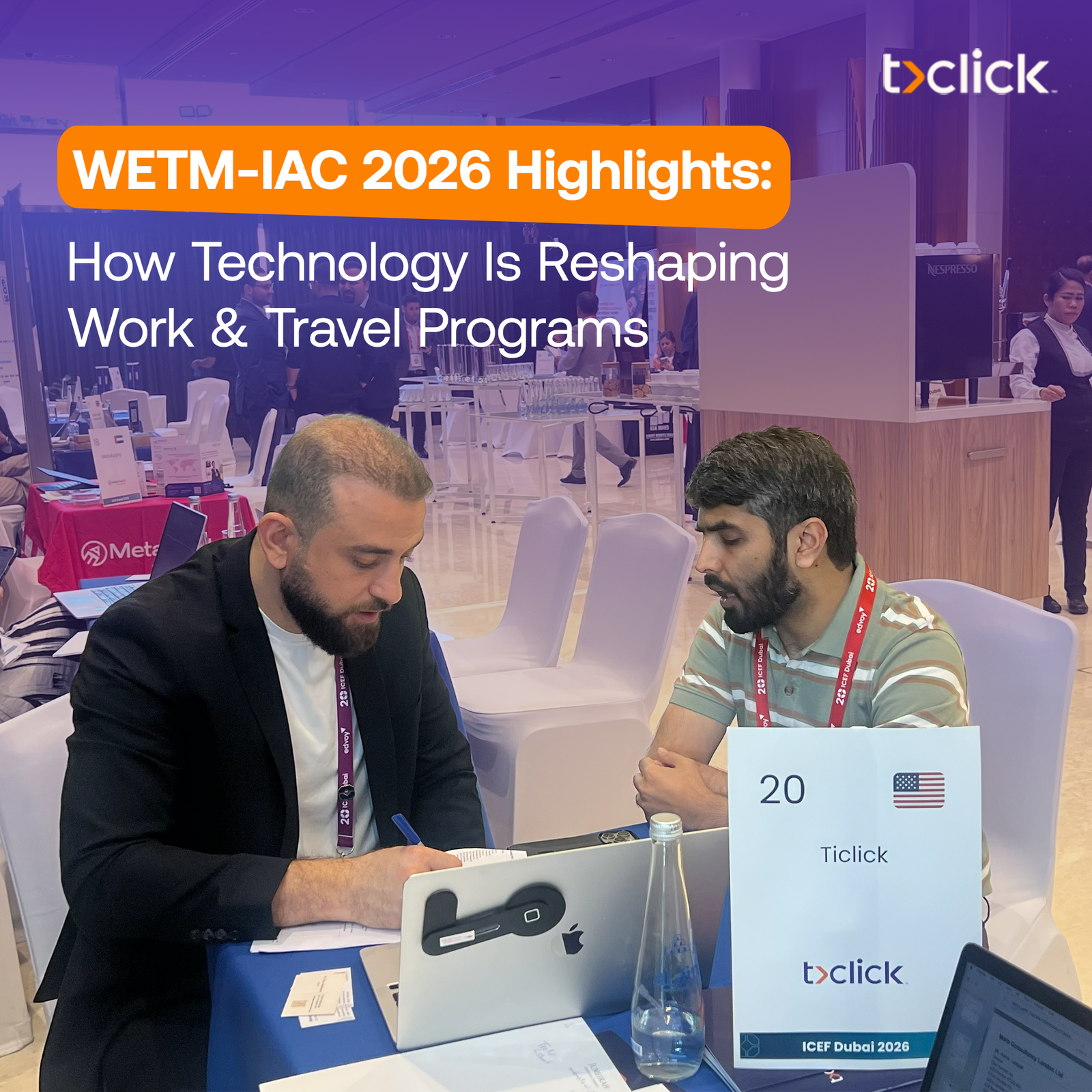
The Work & Travel industry is no longer operating in a simple, linear way. Over the past few years, programs have expanded across multiple regions, participant volumes have increased, and compliance requirements have become more demanding. This has transformed what used to be a coordination-heavy process into a complex operational system that requires structure, visibility, and control.
At WETM-IAC 2026, this shift became impossible to ignore. Technology was not just part of side discussions—it became a central theme across meetings, conversations, and strategic planning sessions. Agencies were not asking whether they should adopt technology; they were asking how to use it effectively to manage their growing operational demands.
For platforms like Ticlick, being present at WETM-IAC 2026 provided direct exposure to these evolving needs. It revealed that agencies are moving toward system-driven operations where CRM systems, automation, and real-time data are essential.
This article explores the most important WETM-IAC 2026 highlights and provides deeper insight into how technology is reshaping work & travel programs, not just in theory but in day-to-day operations.
WETM-IAC 2026: Where Technology Took Center Stage
Technology as a Core Industry Conversation
At previous industry events, technology was often discussed as an additional layer—something that could enhance operations but was not essential. At WETM-IAC 2026, this perspective has completely changed.
Technology is now embedded in almost every operational conversation. Agencies are discussing how to structure their workflows, how to reduce manual tasks, and how to improve coordination across teams using digital tools.
This shift reflects a deeper understanding within the industry: without technology, it becomes nearly impossible to manage the scale and complexity of modern work & travel programs. Technology is no longer an advantage—it is a requirement.
Why Agencies Are Actively Seeking Digital Solutions
The demand for digital solutions is driven by real operational pressure.
Agencies are dealing with:
- hundreds or thousands of participants simultaneously
- multiple program types with different requirements
- strict timelines for documentation and approvals
- constant communication across different stakeholders
Managing all of this manually leads to delays, errors, and inefficiencies.
At WETM-IAC 2026, agencies clearly expressed the need for systems that can simplify these processes. They are actively looking for solutions that allow them to work faster, reduce manual effort, and maintain control over their operations.
To see how these discussions translated into real interactions during the event, explore Ticlick CRM at WETM-IAC 2026 and the key conversations with agencies and sponsors.
Key Technology Highlights from WETM-IAC 2026
1. CRM Systems as Operational Infrastructure
One of the strongest highlights from WETM-IAC 2026 is the transformation of CRM systems into operational infrastructure.
In the past, CRM systems were mainly used to store contact information. Today, they are being used to manage entire program lifecycles.
Agencies are relying on CRM systems to:
- track participant journeys from inquiry to completion
- manage application stages
- monitor document status
- organize communication
This shift turns CRM systems into the backbone of operations rather than just a supporting tool.
2. Automation Across the Entire Program Lifecycle
Automation is becoming a key component of modern work & travel program management.
Instead of relying on manual processes, agencies are automating repetitive tasks such as the following:
- sending follow-up emails
- reminding participants to submit documents
- updating application statuses
- assigning tasks to team members
This reduces the workload on teams and ensures that processes are executed consistently.
Automation also helps eliminate delays caused by human error or oversight, making operations more efficient and predictable.
3. Centralized Communication Platforms
Communication is one of the most complex aspects of managing work & travel programs.
Agencies communicate with multiple stakeholders across different channels, which often leads to fragmented conversations.
At WETM-IAC 2026, agencies emphasized the need for centralized communication systems that bring all interactions into one place.
This allows teams to:
- track communication history
- avoid duplicated messages
- ensure consistent responses
Centralized communication improves coordination and reduces confusion across teams.
4. Real-Time Data and Reporting Dashboards
Data visibility is becoming a critical factor in operational success.
Agencies need real-time insights into their programs to understand what is happening at any given moment.
CRM systems now provide dashboards that allow agencies to:
- monitor participant pipelines
- identify delays
- track performance metrics
This enables agencies to make informed decisions and respond quickly to issues.
5. Digital Document and Compliance Management
Documentation is one of the most sensitive areas in Work & Travel programs.
Managing documents manually increases the risk of errors, missing files, and compliance issues.
Technology is helping agencies streamline this process by:
- tracking document submission
- organizing files in a structured way
- ensuring compliance requirements are met
This reduces administrative workload and improves accuracy.
6. AI and Workflow Optimization
AI is starting to play a role in optimizing workflows.
Although still developing, AI tools can help agencies:
- identify inefficiencies
- prioritize tasks
- improve lead qualification
At WETM-IAC 2026, there was growing interest in how AI can support operational decision-making.
These changes are directly shaping system expectations. Learn more about how insights from WETM-IAC 2026 influence CRM needs for Work & Travel agencies and why CRM systems are becoming essential.
How Technology Is Reshaping Work & Travel Programs
From Manual Operations to System-Driven Workflows
The transition from manual processes to system-driven workflows is one of the most significant changes in the industry.
This shift allows agencies to standardize their operations and reduce reliance on individual effort.
From Reactive Management to Proactive Control
Technology enables agencies to anticipate issues rather than react to them.
With real-time data and automated alerts, agencies can address problems before they escalate.
From Fragmented Tools to Integrated Platforms
Agencies are moving toward integrated systems that combine multiple functions into one platform.
This reduces complexity and improves efficiency.
The Challenges Driving This Technological Shift
Increasing Program Complexity
As programs grow, managing them becomes more difficult.
Technology helps agencies handle this complexity more effectively.
Multi-Stakeholder Coordination
Coordinating between multiple stakeholders requires structured communication systems.
Growing Need for Scalability
Agencies need systems that allow them to grow without increasing operational pressure.
Where CRM Systems Fit into the Future of Work & Travel Programs
Centralizing Participant Data
CRM systems provide a single source of truth for all participant information.
Automating Communication and Tasks
Automation reduces manual work and improves efficiency.
Enabling Visibility and Control
CRM systems give agencies full control over their operations.
Similar trends have also been observed in how agencies operate after global events. Discover how student recruitment CRM software supports agencies after ICEF Dubai and helps turn connections into structured workflows.
How Ticlick CRM Aligns with These Technology Trends
Built for Work & Travel and Exchange Programs
Ticlick is specifically designed for managing Work & Travel programs.
Designed for Complex Participant Lifecycles
Ticlick supports multi-stage participant journeys with structured workflows.
Combining Automation, Visibility, and Structure
Ticlick integrates automation with real-time data visibility, helping agencies operate more efficiently.
What This Means for Agencies Moving Forward
Technology Is No Longer Optional
Agencies must adopt technology to remain competitive.
Systems Will Define Operational Success
The quality of systems will determine how effectively agencies operate.
Agencies Must Invest in Digital Infrastructure
Investing in digital infrastructure is essential for long-term growth.
Conclusion
The insights from WETM-IAC 2026 highlight a major transformation in the work & travel industry.
Technology is reshaping how programs are managed, making operations more structured, efficient, and scalable.
Platforms like Ticlick are helping agencies navigate this transformation by providing systems that support modern operational needs.